 info@abravenew.com
 (206) 746-5024
 2400 NW 80th St, #540, Seattle, WA 98117


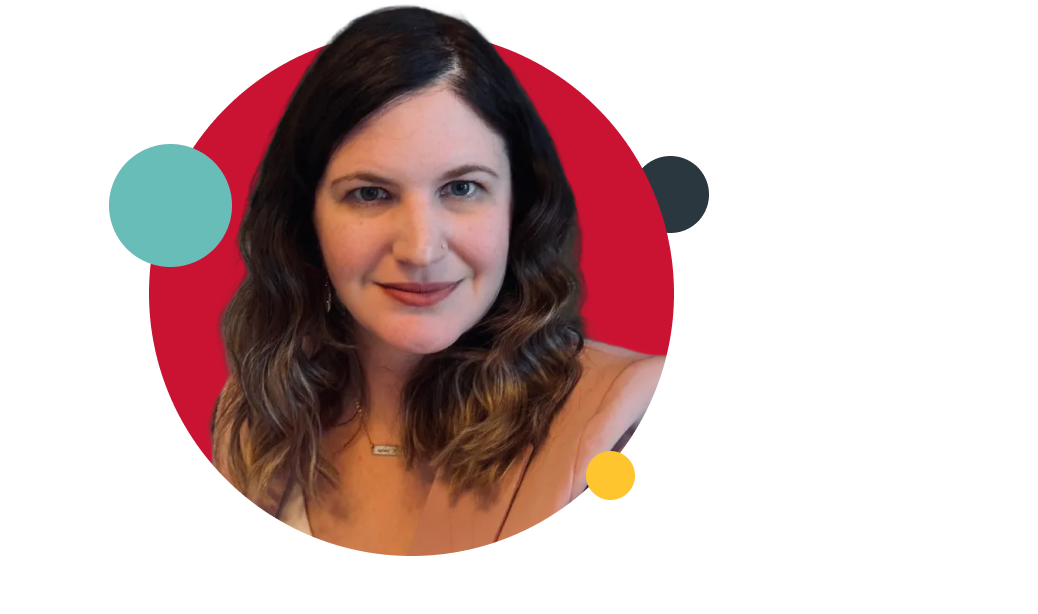
Brianna Miller is a digital marketing leader with over 15 years of experience building data-informed strategies that connect marketing efforts to real business growth. She currently serves as the Director of Demand Generation at Cohere Health where she develops multi-channel demand generation campaigns and account-based marketing strategies.
Beyond her professional roles, Brianna is dedicated to advancing the industry and mentoring its next generation of leaders. She serves as an Adjunct Professor at the University of Missouri-St. Louis, teaching Marketing Strategy and inspiring future marketers. Her commitment to innovation extends to advisory and editorial contributions; she is a 3Sixty Insights Global Executive Advisory Council member, a regular contributor to Martech.org, and an active participant on several boards, including the UMSL College of Business Marketing Advisory Board and the MarTech Conference programming committee.
Brianna has had the privilege of sharing actionable insights at 20 industry events and has been featured on numerous popular marketing podcasts, where she connects with audiences on topics ranging from ABM trends to practical AI applications. As a speaker, she is known for making complex concepts approachable and providing audiences with strategies they can put into practice immediately.
What you’ll learn about in this episode:
- Balancing technology with a human touch: How healthcare brands maintain empathy, educate audiences, and create meaningful customer experiences while leveraging AI.
- Storytelling as a differentiator in healthtech: Why compelling narratives and creative thought processes help AI-focused brands stand out in a crowded healthcare technology market.
- How the importance of building trust and transparency with customers is essential in the age of AI.
- How to build an effective brand and ensure marketing and sales consistently reflect it.
- The importance of seamless collaboration between marketing and sales teams, emphasizing shared goals, open communication, and consistent meetings to align on campaigns.
- Account-based marketing (ABM) strategies for healthcare technology: How to engage accounts effectively throughout complex buying cycles.
- Personalization in ABM campaigns: When to use one-to-one, one-to-some, or one-to-many approaches to maximize engagement.
- Key considerations for tools that support targeting, personalization, and long term cycle measurement.
Additional resources:
- Brianna Miller on LinkedIn
- Brianna Miller’s branding site
- Cohere Health Website
- Josh Dougherty on LinkedIn
- Josh Dougherty’s speaking site
- A Brave New’s Website
Transcript
Josh Dougherty:
Welcome to A Brave New Podcast. This is a show about branding and marketing in the healthcare space. But more than that, it's an exploration of what it takes to create brands that will be remembered and how marketing can be a catalyst for those brands' success. I'm Josh Dougherty, your host. Let's dive in.
Hello and welcome to the show. I'm so happy to have you along. Today, we're going to get a chance to talk to a real digital marketing leader. Brianna Miller works currently at Cohere Health, but has 15 years of experience in the B2B healthcare and SaaS arenas. She's also a speaker and adjunct professor for marketing strategy at the University of Missouri-St. Louis. So she brings a lot of knowledge and expertise to the conversation.
And the reason I'm excited for you to hear from her is because she can provide a unique perspective on this convergence or the intersection of brand and marketing. She's in demand gen. She works in account-based marketing. And so she is managing multiple audiences through long and complex sales processes, thinking about how do you build a relationship with those audiences. And specifically in the brand arena, how do we use those interactions and the long-term sales cycle to create a brand story that people want to be a part of, to create a brand that is unforgettable, and to ultimately draw people into a conversation where they can get their questions answered, their problems solved, and hopefully make a purchase at the end of the day?
So without further ado, I want to get into the conversation. Let's welcome Brianna in.
Well, hi, Brianna. Welcome to the show.
Brianna Miller:
Thank you so much. I'm really excited to be here today.
Josh Dougherty:
Awesome. Well, I know we're going to talk about a bunch of things, but as we get going, I'd love for you to share a little bit about your story. Could you tell our listeners about your career path, where it's taking you over the years?
Brianna Miller:
Yes, definitely. So I honestly want to say above all things, what leads me right now is that I'm actually a mom to an inspiring little girl who motivates me every day to live with purpose. And I'm really, really passionate about helping other women and businesses and just marketers discover their passions and chase their dreams. I am also an adjunct professor and a speaker and a contributor to industry sites. I really just find myself thriving in the place of sharing knowledge and sparking ideas. But I really like to joke that I am one of the rare marketers who actually studied what they ended up going into.
Josh Dougherty:
You are.
Brianna Miller:
Yes. So I studied marketing in college and I stuck with it. I've been in the marketing space for over 15 years. I've worked with everything from national brands to small businesses across industries like education, manufacturing, retail, and healthcare. But I definitely found my passion in B2B marketing and demand generation. So I've been in healthcare technology specifically for over a decade. And right now I am the director of Demand Generation at Cohere Health. So I get to bring together all of my experiences from all the way back to studying marketing in college to being an adjunct professor to ... I even think being a mom sometimes—all those experiences together in my job right now.
Josh Dougherty:
Yeah. I think being a parent is huge and influences your perspective. I was excited when you brought that up. I have an eight-year-old, so I'm kind of going through that young parenting role too. And it's fun to kind of ... I don't know ...
Brianna Miller:
I think they inspire you a lot.
Josh Dougherty:
… be inspired and see the world in a different way, which is really cool. Let's talk a little bit about Cohere Health. Can you share a little bit about who they are, what they do? And then we'll dive into talking about, I think this unique mixture between like ... Obviously we're a brand-focused show, so I want to talk a little bit about that, but I want to talk about the intersection between brand and demand gen, which I think is super fascinating. But before we do that, let's talk about Cohere Health. Who are they? What do they do?
Brianna Miller:
Yeah, absolutely. So Cohere Health, they were founded on a mission to fix a piece of the insane healthcare puzzle that is out there. And that piece was prior authorization, which is often, if you can think about it as a mountain of paperwork and endless phone calls that sometimes can stand between patients getting the care that they really need and when they need it. And so we were founded/created clinically trained AI to make that whole process smarter and faster, better for the patient, better for the clinician. And that's where they were founded. We've expanded into payment integrity as well. We're interesting in the fact that we sell to payers or health insurance companies, but our end user is the provider, your doctor's office. So we are designing to try to make access to care faster. We help doctors get their patients the care they need 70% faster by removing headaches, all those administrative headaches, and just focus on caring about people. So it's just a faster path to treatment. And they're also very transparent on their AI and how it works and how it's making things better.
And then my job at Cohere is to tell that story, the story of bringing the payer and provider relationship to a good place, improving it just satisfaction-wise, getting the patient to care faster, telling those many different stories, and connecting those to really robust multi-channel campaign strategies.
Josh Dougherty:
Nice. Not very much to work on there.
Brianna Miller:
No, not at all.
Josh Dougherty:
That's a lot of things to do.
Brianna Miller:
No. We stay busy.
Josh Dougherty:
Exactly. Well, I'm excited to talk to you about the AI component and how to keep a brand human with AI and also to talk about how do you tell that story? Because I think a lot of the people that we speak to in the health tech space, they have a really complex buying cycle like you do, so they can learn some things from you about how you all are managing leading a buying committee through that process.
But as we get started, I'd love to ask a couple questions about brand. I love to start our podcast by just asking how you define branding as a marketer. What's your definition when someone asks you about that?
Brianna Miller:
Yes. And this question, I think it can kind of be hard. It probably depends on which marketer you're talking to and what aspect they work in. But to me, branding is really about telling your story in a way that makes people want to be a part of it. It's about building trust and sparking emotions, creating a connection. It goes significantly beyond selling. I almost don't even want to bring in the words since I'm selling at that.
I don't think there is one secret sauce to branding, but if I had to say something, I would say maybe just being authentic and consistent. And if possible, unforgettable in a good way. So I want to create a brand that people root for, which may be surprising to think in this space where we're working with health insurance companies and prior authorization and things like that. But when you have a brand like Cohere Health that really wants to do something good, your customers feel it, others feel it. And that just, if you do it authentically, just grows your brand.
Josh Dougherty:
Yeah, I love that approach. So when I talk about branding with people, you said you wanted to create an unforgettable brand. We talk a lot about how branding at the end is about creating or curating a memory. So thinking intently about what do we want people to remember us about or remember us for? And how do we tell little snippets of a story so we build up this overall memory? I also love the idea of wanting to create a brand where people want to be a part of that brand and want to be engaged. It's so valuable to have, I think, in the B2B healthcare space and just like B2B SaaS in general. It's easy to think like, "We're selling a technology product. We just need to talk about the technology." But even technology buyers buy based on connection, on feeling that engagement.
Brianna Miller:
Yes. They're all people that are buying these products. While we are B2B and it is a business, they are all individual people that are part of that buying process and are going to connect with you for different reasons. It could be they just got out of a bad meeting and I need to connect with them in a different way. It's not just one key to it all, I would say.
Josh Dougherty:
Totally. So to do that—and this is going a little off script from our questions but I think it's a good thing to explore—you have to understand a little bit about the emotions and the emotional motivators that people have. What are some of the ways that, as you've grown in your career, you can get to know or research those motivators for people to make sure you're connecting in the right way with them?
Brianna Miller:
So I probably will come at it in a couple of different ways. So there is some data out there, whether there are reports you can find or studies that have been done. You can look at what searches are getting to your website, or what people are doing around your topic can tell you a lot when you dig into some of those long-tail keyword searches. Or now the searches in ChatGPT, those prompts that people are putting in. What are those questions that they're asking that are related?
And then also, I need to build really good relationships with the sales team and customer success team or account managers—whoever that may be at your business—because they're on the frontline having those conversations that marketing's never really going to have. Maybe we might be at a trade show if we're helping support the booth and talking to a few people, but I need to know what are the conversations that sales is having and the worries and the concerns that are being brought up in those conversations. And even the one-offs. We may not even realize something might be a pain point and it just wouldn't show up until it randomly comes up in a meeting. Or especially with our existing customers, they may have a great relationship with their account manager and learning from them what's going on at each of those accounts, where is their focus right now is definitely going to be a big thing.
I will say as well, we've found some very interesting insights lately of when you go to these conferences and you have a booth, don't just spend all your time at the booth. Obviously you need someone there, but send people to the sessions, see what people are talking about in the sessions and what questions are the audience asking the speakers. Because we've even found just the way we say certain things related to AI or automation was way different than we were planning to do because of things we learned in those sessions that we would not have known otherwise.
Josh Dougherty:
Yeah, no doubt. I mean, you're giving me flashbacks. I'll date myself a little bit with this, but I started out my career as a direct mail copywriter.
And we would always go through verbatims from research and be like, "Where can we pull in these verbatims and use them word for word inside of messaging?" And it was always, the question was like, "How much is this going to lift response?" And it always was a massive lift, even though you wouldn't think changing a sentence here or a sentence there would help, but if you've heard that sentence from 50 different people …
Brianna Miller:
Yep. Exactly.
Josh Dougherty:
... they all of a sudden feel heard and seen when you're talking to them.
Brianna Miller:
Yes. And why are they thinking that way? It was very … some interesting things recently in regards to just how ... Again, because we have different audiences, the payers to providers, yes, we want to speak to the payers, but they're also listening to the providers. How are the providers saying one thing is also how we need to be speaking, answering both of those. So it's very complex, but you definitely have to get in the weeds a little bit to find that correct way to say stuff.
Josh Dougherty:
Yeah. And I think that's why many of us get into this—we like to put together a puzzle at the end of the day. I know.
Brianna Miller:
Yes, I agree. I agree.
Josh Dougherty:
Let's talk a little bit about the healthcare technology of the healthtech space in general. I'd love to hear your thoughts about—and you've gotten into it a little bit—but what does it take today to stand out in that space? There are tons of startups, there are lots of investments flowing into this area. Many organizations have a strong AI component or it's a core part of their product. So what do you think are the keys,as you think about it, to standing out in a space right now?
Brianna Miller:
So I think that standing out in health tech, especially with AI, I mean AI anything right now, there's a unique challenge compared to just general B2B marketing because healthtech and AI require building a deep trust and connection with customers. We have to kind of demystify the AI buzzword, and there's a lot of education around there. So it's our job, I view, to show people that AI, in general, what our AI is compared to ChatGPT or what they keep hearing online, that it isn't some black box making decisions for them, but it's a powerful tool that is actually here to help them and help people.
And so you have to be, in my view, radically transparent about how your technology works, how you're using it ethically, and how you're focused on keeping everything centered around the human benefits.
So I feel like Cohere does that really, really well. They've built smart AI and trustworthy AI. The previous company I was at, Protenus, it was the same in that aspect. So I kind of had that foundation of if I was going to work for another AI company, I wanted to make sure they were not just saying they did AI, but they were being smart and transparent and they truly wanted to make a good impact. So we focused on educating and demonstrating how we're empowering real doctors to make better decisions and strengthening the partnership between payers and providers, which is a controversial relationship, but it's an incredibly important one. So that's where we want to come in and not just say that, "AI's going to fix everything and replace everyone's jobs." No, it is a powerful assistant. And I think that's how people have to think about it when they're coming at that approach. Just transparency, being trustworthy, it goes so far.
Josh Dougherty:
Yeah. I think that relationship, it's funny to think about it because it is such a contentious relationship, but it's like the linchpin. If that doesn't work well between the payers and the people providing care, nothing happens in the healthcare space.
Brianna Miller:
Yeah. You have to have a good relationship. And everyone needs to trust the AI behind it. I mean, there's so much information out there right now about AI and when just everyone throwing that around, that it's important that we step back and we educate about what is our AI? Why is it different? Why does it matter? How will it actually make your life better as a person, not just a company, is just something that I think is really important.
Josh Dougherty:
Yeah. How do you make space to do that type of education, right? Because people are very busy. And we're delving a little bit into the ABM (account-based marketing) conversation, but how do you build enough space to tell that more nuanced story?
Brianna Miller:
Yeah. I think you really have to think about where you're needing to tell the story. So we have a lot of educational resources, whether it be like blog posts or certain AI sections of our website, we're doing that, but also a lot of training across the team.
Our sales reps, everyone, needs to understand the message of our AI and what it is and how it's different to be able to speak to it at all points. And also, I think the understanding of when it makes sense to bring up specifically the term AI versus all the other things that they're dealing with. Again, if we're just saying, "Oh, it's AI. I'll fix it." It's yes, but why? Let's talk all the way through it from start to finish. And so thinking about it from someone who is just getting started in the buying process to someone who's making that final decision, having the different resources for each stage.
Josh Dougherty:
I think you're touching on something that's really important, which is, how do you take something that's a highly technical product and keep it feeling human? And one of the things you've spoken about so far in our conversation, I think pretty eloquently, is if you focus on the benefits that are coming through and the actual outcomes around the product, all of a sudden it feels like a human product, not just a new piece of technology.
Brianna Miller:
Yes, exactly. I mean, I think whether it's for in this healthcare space or ... I attended a panel recently on marketing AI and how it's going to replace us, same type of questions. It's not viewing it as a replacement, but it's a tool to enhance that human connection and that decision-making, and it's efficiency. And for us, it is clinically designed and reviewed.
I think with any type of these things, especially in healthtech, just keeping everything patient-centered and thinking of that when you're developing things and when you're communicating things. Of course, we all are thinking ROI. And of course that's important role in businesses and efficiency and things, but also keeping it human as well. That we all know we work in healthcare and the main goal is to bring care to the patient.
Josh Dougherty:
Absolutely. Well, one more brand-focused question and then we'll switch to talking about ABM because I know that's a lot of where you've spent your focus. I would love to hear—as you look at your competitive space for your company—what are those things that really, the differentiators that you like to bring up about Cohere that set your brand apart from others?
Brianna Miller:
I really think one of our big things is the fact that we have such a provider focus, that we are building trust not just with the payers who purchase our solutions, but with the providers who use them every single day. We are so focused on the education and empowering of our customers and trying to understand specifically what their needs are because every payer is different. And yes, they have things that are similar, but we need to figure out where we fit with them and their current needs, not just trying to force a solution on them. We need to help lift them up on the areas that they need.
So I think that's ... I mean, it's one of the things that really brought me to Cohere when I was interviewing a year ago when I was ... I could see that in the process that, yes, we want to put our customers first. And even further, the providers first. And we measure our success on numbers like provider satisfaction, which was a huge selling point for me and I think stands out a lot from competitors.
Josh Dougherty:
Yeah. Awesome. Well, let's shift and talk about demand gen then and talk about account-based marketing. We've delved into it a little bit, but I would love to hear, as you've leveraged ABM, what are some of the categories or the strategies that are working for you right now? Where are you seeing the most success?
Brianna Miller:
Yeah. So, I’ve been deep into ABM for quite a long time now. Did a lot of it when I was at my last company, Protenus, and then I'm now here at Cohere Health. And to me, in our space, ABM isn't really just a tactic. It's really the backbone of how healthcare technology or SaaS type of businesses need to be thinking about marketing.
We have such complex, long buying cycles. I mean, we could have 12 to 18 months or more, 10 to 20 plus people as part of the decision-making process. And being in this space for over a decade specifically, it is complex. It is fun because of that. And I think ABM makes a lot more sense because you can focus on those high-valued accounts and tailoring your message across all channels. So whether email, LinkedIn, your website with custom landing pages, ads, everything.
I have been, and specifically for ABM, loving my favorite tool, I will give you, is AdRoll. It's an ABM tool. It was previously known as RollWorks. And that's been, I used that at my last role at Protenus. I'm using it now at Cohere. And I love it. I think it is a great tool for those getting started in ABM and some of that insight data, using that to target accounts because it just is very intuitive. It seemlesslyy integrates both my different systems and I can target based off of where they're in the funnel. I could target them based off of products that they have, products that they don't have. And then their engagement level, I really enjoy it there.
Josh Dougherty:
Yeah. I think it speaks to a lot of the value of personalization is everything in ABM and being able to meet someone right where they're at.
So I'd love for you to share, you talked about you have a lot of targeting opportunities, but how are you working to meet each member of that decision-making group where they're at with relevant content?
Brianna Miller:
Yeah. So I think, honestly, a lot of my strategy for my ABM campaigns is often actually going to start with conversations with the sales team. So based off of my goals, an ABM strategy of one to a few typically makes the most sense. One to one would be great. It's very costly to do one-to-one campaigns.
Josh Dougherty:
Totally.
Brianna Miller: We're not in a space where I have a one to many of a thousand accounts that I'm trying to reach. So we're usually doing a one-to-a-few strategy. I'm meeting with the sales team to figure out if there are some correlations between certain accounts that I can target them based off of a specific pain point or a product that might make sense to them or just a specific persona that we're trying to reach there. And then I'm going to build my campaign as kind of a combination of pulling the data from my different systems, HubSpot, and Salesforce. I'm going to create content based off of the different stages that I think the accounts are at. And then using a tool like AdRoll also helps me target both the account and the persona, the individual person based off of their engagement level.
So for example, if I had a CFO who's in the ... As an individual, as in the awareness stage, I'm going to be sending very different content to them, whether via email or ads than a CFO who's in the consideration stage. Similarly, if I have an overall account that we have no engagement with, no opportunity open, my messaging's very different.
Josh Dougherty:
Totally.
Brianna Miller:
It's very high level. It is solely education-focused, brand awareness-focused, versus I'm getting into an account that we've been having conversations with, maybe it's stalled for whatever reason, or we're trying to move it forward. That's going to be very different error coverage that I'm going to provide to our sales team, whether it's ads or emails or again, things like that. So I'm trying to use the data and the systems that I have to better target what they're looking for.
Josh Dougherty:
Yeah, absolutely. And I think you've got to be careful because they're asking such different questions throughout the process, right?
Brianna Miller:
They are. They're very different questions. They have very different concerns. Like we talked, they're all humans, they're all individuals. They have different needs and worries about their every day at their jobs. So I have very different messaging for them and we have multiple products, so the messaging is also different there.
So it's just kind of a little bit of a change of mindset of thinking both individually of those individual people, but also thinking of where the account is as well. So like we said, that puzzle. But where is the account in the process, but where are these people? Because they might've been, all of a sudden, just pulled into this discussion. So they're much high level, much more high level, but the account itself is considered further in the funnel. So, it’s a constant puzzle.
Josh Dougherty:
Yeah, constant puzzle and the constant, I think, orchestrating with a sales team. So I'd love to talk a little bit more about how you manage that relationship with the sales team, because oftentimes there's overlap between what you're doing and what they're doing, and it has to appear like a coordinated effort.
And so you talked about using them to source content, which I think is excellent and common. But when you get to the level of someone's moving down the funnel, they're getting through consideration, they're starting to think about actually moving into maybe a sales cycle, how do you manage that collaboration and make sure it's smooth and seamless between the marketing side and sales?
Brianna Miller:
Yeah, definitely. So that relationship between marketing and sales is critical, I think, especially in B2B. Not to say [inaudible 00:29:24] in others. But it's important to have shared goals and open communication. So we are meeting on a regular basis about what campaigns are running, which of their accounts are in which campaigns, which ones are engaging with the campaigns. When we are building a campaign, like I said, co-building those account lists that should be targeted because they know more than I …
Josh Dougherty:
Of course.
Brianna Miller:
... know. They just do. And even sometimes more than the data can tell me. And then I'm going to align on metrics. So they know what standard I'm holding myself to. And I'm going to let them know like, "This campaign went great, exactly as I expected. This one didn't, but this is what I'm going to do to fix it if we run it or whatever."
And also it is a collaboration because marketing's going to hit them, but B2B is also still such of a personal sales process that they need to understand what information did I already send them, what did they already engage with, so they're not repeating themselves. If they already sent them report A... Or I send them report A and they engage with it, I don't want the salesperson to send it as well. That doesn't look good. So having that constant kind of communication and letting them, I want to say, look behind the curtain a little bit, but also see what these tools are.
And these tools like AdRoll ABM, RollWorks, integrate with their tools like Salesforce or HubSpot or the different CRMs out there and show them like, "Hey, you can see when an account has a lot of search intent or they're engaging." So having that for them, I think, helps a lot and not feeling like we're separate, but we are all one team with the same goal.
Josh Dougherty:
Totally.
Brianna Miller:
And I'm just trying to help you.
Josh Dougherty:
Yeah. And as you're measuring your success, I think a lot of people have switched to measuring closed deals and revenue coming in as success for marketing as well. How do your metrics differ? Do you manage as a team, with shared metrics between the two of you—the sales side and the marketing side? Or how does that work?
Brianna Miller:
Yeah. So we do in regards to our overall company growth goals, those are shared as a team, but we do have individual goals. And I'm really measuring a lot of influence over source. And of course, I do have to do sourced, but as we know, our sales cycles are incredibly long. So many people. It is not impossible, but hard, to say specifically that email or something was the thing that brought them in.
Josh Dougherty:
Totally.
Brianna Miller:
And also with the data, we don't always know exactly who is visiting the website. So to me, I want to know more what were the content pieces that they engaged with before becoming an opportunity, while they were an opportunity, the different stages. Do we get a lot of website visits before, or after, during? I'm looking at more trends to see where did it influence because there's some ... Even saying like, "Oh, they came from a trade show." That main conversation, yes. But if I want to play devil's advocate, I bet you they visited our website before then or a blog or interacted with us on social.
Josh Dougherty:
Totally.
Brianna Miller:
So I want to see the whole view versus just the one thing. And that also helps the sales team by telling them like, "These are the resources that are getting the most engagement."
One thing I shared the other day with them. I was like, I'm noticing a trend that when people download report A, they often download playbook B. So if you're seeing your contacts do this, we're seeing a correlation there. So I think we have the same goals, but I'm trying to find the trends behind reaching those goals.
Josh Dougherty:
Sure. Yeah, it makes a lot of sense. And I think something that's so fascinating there is when you have a circle of, I think, accelerating success because once you discover trends, you can even ... Just like they can help inform the content that you're creating, you can help inform what is the path to go down in a conversation if naturally you're seeing where everyone goes and access this resource, then that resource, and then the following resource.
Brianna Miller:
Definitely. And I want to know just as much, what are those cold outreach emails that they're writing, that are working. What is that message that is getting the reply, which is huge. And often it's like, "Oh, again, that's interesting. The way you phrased it is obviously catching someone's attention. Can I use what sales is doing in some of what I'm doing as well?"
Josh Dougherty:
Yeah. What I'm interested to think about, so we've talked a lot about content coordination with sales. Do you have any specific channels that have been most successful for you in the ABM space right now that are maybe non-traditional? I think we talk a lot about email and blog posts and those types of things, but yeah.
Brianna Miller:
I think it depends a little bit on our persona. It's just a little bit different. I always find in our healthcare technology space a good spot to get that initial interaction or lead gen would be a webinar, and whether that be externally hosted or internally hosted. I will say it cannot be salesy. It has to be focused on education, but at that point then I see a lot of follow-up success with the email nurturing and the ads based off of engagement at that point. So if they attended a webinar, that gives me one in on what type of ad content I can show them. And then using a tool like AdRoll ABM to, say, show them this ad. If they interact with that, they show more interaction, show them a different ad and help get them further down the funnel. And then I really love a great landing page, but something for …
Josh Dougherty:
It's a lost start to really focus on a good landing page.
Brianna Miller:
Yes. And not just land and download a resource, but I like to ... Especially for my ABM campaigns, a one-stop shop is kind of where I think of it in my mind that my campaign revolves a bit around. People can find their answers, their resources, all of that in one place. And it's thinking like if you had a persona page, but this is even further because it's for a specific persona at a specific type of account. So our sales team usually typically loves them. They get a lot more interaction. Say, people stay on them a lot longer.
Josh Dougherty:
So you're doing one-to-many campaigns too. Are you ever personalizing those pages to the specific accounts or is it generally ...
Brianna Miller:
I have in the past. I've done some one to one where it's very specific to the account. They're a little harder to do top of funnel, I found, at least in the healthtech space.
Josh Dougherty:
Totally.
Brianna Miller: I think they're a little bit better for once they're in that sales process to be a go-to resource. Instead of having to basically go across our website and find the different resources they need, it's kind of just the messaging that they want and is relevant to them. So not to say it wouldn't work top of funnel. It's just a lot harder because it's very c-suite focused a lot of times, and that's just a hard market to get some engagement in. So if they already know about us, I can get some more engagement there.
Josh Dougherty:
Yeah. And I think too, it's about following the data, right?
Brianna Miller:
Yeah.
Josh Dougherty:
If you don't need to do that personalization, why? Because it is so much more time-intensive to be able to do that.
Brianna Miller:
It's time-intensive. It's much more expensive. So I'm looking at both my budget and what I need to achieve and how am I going to get there efficiently with my team, efficiently with the resources we have within our budget. I need to combine all those things. Yes, it would be cool if I had crazy one-to-one campaigns all with this, all this personal branded stuff. Sure. But it's also to what extent do I need that? Is it actually going to move the needle? And when do I also not be too creepy? I feel like sometimes I see ads where I'm like, "That's all creepy." Okay.
Josh Dougherty:
No doubt. I think anyone who's doing AI marketing, and we think about this whenever we're building an AI-driven brand, you're already overcoming some creep factor, so you need to think about how you're showing up.
Brianna Miller:
Yeah. I mean, it even goes back to as simple as like, yes, we all know that businesses know when we fill out a form or we visit their website. Or at least most, I feel like people know that. But I always tell my sales team, "Don't be creepy about it. Don't be like, 'Hey, I saw you visited this webpage.' Don't get creepy."
Josh Dougherty:
Exactly.
Brianna Miller:
We know it, but we don't say it out loud.
Josh Dougherty:
Yeah. Well, I know we're getting towards the end of our time, but there's a couple last questions. One I have is around someone who's searching for an ABM platform. So you've already obviously talked about AdRoll ABM as the one you like to use, but if someone maybe has a nascent account-based marketing program, which I agree with you, in healthtech it's kind of the foundation of how you're doing marketing. So maybe it's a nascent program, but maybe they're just not happy with the tool that they're using or the tools that they're using.
What are your recommendations for how to conduct a search that's smart to find the right next tool?
Brianna Miller:
Yeah. And this is very relevant because I just went through it. So I did use AdRoll ABM at my previous company, but I went through the full process of looking at all the different options when I came to Cohere Health because we're a different company. I got to figure out I have a different team. I needed to really look at what is my team's capabilities, what are our goals, and what is the pace I need to maintain.
So my number one thing I'm looking at, is how does it seamlessly integrate into my existing tools? What are the CRMs you're using or your marketing automation software? Because I don't want this to be a big heavy lift of an implementation. If at all possible, I want to get it onboarded and going as quickly as possible. And then ease of use as well, very non-negotiable. I need my team to be able to adapt to it or adapt to it quickly. I don't want to need to have to spend three months training and learning the system if at all possible.
And while I love some of the other features that some of the tools had out there, the different ABM tools, I mean, they were very, very cool and very robust, but we are not a huge team for our size company. And if I was going to get my money's worth on that, I feel like I would've needed a whole additional headcount to spend their whole time on those tools because they're so robust and they have so much. And not to say that AdRoll ABM doesn't, it had exactly what I needed. It had the reporting I needed, the integration I needed, the features I needed, and I could get it up and running fast. So I think that depends. It could be a point where we reach another level and need additional features, but I don't think people should get distracted by the shiny features that they're unlikely to ever use and just focus on the one that is the right platform that's going to empower your team, not overwhelm them.
Josh Dougherty:
Yeah, absolutely. Yeah. It's a good word because I think the best functionality is if you can't use it, there's no use to pay for it.
Brianna Miller:
Exactly. I was like, if we're not using it, then what's the point? We're still startup life, so I don't have time to spend a long time getting something up and running, and I’ve got to be able to explain why we're using it right away.
Josh Dougherty:
Yeah, absolutely. Well, I think that kind of closed out our conversation. Thanks for covering so much ground in such a short time. And I'd love to share how can people connect with you? What's the best way for them to keep up with the work that you're doing? And you're someone who speaks as well so they can keep up with when you're showing up on this podcast or going other places to speak. What's the best place to find you?
Brianna Miller:
Yeah, definitely. So you can always connect with me on LinkedIn, but you'd also go to my website, which is beingyourbrand.com. I always post articles that I write, podcast episodes that I'm on, different conferences I'm speaking at, but I am always up to talk marketing all day every day. I truly love what I do. So if anyone ever wants to talk marketing, definitely reach out.
Josh Dougherty:
Excellent. Well, we'll post those in our show notes too, that people can just click on them to get to LinkedIn or to your site as well. But with that, yeah, thanks so much, Brianna, for being on the podcast and for such a good conversation.
Brianna Miller:
Thank you so much for having me.
Josh Dougherty:
Thanks for listening to this episode of A Brave New Podcast. Go to abravenew.com for more resources and advice on all things brand. If you enjoyed this episode, show us some love by subscribing, rating, and reviewing A Brave New Podcast wherever you listen to your podcasts.
A Brave New Podcast is created by A Brave New, a branding agency in Seattle, Washington, that crafts bold and memorable healthcare brands. Our producer is Rob Gregerson.

Similar Articles
OCT 11, 2021
The Beginner’s Guide to Generating Inbound Leads
Marketing doesn’t have to be painfully intrusive, like getting yet another telemarketing call right when you sit down to dinner with your family.
OCT 11, 2021
The Beginner’s Guide to Generating Inbound Leads
Marketing doesn’t have to be painfully intrusive, like getting yet another telemarketing call right when you sit down to dinner with your family.