 info@abravenew.com
 (206) 746-5024
 2400 NW 80th St, #540, Seattle, WA 98117


.png)
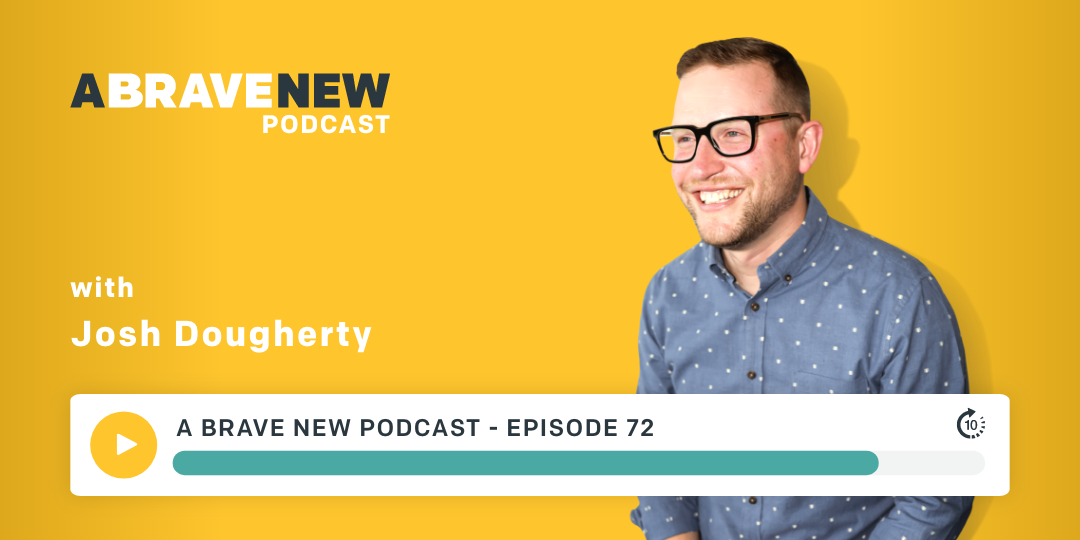
Annie Furlong is VP of Consumer and Growth (B2C) Marketing at Carrum Health. Annie brings 15+ years of experience as a B2C, B2B2C, and B2B marketer and people manager to healthtech and employer benefits markets. She has worked at and consulted for startups, associations, and large publicly traded organizations. As a strategic, creative, & energetic marketer, Annie’s professional passions include business and account strategy, process creation & improvement, shaping customer experiences, professional development and women’s leadership, driving adoption and engagement of products, and leading teams.
She is the proud parent of two little girls, an avid downhill and cross-country skier, and a lover of all things that living in Colorado has to offer. Annie received her bachelor’s degree from Colby College, where she studied neurobiology and business, and has a master’s in Organizational Leadership with a concentration in Strategic Innovation and Change from the University of Denver.
What you’ll learn about in this episode:
- How branding works in B2B2C healthcare marketing, including Annie’s framework for building brand trust through consistency, reputation, and real customer experiences.
- How to market to employees inside a B2B company, and why understanding both the employer buyer and the employee end-user is critical to driving adoption.
- How to maintain brand consistency across multiple channels, and why B2B2C brands should adapt their messaging for different employee populations, including strategies for reaching office workers, frontline teams, and distributed workforces.
- How Annie approaches consumer and growth marketing within a healthcare benefits platform, and the shifts that Carrum Health is making in specialty care access.
- What it takes to stand out in the crowded B2B2C healthcare marketing landscape, and why empathy and meeting people where they are in their healthy journey matters.
- How unconventional channels like direct mail, QR codes, billboards, and benefits fairs can cut through the noise when marketing healthcare solutions to employees.
- How to balance performance marketing with long-term brand building when your goal is both immediate action and lasting trust.
- Why rebuilding trust in healthcare marketing is essential today, and how brands can acknowledge the broken system while positioning a better path forward.
Additional resources:
Transcript
Josh Dougherty:
Welcome to A Brave New podcast. This is a show about branding and marketing in the healthcare space, but more than that, it's an exploration of what it takes to create brands that will be remembered and how marketing can be a catalyst for those brands' success. I'm Josh Dougherty, your host. Let's dive in.
Welcome to the show. Today I'm joined by Annie Furlong from Carrum Health. Annie works on the member marketing side with Carrum Health. Carrum Health is an employer benefit that gives employees access to the very best specialty care across the United States, and they certainly are a B2B company. They sell their benefit to employers around the country, but Annie works specifically on the member side, which is focused on after the product is sold, after the benefit is sold, and it's being offered to employees. How do you ensure that employees are taking advantage of it? And so today we're going to talk about that side of the marketing equation, that side of the brand building equation. It's going to be a great conversation to dig into the other side of marketing that happens in a lot of organizations in the benefit space. So without further ado, let's bring her into the episode. Annie, welcome to A Brave New podcast.
Annie Furlong:
Yeah. Thanks for having me. Excited to be here.
Josh Dougherty:
Awesome. Well, I'm so excited for our conversation today. But before we dive in, I want to give you a chance to share a little bit about your story and tell our listeners about your career path, where it's taking you.
Annie Furlong:
Yeah. So healthcare has really always been a passion of mine but more on, I'd say, the business side of healthcare, so to speak. In college, I was pre-med initially and thinking, oh, that was the route I wanted to go down. And probably about midway through school I realized I don't just straight memorize facts super well so I realized that was not probably the path for me. But I picked up a business minor and always being on the business side of healthcare very much appealed to me. I found a role right out of school at a company called The Advisory Board, which now Optum owns. But during the seven years that I was there, we were pre-Optum and just really affirmed this was what I was passionate about. I wanted to be a part of helping to fix the healthcare system that we have created for ourselves in this country and went from there.
And so I’ve done everything from working directly for large publicly traded companies to then dabbling in the trade association world and MedTech to then really figuring out that startups were where I was ready to get into and be passionate about and be a part of changing things up in the system. I found myself first taking a little bit of a side route into MedTech, but then came back to my roots in healthcare and found myself in the niche world of employer benefits, in particular. I'm on my third employer benefits startup within the healthcare space now at Carrum Health. And I just really love what I'm doing here. Vice president of consumer and growth marketing here, and really focused on how we're engaging our members, driving awareness of the benefit, and helping to change a little bit of the healthcare system and how we operate in this country with insurance and things along those lines for specialty care.
Josh Dougherty:
Yeah. I love your mission as an organization because it's so important to be able to navigate through specialty care healthcare easier. It's so difficult. And so the place of organizations like yours is massive to be able to make that a little bit smoother.
Annie Furlong:
Yeah. Yeah. The medical debt problem alone in the United States and the fact that we are a piece of the puzzle to helping to avoid that altogether is huge, while also being able to guarantee top quality care. It feels, often, very impossible to a lot of our members—how can those things go hand in hand? But here we are doing it, which it feels great to be a part of.
Josh Dougherty:
Yeah. I'm also thrilled to be talking to you because of the, I think, little known space. We often think in health tech, it's all about the B2B marketing side of things, and you're focused on the other half of marketing that is equally as important to drive utilization on your tool and your system. I know we'll dive into that more, but I'm interested to see your perspective, which is slightly different. Because you're dealing with employees, largely members who need to get access to that care.
Annie Furlong:
Mm-hmm.
Josh Dougherty:
So before we dive into specifics, I always ask everyone upfront because we're thinking about how do you build a strong brand, and I think that's true for in a B2B space and in a space with member marketing like you’re working on. I like to ask people how they define branding. What is your definition? How do you think about it?
Annie Furlong:
Yeah. I really think of branding as trust and also consistency of experience and reputation. I think that's true for both the B2B side of marketing as well as the consumer side. In healthcare, and in benefits as well, we have to really think about what our brand is to our clients but then also to our patients, our members, and then also those ecosystem partners that we're all playing in the same sandbox together. For me, it's really our brand that promises that we will deliver on what we are saying we can and will do. And then to our employer partners, we are the brand of value and outcomes, and then to their employees, our members, we are the brand of quality savings and support. It certainly ties in very closely to each other. So they're not, whatsoever, mutually exclusive but rather complementary. For me, when I think about branding, it's about trust and consistency and that reputation.
Josh Dougherty:
Yeah. It's interesting, and I think I agree with you that trust is huge. We talk about memory or having that emotional connection to a brand too. And I'm glad you mentioned in the benefits space, like the ecosystem partners, because often you're showing up with a whole suite of benefits that someone else or that an employer is offering, and so it's a tricky thing. So you want to play nicely, but you also have to be noticed above the others. So as you think about your work over the coming year or the last few years even, what do you want Carrum Health to be remembered for by the people who interact with you in that ecosystem side of things?
Annie Furlong:
Yeah. For me, the effect that Carrum, I think, has been very dedicated and committed to quality and not yielding or relenting on that promise and guarantee is something that I'm super proud of. And I think that is important in all of our stakeholders, external stakeholders, internal, our partners, and I really want our members and their employers, of course, to really see—especially as it relates to their other benefit offerings. I want them to see and experience that integrity, transparency, and care. Because I think, especially in healthcare, things often feel very murky and you don't know and it's someone speaking to you as though it's another language at times. And I want us to be remembered by our members as someone who is supporting them every step along the way, who is providing transparency and just making it super clear and supported throughout their journeys. And hopefully of course, then walking away with a great care experience, which also we know is not always the case in this country.
Josh Dougherty:
Yeah. It is not, but it's so important. We've alluded to this, you're in that B2B2C space. I think, obviously, you're talking about marketing to members. I would love, as we dive into this, for you to share a little bit about what you think your fellow B2B marketers could learn from you. I think there's often conversations about what we can learn from the broader B2B space. In my experience working in the benefits space a little bit as well—those of you that are working with members have super rich strategy, discipline and how you're doing and reaching people. So what do you think are the cross pollination lessons? Maybe it's not just one way, but what both sides of the house can learn from each other as they're building the brand?
Annie Furlong:
Yeah. I think, ultimately, a B2B product, even though the folks who are buying your product are the buyers at the business, et cetera. It's still only as successful as that internal adoption. And so I think it is important for B2B marketers to also understand how to effectively drive enablement and internal advocacy within those businesses and also especially what the end users are finding so valuable because that is very much a feedback loop or mechanism on the product or service or offering and shows you what is the value that is seen. Because, especially in benefits, those benefits leaders every single year are looking at what they are offering to their employees, and they're having to talk to their executives about what are people using? Is it valuable? Do we want to keep spending money on this or do we want to offer this, or is it just noise or whatever it might be? And so all of this should really be a feedback mechanism back up to B2B to then utilize, to be able to get more buyers in the door.
And I think it’s true as well on the B2C or B2B2C side of things, understanding and knowing why did that buyer decide to take you on and bring you on so that you can also make sure that you're helping to prove that value to them. Because in the B2B2C space, while my team is focused not only on getting the individual eligible employees to be aware of the benefit and to use it, we are also still working directly with those HR and benefits leaders to show them the value of how people are utilizing it, what they're saying about their experience, and providing that value back to them to ultimately keep them renewing, keeping them happy, and keeping them in the door with us. So yeah,
Josh Dougherty:
You talked about creating this feedback loop, which I really like that picture. What are the mechanisms that you've created internally to ensure both sides of the house are talking to each other? Because I know if you're been working in this benefits space, it's usually completely different teams running those two marketing efforts, and then you have sales also engaged or biz dev, which is another team. So how have you worked to ensure there's that tight communication to keep everything flowing nicely?
Annie Furlong:
Yeah. First and foremost ... Also we use Slack at Carrum and so we definitely have a marketing only ... I say our safe space for sharing things that we've seen, what's working, what's not across our respective spaces. And then we also just make sure we're connecting my content, our member content marketing team, and then the B2B content marketing team as well as sales enablement, product marketing, very much in lockstep to make sure that we know what's going on. Because we might also be coming up with a new service line offering or expanding what we are providing. And very often the B2B side of things are the first to, understandably, be able to know about that and to get the details. And so being able to then say, okay, what is that B2B product marketing team getting? How are they understanding everything about this new offering? How are we then translating that down to our members? So what's it going to be? Because very often we are needing to take maybe whether it's their case studies or their content or whatever it might be, and then translating it down to our members just because you're obviously speaking to different audiences and also different levels of understanding of the benefit as well. So we're having to take that next spin.
Josh Dougherty:
Yeah. That makes a lot of sense. And as you're introducing a new offering or new something into the market, talk to me a little bit about best practice in the member market. How does your brand present? Is it about how solutions oriented it is? How concerned are you about building the Carrum brand versus just providing the offering? What is the mix that you've seen work the best for you to build the utilization and engagement?
Annie Furlong:
Yeah. We try to start off every new client conversation, every new client implementation conversation also, by asking them a lot of questions. So we might roll out a new partnership with a large employer and we want to know what's worked in communicating to your employees. What have been initiatives you've rolled out or new benefits you've rolled out in the past? And ask them both sides, what are ones that went well and what was it about that that made it go well? And then also what were the ones that maybe just no one paid attention to or whatever it might be. So we can also learn from maybe some of those mistakes or try to improve upon that. So I think it really starts very often with an understanding of their specific channels. And the more clients you're getting, the more you're being able to try different nuances. For example, trying to communicate and even reach people or get in front of the eyeballs of employees who sit at their computer all day and are actively in front of a screen from nine to five—or whatever time—is going to look very different from folks who are working on the front line of a factory, who don't see anything all day. And when they do have a break, they're certainly not like, "Oh, let me go check my benefits information."
Nor maybe do they even have a company email address. So how you approach those different populations is so different Also, especially in the specialty care space, when we think about the demographics of an employer base too, some are older or maybe less active and they might be needing more of that specialty care, whereas there are some employers who maybe have super young workforces who are incredibly healthy and live in really urban, easy-to-access healthcare and spaces. And so, how we're also communicating differently to those audiences is really important. And then, certainly, my team's job is to try and figure out how to do that all at scale and in a way that you have to make individual campaigns to every single different employer population. Yeah.
Josh Dougherty:
It's like the eternal marketers challenge of how do you have a systematized personalization program across the board. I don't know if I prepped for this, but I'm interested to hear this. What is the most off-the-wall strategy that you've used to reach people or what are some examples of that? Because, obviously, I'm sure you have a standard playbook that you use but then varies by population. So are there any things that you thought, man, I never thought this would work and it did?
Annie Furlong:
Not at Carrum but in a past life, we had a client who had a very targeted geographic location and honestly thought about speaking directly to them via billboards in their town. It was not like a San Francisco-based employer or a large but rather a smaller town in the US. And actually drove quite a lot, but just of traffic and awareness and utilization. But I think we're also always trying to think of different ways ... like campaigns, like fun things that run. It's a fine line to sometimes walk around being a serious healthcare brand and wanting to come off as informed versus some things that can be more gimmicky and catching people's eyes, but sometimes having a little bit sprinkled throughout has definitely been helpful. There are so many different types of even just random incentive campaigns or giveaways. I remember when I was at a caregiving company. We gave pretty awesome care package sweepstakes of kids stuff for parents. I, personally, as a parent wanted to somehow win that. But I think some of those kinds of giveaway things that have been a little more off the wall. But yeah, sometimes also it's more of the sandbox that the employers let you play in as well.
So during my time in ed tech we did a big education benefits fair as well. It was just having basically an internal conference for one of our employers, which was quite the ordeal to put together, but was hugely successful. I think at the end of it, we had one in two people in the entire company had signed up for the benefit, so quite successful in that regard. But I think just we're always looking for what are new ways we can grab people's attention? What will employers let us do? Certainly within healthcare, there are a lot more rules around how we can incentivize things and things along those lines. But yeah, I think it's a lot of fun.
Josh Dougherty:
Yeah. I think the in-person thing is nice too because it's like that key principle of how do you break through the noise so someone actually notices you? Because we're so tuned out in our day to day to driving ... Not driving necessarily, but going through the motions of what we're used to doing every day that unless you break through that plane ...
Annie Furlong:
Yeah. We've done everything from elevator takeovers in offices to simple things like a mirror cling that people just all of a sudden are like, "Oh, what is this? Let me scan this QR code and see what this is." But it's definitely breaking through the noise to your point. And also I think making sure people understand, I think co-branding is so critical, especially in benefits, because people do have dozens of different types of benefits available to them. And also there are so many scams and different things out there at this point where you sometimes are like, "Do I have this benefit available to me? Is this real?" And we hear often from our members that Carrum seems too good to be true, and we want to make sure people don't then dismiss us for some reason because of that perception.
Josh Dougherty:
Yeah. So that too good to be true really dovetails into what I was going to ask about next because I think you talked about this at the beginning of the podcast and a couple of weeks ago I did a podcast on ... I don't know. Are you familiar with the Edelman Trust Barometer? It's an annual study on trust. We obviously have a deficit of trust in our society but outside of healthcare. And then people expect when they get into healthcare, especially in a specialty care space, that they're going to spend hours of time on the phone trying to get to the right specialist, and then they might not even have gotten to the right specialist at the end of the day. Or they've gone through a phone tree on a major health system and have gotten nowhere after spending two hours working on it. And so how do you meet someone who's coming with that frame of mind where they are and show empathy to that and start building trust? That's probably a difficult question to answer. It's probably something you've explored with each audience you're working with, but how do you bring empathy into that conversation and begin to rebuild that trust that maybe is broken from a overall perspective of how they think healthcare is going to work?
Annie Furlong:
Yeah. I think, very often, we've found success—and even, I say, naming the elephant in the room and explicitly saying, we know this is broken. The fact that we can tell you how much you're going to pay for your knee surgery both within your Carrum network and then also within your healthcare insurance network, yet your health insurance can't seem to tell you how much it's going to cost you is just bonkers. But I think just being able ... One, certainly word of mouth is incredibly impactful. And being able to have members who have gone through their experience with Carrum, and they share it so broadly across their employee populations and their teams because they are almost so caught off guard or dumbfounded at how great this was—the experience and the fact that, nope, there still is no bill coming to your mailbox.
But I think just naming upfront that we know this is a problem, and we are here to give you a different kind of healthcare experience because this is how it should work. And so, come to us and we will explain to you if you'd like to in more detail as to how we make it work. I know I talked about transparency earlier a little bit, but I think being transparent with our members about that and a little bit of how we do it. How we contract directly with healthcare providers and are changing how the system works, and educating them on that helps provide that foundation of trust. And then we, of course, are always capturing our member testimonials, video stories as well, so that they can hear directly from members so that they understand that this is real, this is what people are going through. And also, I think, just being able to hear directly from people from their own employers who have gone through it too so that they also don't think it's a far-fetched benefit or something that's not real within their own teams.
Josh Dougherty:
Yeah. Sorry, I had just done this Edelman Trust parameter recording. We just had this release this week as of recording, it'll be a couple of weeks after. But they talked a lot about how there's a sense of insularity and you trust the people right now. And so that employee-to-employee connection is massive. It's always been a big connection, but I think more so now than ever before.
Annie Furlong:
I think one of the biggest challenges we face is when someone may have a relationship with their orthopedist or, insert specialty care doctor. And for us, we're trying to explain, yes, your doctor might be great, however, here is why you might want to at least consider coming to a doctor in our network because here's what you're going to get out of it—whether it's fewer dollars out of your pocket or any at all. Because maybe they trust and know the quality of the care of their doctor, and so quality is not going to resonate with them because they feel they already have that. But maybe then it's about cost and just really making sure you can speak to those different value props and understanding for what they're going to get out of it and why coming to us should at least be a strong consideration for them.
Josh Dougherty:
Yeah. Totally. Well, let's talk about communicating those value props. What are the strategies that are working best for you right now? What are the things that are breaking through that noise?
Annie Furlong:
Yeah. I always say there's no silver bullet, and it really is about consistent communications throughout the entire year, but also in an omnichannel approach because people are getting care and need care at different points. So you might have someone who does not need that knee replacement today, and so they're going to ignore your email or they're going to ignore that piece of mail that you sent them or whatever it might be. But maybe in nine months they go skiing and fall and now they need to go get that surgery. And so you want to make sure they actually remember that you exist as a benefit. And so you can't really rely on that recall. You need to make sure that you are having more consistent communications. I know that's often sometimes a challenge with our employers because they have so many benefits and to your point earlier, everyone's trying to get in front of their employees, so it can be a lot of noise. And so you want to have a very thoughtful approach. And for me, it's not just about the evergreen content and here's what this benefit is, but also doing it in a way that is value added and educational so that people maybe are coming to you because they want to listen to this cancer care doctor talking about preventative ways to think about prevention of cancer or clinical trials or whatever it might be.
And so they're getting something out of it and they're hearing that, but Carrum just happens to be putting it on and then educating you a little bit at the end about here's what this benefit is available to you. And employers also I find are much more open to promoting those types of things than just saying, yeah, sure, send another promotional campaign or whatever it might be. But people also check their benefits or check their information in so many different ways. So you can't just rely on one or two channels but, rather, you need to make sure we're showing up on that digital screen in our office and obviously in their benefits portal. And then also having omnichannel like email, text, home mailer, all these different ways. And then maybe also making sure you're showing up to their open enrollment events and benefits fairs and hitting them in all of these different places.
We know also ... I always joke the '90s are back because home mailers are so key. But very often, especially in healthcare, perhaps that healthcare decision maker is not the one who is the employee on staff, but rather the dependent that is working from home or working at another company, but they're under their spouses insurance, and so therefore you want to make sure they know, because how often do people have benefits and you don't even know that you have access to that as well.
Josh Dougherty:
So, back in the day, I started my career in direct mail. I was a copywriter in direct mail. So you think back in the '90s, I think it's interesting too ... I guess how much are the '90s back? Are you testing and doing all these things with mail like maybe was done traditionally with direct marketing programs?
Annie Furlong:
Yeah. Big time. I would say it is huge. I think both different formats and testing things they’re making sure that for every email, SMS, whatever campaign, we have a direct mail component to it as much as possible. People love to receive physical ID cards for their benefit as well. So there's so many different ways we can get in front of people with direct mail and also ways to bring attention in their mailbox too for different formats. So very much so. I think that and the QR code have really made a resurgence.
Josh Dougherty:
Yeah. I know the QR code is everywhere. I remember going—I think it was 2012 or something—to South by Southwest, and there were people walking around in gigantic T-shirts with the QR code and I was like, this is never going to happen again. Here it is.
Annie Furlong:
COVID.
Josh Dougherty:
Is it COVID?
Annie Furlong:
It's a silver lining of COVID.
Josh Dougherty:
The advance of-
Annie Furlong:
QR codes are back.
Josh Dougherty:
Smartphone integration to web browsers, right?
Annie Furlong:
100%.
Josh Dougherty:
Yeah. I think I'm glad to hear that you're using mail. I think it's fascinating to see how people's relationship with mail has changed as their inboxes have become the cluttered thing now. So it's a very fascinating topic. We could probably spend a whole day talking about that. So I guess as we close out the conversation, I'd love to get your thoughts just on trend watching and where things are going in the marketing space. So you've been doing this work a long time, you've seen a lot of trends come and go, I'm sure, as I have, but as you look forward in the next 12 months, maybe, what current trend do you think will be more of a practical reality for branded marketing experts a year from now?
Annie Furlong:
Yeah. I mean, with marketing especially, AI can mean so many different things, but I do think how and where to effectively and appropriately leverage those tools is going to be a huge game changer for so many. Because I just think of the ability ... We talked a little bit about how to scale personalization and that really is the way to do it. And so what previously could have only been incredibly manual or cumbersome is now so much easier to do and in a more scalable way. And so I think that's certainly from a trend perspective, but I think just also ... I mean, I'm hoping that just with all of the advances and offerings in the digital health space and health tech and also benefits that people start to maybe question going through their insurance to a certain extent as the default. Because I think, still, you're like, "Oh, I need to go see this specialist," or, "I need to maybe consider heart surgery," or whatever it might be. Really hoping that the trend ... I think employers very much in the B2B space, it is the default, so to speak, at this point, to think differently about how-
Josh Dougherty:
Totally.
Annie Furlong:
About your healthcare spend. And I hope that trend passes down to the consumer level because it's unsustainable how we are continuing to spend money on healthcare from obviously employers down to the individual consumer, regardless if you have insurance.
Josh Dougherty:
And it's ineffective too.
Annie Furlong:
Yeah. It just befuddles me at times how we have allowed it to get to this point. But I also joke, we've dug ourselves in quite a hole as this country, and so the likelihood of it being completely overhauled and reformed as an industry is probably somewhat low.
Josh Dougherty:
And I think that's why there's a really important place for companies like yours and others. As an agency, we've done work in the past for folks that are in advanced primary care and providing a transformative way of doing primary care that probably works really well with a solution like yours. And the millions of dollars that they're saving employers is ... I mean, it's kind of mind-blowing and it's just by doing care in a more intentional model.
Annie Furlong:
Yeah. And we'll fly people to care if they are in a place where there is not that access. And we'll have members ask us, "Why would my employer or why would anyone spend that money?" And I've had conversations with members and I've explained to them, "Because it is still going to be cheaper than you going through your healthcare insurance." And those are moments that just kind of blow people's minds. And we all have this kind of realization moment of how did we get here to a certain extent.
Josh Dougherty:
Well, you and I will both be working towards that because that's something that motivates me as well in the healthcare space of, yeah, probably can't completely remake our system, but how can we find those ways that can make it more efficient, more helpful, and allow people to actually get healthy or get care before something gets horrible because they're just putting off talking because they don't want to deal with a prior author's referral for their insurance company.
Annie Furlong:
Yeah.
Josh Dougherty:
Excellent. Well, thank you so much for the conversation today. It's been helpful and insightful and fun to talk about engaging with members instead of engaging with B2B. I love my B2B friends, that's what I do most of the day, but it's-
Annie Furlong:
Me too.
Josh Dougherty:
I think it's a different task that's a little bit more fun and human often to do the other side.
Annie Furlong:
Yeah. I agree.
Josh Dougherty:
How can people connect with you? What's the best way for them to follow along with what you're doing?
Annie Furlong:
Yeah. Well, I'll say first and foremost, if you do find yourself in this niche world of B2B2C marketing, I did create just a free Slack community for fellow marketers where we have a community and space for us to share resources, job postings even, and also share real examples of what we're doing with our employers and our members and things along those lines. And so if you are interested, you can always send me a message on LinkedIn, but I also have a link directly to be able to join that space on LinkedIn. I am, I'd say, a somewhat frequent LinkedIner or whatever the right phrase or name is. So you can certainly find me there, shoot me a DM, things along those lines. And happy to always chat and set up time too and just compare notes and just pick each other's brains, if ever of interest.
Josh Dougherty:
Excellent. So we'll include links to your LinkedIn and then also we can include a link to the Slack community inside the show notes too, so people can find it easily.
Annie Furlong:
That sounds great.
Josh Dougherty:
And yeah, we'll finish up there. Thanks so much for sharing your knowledge and expertise. Appreciate it.
Annie Furlong:
Yeah. Thanks for having me.
Josh Dougherty:
Thanks for listening to this episode of A Brave New podcast. Go to abravenew.com for more resources and advice on all things brand. If you enjoyed this episode, show us some love by subscribing, rating, and reviewing A Brave New podcast wherever you listen to your podcasts. A Brave New podcast is created by A Brave New, a branding agency in Seattle, Washington, that crafts bold and memorable healthcare brands. Our producer is Rob Gregerson.

Similar Articles
OCT 11, 2021
The Beginner’s Guide to Generating Inbound Leads
Marketing doesn’t have to be painfully intrusive, like getting yet another telemarketing call right when you sit down to dinner with your family.
OCT 11, 2021
The Beginner’s Guide to Generating Inbound Leads
Marketing doesn’t have to be painfully intrusive, like getting yet another telemarketing call right when you sit down to dinner with your family.