

 info@abravenew.com
 (206) 746-5024
 2400 NW 80th St, #540, Seattle, WA 98117


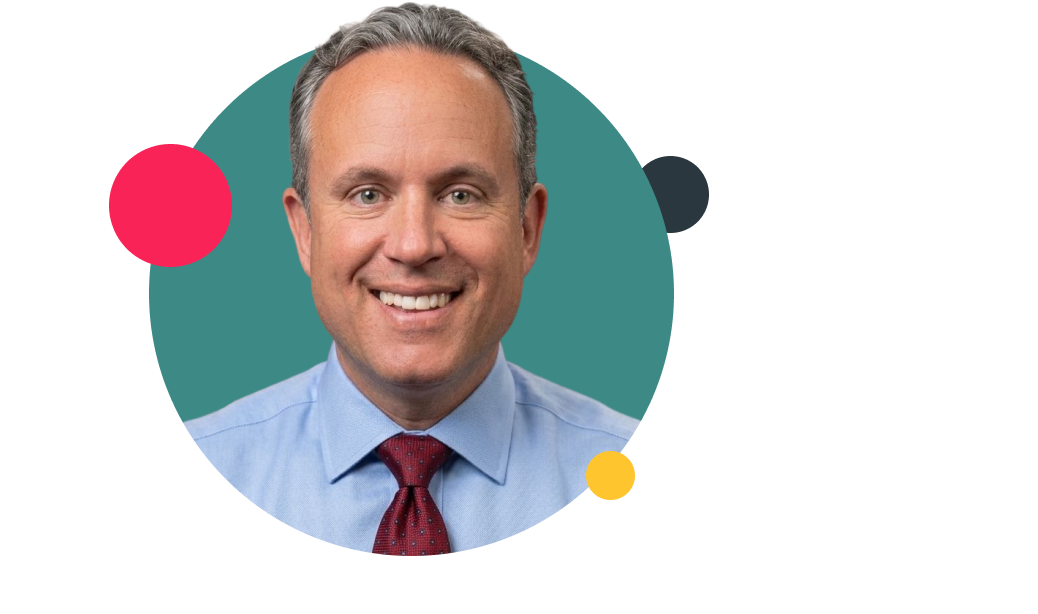
Lon Hecht is a seasoned healthcare executive with over 25 years of experience leading transformative growth. He joined Care2U as Chief Growth Officer in 2023 and became CEO in 2024, reflecting his strategic vision and results-driven leadership. Previously, Lon was SVP of Growth at Optum Home and Community Care, where he helped integrate and scale innovative healthcare models, including naviHealth, Landmark, Prospero, and Optum at Home.
His leadership portfolio includes roles as Chief Commercial Officer at Utilize Health, VP of Payor and Provider Markets at Teladoc, Founder and CEO of QuickSeeMD, and VP of Sales at eviCore. Known for delivering exponential growth and building high-performing teams, Lon is a recognized leader in value-based care. He combines entrepreneurial drive with operational expertise and a strong network across payor and provider markets.
Lon holds a B.S. in Marketing from West Chester University of Pennsylvania and resides with his family on the Jersey Shore.
What you’ll learn about in this episode:
- How Care2U has positioned its brand around a disruptive care model, delivering high acuity care at home, and how that promise is translated into messaging that makes a complex healthcare service understandable to different audiences.
- How Care2U differentiates its brand by owning a distinct positioning around acuity, access, and cost in a way that resonates with both payers and patients.
- The real-world patient impact of receiving hospital-level care at home, combined with a rapid-response model that deploys clinicians within 2-4 hours to deliver high-acuity treatment at home.
- How payer alignment shapes credibility, and why the ability to speak directly to the insurance economics is important when scaling a healthcare brand.
- How Care2U aligns with insurers and differentiates from both hospital at home programs and urgent care providers.
- Why spending more time with patients and less time spent in waiting rooms leads to better outcomes and smarter care decisions.
- The measurable clinical outcomes behind NPS (Net Promoter Score) including hospital escalation rates, strong patient experiences, and effective and safe recovery at home.
- Where this care model is headed next and the broader vision for transforming the future of healthcare delivery, following its success in the New York market.
Additional resources:
Transcript
Josh Dougherty:
Welcome to A Brave New Podcast. This is a show about branding and marketing in the healthcare space. But more than that, it's an exploration of what it takes to create brands that will be remembered and how marketing can be a catalyst for those brands' success. I'm Josh Dougherty, your host. Let's dive in.
Welcome back to another episode of A Brave New Podcast. I’m excited to have you along this week as we explore the world of high-acuity care at home. I’ll be speaking with Lon Hecht, who is the CEO of Care2U. They’re doing innovative work in New York to really provide care to people in-home that may typically happen in an emergency department, and they also provide hospital-level care directly in the home.
So, this is a really, I think, interesting conversation and his organization is pioneering and working on an interesting innovative model to make sure that maybe we reduce the utilization of emergency departments, which are typically people’s go-to when care exceeds what can be provided at an urgent care or in a primary care.
So we’re going to talk about all things about their model—how they provide care, what level of care they provide, how it’s paid for, how they’re differentiating what they’re doing from other maybe at-home care that can be provided.
So, without further ado, I’d love to bring Lon into the conversation.
Well hey Lon, thanks for coming on, welcome to the show.
Lon Hecht:
Thank you so much for having me, I appreciate it. Really excited about this.
Josh Dougherty:
Yeah. Awesome. Well, I know we have a lot to talk about with Care2U, but I want to first maybe have you introduce yourself and share a little bit about your story and your career path with our audience, so they can get to know you a little bit.
Lon Hecht:
Sure, sounds great. My name's Lon Hecht, I'm the CEO of a company called Care2U. Just to spell it out, it's C-a-r-e, the number 2, the letter U. And we're in a space called high acuity care—bringing high-acuity care, think ER-level care and hospital-level care, into the home. We do that very rapidly.
A little bit about me: I'm an industry veteran in healthcare. Been in the industry for over 30 years now, which is embarrassing to say, it's been that long. And typically I've been on the growth side, but I've been with some pretty interesting companies. I spent years with a company called NaviHealth in post acute care. We were acquired by Optum. I spent several years there as the SVP of growth in their home and community division.
I was an executive at a company called Utilize Health. I was heavily involved with Teladoc and others, so I've got a really interesting background that way. And what I think is really interesting is I've touched all different areas of the market—I've been more on the health plan side, I've been more on the provider and hospital side, and I also understand things from a member's perspective. So I kind of have that really cool view where I can get a sense of what's going on for everyone.
Josh Dougherty:
Yeah, I think as we go through the conversation, you'll see a little bit of that too, as how you're kind of building your strategy for Care2U, right?
Lon Hecht:
Yep.
Josh Dougherty:
Obviously, that influences it.
Well, awesome. Thanks for making the intro. I think as we dive in, we're gonna spend all sorts of time exploring Care2U—the challenges you're working through, your model, all those sorts of things. But I would love for you to kind of start out the conversation by sharing with me: what is the fundamental problem you're trying to solve? And maybe, why is that problem important to tackle right now?
Lon Hecht:
So I think it's two different problems I'm trying to solve. One of them is access to care—really, particularly, access to high-acuity care where people need it. And I think on the other side, I'm also trying to solve a cost problem that is so rampant in our industry.
So when you think about anything more than a primary care visit or a specialist visit, everybody just assumes it needs to be done in a hospital, and I think that's a faulty assumption. Once you go to a hospital, things get really expensive, and you're surrounded by a lot of illness, and you can pick up other infections, things of that nature.
So what I'm really trying to solve is: how can we provide this higher acuity care at the home so people can be in their home, with their loved ones, in a comfortable surrounding, with their pets, things like that, where they feel comfortable healing quickly and rapidly—but also at a cost point that makes sense for the system and for the patient themselves. I'm trying to solve a couple of different things. Access is a really big one for me.
Josh Dougherty:
Yeah. I think access is something that's top of mind for everyone working in healthcare today, right? Because across the board—even if you look at primary care—you look across the healthcare environment, there is an acute shortage of providers and all those sorts of things, which is making it hard for people to get the care they need when they need it.
Lon Hecht:
It absolutely is, and it's forcing folks into higher levels of care than they should be.
Josh Dougherty:
Yeah.
Lon Hecht:
Right? So we're trying to help with that as well.
Josh Dougherty:
Yeah. Great. Well, as we were prepping for this and talking through it, we said there have been approaches to try to make hospital at home work in the past, but they maybe haven't worked as well as they could have. So I wonder if you could share with our audience: what are other ways that people have tried to solve this problem before? And we'll get into talking about your solution, your approach, but maybe—what are some of the attempts, and why did they maybe not work out as well as they'd hoped?
Lon Hecht:
Certainly. So I think there are two different kinds of approaches I would address.
One of them is Hospital at Home. There is a government waiver program called Hospital at Home, which is very hospital-focused, and it really spun up during COVID. What it was, was a capacity play—hospital beds were full, they needed to find a way to treat more people. So the government, or CMS, made a waiver that said hospitals can treat patients in the home.
It was a good first attempt, and I appreciate it, but the challenge with it is a patient actually has to go to the hospital, they have to go to the ER, put all that time in the ER around a bunch of sick people, meet clinical criteria, then if an administrator thinks they hit that criteria, rather than fill a bed, they have to want to send them home—and that's not their model. So even though there is something called Hospital at Home, it doesn't get used that much. It just hasn't taken off the way that it should.
And the other thing is it's really specific for one health insurer, and that's Medicare—fee-for-service Medicare. That's it.
Josh Dougherty:
Yeah, yeah.
Lon Hecht:
So it really isn't broad-based and accessible to everyone. That's one thing. I think it was a really good start, but I think the model needs to evolve. On the other side, we talk about doing ED-type level care in the home. There are folks that are lower acuity than us that have been trying for a while, and they're doing things that are urgent care level at home.
And I think that is a really good thing for certain things, but the challenge is—because their level of acuity and the capabilities and the training they have are not as elevated as ours are—you have way too many people that get treated and then get escalated to the ER. So then the question is: it helps some people, but it becomes duplicative in costs for others.
And if you're a health insurer and you think that you're gonna pay somebody to go do urgent care at home and they're still gonna send 30-40% of the patients to the ER—is that really helping the cost equation at all? It's not.
Josh Dougherty:
Yeah, yeah.
Lon Hecht:
Right? It's just not at all. So we've really flipped this model. We work with all payers, all health insurers—and I'll say payer, but that really means health insurer.
What we'll do is deploy into the home within two to four hours: a nurse practitioner, PA (physician assistant), or a paramedic. They work up the patient and bring an ER physician or hospitalist on telehealth at the same time, and they work the patient up. If the patient can be treated in one visit, perfect—we avoid an ED visit. If they need more ongoing care, we can just admit them right in the home to that hospital-level care at home, so they never have to step foot on the hospital campus.
It's a big game changer, right? It really shifts everything back to the home. And the really cool thing is we're able to do this at a cost—if you look at Medicare, it's about a third of the cost of what it would cost to go to the hospital. If you're looking at your typical commercial insurer, which is what you and I probably have—it's like a sixth of the cost. So it really helps the system, and it helps patients quite a bit, because most patients only spend a specialist copay with us, rather than an ER copay or a hospital copay, so it tends to work out really well for them as well.
Josh Dougherty:
Yeah, and it's just driving that value equation up. I think the nice—the serendipity here—is that a lot of times people see cost savings as ... patients view cost savings as, like, oh, it's just the payer trying to drive down the amount they're spending on me. But here you have kind of that unique balance between value and outcomes for a patient, as well as the cost equation being driven down.
Lon Hecht:
Absolutely. A key metric we measure is NPS—and for your listeners, a lot of them know what that is, some may not—but it's Net Promoter Score. It's basically how much do your customers like you? And it goes from, like, a negative 100 to 100, and if you're in healthcare and you're over 30, you're really doing something right.
We're over an 85, right? So we're crushing it in this area. Patients love us. So then when health plans agree to reimburse us, they're getting a lift from a customer satisfaction standpoint, which is really important to them as well.
People think that their health plans want to minimize care, but they really want you to be happy too. It is important to them, believe it or not. You may not believe it, but it is important to them.
Josh Dougherty:
Yeah. Yeah.
So, I guess you've talked a little bit about what's innovative, right? You can deploy with a paramedic, nurse practitioner, physician assistant into a house within a couple hours. How did you kind of come up with this innovative approach? Like, what was the origin of saying, huh, we should try this out and make it happen.
Lon Hecht:
Well, the origin—and I won't name names—but it goes back to an IPA in New York, which is a big grouping of doctors that had a challenge, and that was managing the ER and hospital costs. And then they had an innovative health plan that had a similar problem, so the two of them came together with their organization and really kind of put together what was this concept.
And it's really evolved over the last three and a half plus years, and we've been able to put it together in a way that is really patient-focused first and gives them what they need. And by doing what's right for the patient, it's also gonna work out for everyone else in the value equation. So it really started based on a need that a health insurer had and an IPA—which is, once again, a big grouping of physicians that typically take on risk. We kind of worked together and put that model together, and it's really been going gangbusters since.
Josh Dougherty:
Yeah. Yeah. Can you talk—so like you said, you do this initial triage, you do the evaluation of patients, and then you can admit them right into ED-level care at home. What does that practically mean? Like, what's the level of care that you're truly able to provide at home?
Lon Hecht:
Right. So keep in mind, when we do the ED avoidance visit, that's your emergency room level care. And I just want to be clear: Care2U is not for everything. If you're having a heart attack, if you're having a stroke, if you're having a traumatic head injury on blood thinners—go to the hospital. That's what a hospital's for, right?
But there are so many things that can be done in the home, and I'll give you some examples. If you have congestive heart failure and you're having an exacerbation, or COPD exacerbation, or cellulitis, or a complicated UTI, or pneumonia, or a very complicated infection, or you're homebound—those are things we can really treat. Dehydration—all these things that clog up the hospital and people stay there multiple days for.
We can take care of these in the home. We send in the appropriate level of practitioner, and then we bring in all kinds of capabilities. So not only do we do point-of-care testing, but we can do stat labs. We can turn around really complicated labs in typically four to six hours, which is amazing. We can bring imaging into the home, we bring in oxygen concentrators, we can do minor surgical procedures, infusions, all that kind of stuff.
So when we say ED-level care at home, that is like the ED visit. But then we would admit them to our service, which is true hospital-level care at home—so that's like a hospitalization. The one differentiator is we are not a hospital. We're more of a medical group that does really high acuity things.
Josh Dougherty:
Yeah, yeah. Okay, that makes a lot of sense.
And then, can you talk about the impact—the real-world impact? Obviously, you need to protect privacy, I don't want to make you dive too deep into it, but I'd love if you could share generally: what does this mean for patients, or what has this meant for patients? Some stories there.
Lon Hecht:
So, hey, check out our Google reviews. There are a lot of great stories out there. The feedback has been amazing. I believe it's been life-changing for a lot of folks, right? Especially as you get older in life. Now, we treat patients typically from 18 and up, but we tend to see more patients that are 65, 70, and older, just by nature of the fact that they have more needs.
We're keeping people where they're comfortable, and we're able to deploy so rapidly. A lot of these people are homebound, you know—they're in and out of the hospital the last couple of years of their life, multiple times a year. It is a life changer for them, and even just as importantly, for the caregiver that's taking care of them.
We're in the New York market right now—very openly, we're raising some capital to go expand into different geographies, which is great, and I'm excited about that. But in the New York market, it can take you an hour to go a block. That's why being in the home in two to four hours is pretty impressive, right?
I think the big thing is that patients can get that immediate attention when they need it. And what I think is a really big game changer too for patients is: you go to the ER, you're probably spending four, six, eight hours there, you're probably with a clinician for five minutes, maybe. In our model, we're in the home in two to four hours, you're with that PA or paramedic for probably 70-75 minutes, and then you're gonna spend a good 15 minutes with a doctor on the phone—and then we're doing all this follow-up and care coordination, and we're keeping your doctor looped in the whole time.
When you go to the ER, it's a black hole for the doctor. They don't really know what's going on—your primary care, your specialty provider. We're keeping everybody looped in, so it's just way better care coordination, and I believe it drives considerably greater outcomes in that sense.
I just ... the feedback I get is amazing. I get emails all the time. Nothing makes me happier than when I get an email about one of our clinicians or even the folks in intake or dispatch, the jobs that they're doing. We take a lot of pride in that. We read everything that comes in.
Josh Dougherty:
Yeah, I love that. I think—personally, I've done a lot of work in that direct primary care or advanced primary care realm, which is obviously a different level of care. But also that emphasis of it: when you can get a provider in with someone for a longer period of time, they're able to better diagnose what's going on and get to—kind of remove all the natural turns and paths or rabbit holes that happen when someone's seeking the right type of care—and get them to the right type of care quickly.
Lon Hecht:
Exactly, exactly. And it's cool because we're eyes and ears in the home. When you go to the ER or hospital, you don't have that, right? You don't understand what people's social determinants of health are. You don't even know what medications they're on. We can literally walk in the bathroom—if they want to take us in there and say, here are my medications—we can look at those and do a med rec right then and there. And understand what they're on. So I just feel like it gives you a much better vantage point to be able to deliver great care.
Josh Dougherty:
Awesome. Well, you talked about Net Promoter Score and NPS, what patients are thinking about it—but another thing that we always have to think about is: what are the quantifiable outcomes from a health perspective? How is this actually ... do you have measurable, quantifiable outcomes to show how this is helping impact health recovery on that side of things?
Lon Hecht:
Yeah, we monitor a lot of metrics, and obviously it's very important that we share those with our partners. Things that I think are critical to monitor are things like escalation rates—how often we need to escalate folks to the hospital. Because to be clear, sometimes we need to. Our goal is to try and keep that sub-10%. I shouldn't say it's a goal, but that's typically where we fall in—closer to about 10% escalation rate, which is fantastic, because we're seeing such high acuity needs.
Also, length of stay on our service, right? We want to be really cognizant of how long somebody is on our service. We don't want to keep people on longer than they need to be. And the other thing is we want to make sure that we get them to the appropriate level of care as soon as we can, because I want to be good stewards of not only the health plan and the insurer's dollars, but also the patient's dollars. If I can get them to a level of care that's going to save them money, and it's appropriate, I'm going to try and do that for them.
We also have a whole quality program where we're monitoring any kind of quality issues, things of that nature. I can't get into too much depth on that, but we really do keep our eyes on it. It's critically important to us.
And then NPS is, I think, a really good thing—because you know how the world works. If you do something good, it's expected. If you do something bad, people are very apt to jump into those surveys very, very quickly. So to keep an NPS above 85 with that kind of world—if people have issues, they're gonna come out and they're gonna talk about it.
Josh Dougherty:
Yeah. I mean, it's excellent in the healthcare space to be up at that level, so when you said that, I was like, oh, yeah, you're doing something really well.
Lon Hecht:
Yeah, I keep wondering, how are we gonna maintain that? But literally every quarter we continue to maintain it, which is awesome.
Josh Dougherty:
Yeah, and I joke about—I mean, you mentioned Google reviews, and I was like, yep, that matters too, because someone's gonna make a decision off that, like it or not, right? Today, that's how people make a decision.
Lon Hecht:
Yeah. Well, it's funny—I think we have, like, a couple of Google reviews that are not flattering, and then you look at them and they're not for us. It was somebody who left a review for the wrong person. And it's like, you go on there and comment for it, but you know—maybe they pull it down, maybe they don't. But clearly the ones I see are not reviews for our service, so it's interesting.
Josh Dougherty:
Absolutely, yeah. I mean, can't control that, unfortunately.
Lon Hecht:
Can't control that, yeah.
Josh Dougherty:
Um, awesome. So I'm glad to hear about outcomes and how you're measuring. I think as we're talking, I'm thinking about older loved ones that would have really benefited from this service—where they get stuck in the hospital for weeks after because that was just the path they had. So, excited to hear about this.
The thing that's essential in all this—and I think you've alluded to it, because you had a payer involved in the initial birthing of your company—is that healthcare innovation is all about alignment of incentives with existing financial models, right? Can you go a little bit deeper into how the model aligns with insurers and other payers who are funding care, and how you're making sure that it works really smoothly in that way?
Lon Hecht:
Yeah, certainly. So I think the things that they think about are: one—how are patients going to find out about this? And what's really interesting about us—and this is different here than anywhere else I've ever been—is we've built great relationships with big provider organizations. Usually, when you do have a relationship with a health plan, the vendor expects them to try and pull your contract through for you. That's not the way it works with us. We've got the relationships, so we can help pull that through for them.
The other thing is we're able to kind of speak their language. What they want to do—people think it's all about denying care and everything like that—it's about site of care optimization. It's about patients going where they should go for the care that they need when they should need it, and I think we line up perfectly with that for so many different things.
And when we get calls up front, we triage on the phone before we go out there. If somebody calls us with something that's low acuity, we're gonna say: let's try and get you into your primary care doctor. Let's try and get you into a network urgent care. Oh, your payer is Aetna, or United, or whatever that may be—okay, there's an in-network urgent care two blocks from you. Let's get you over there. We don't need to see every ... And we do that proactively—we make no money on that—but we're trying to be good stewards of their dollar and the patient's dollar and everything like that.
So I think it's about seeing the right kind of patients. It's site of care optimization. It's making sure that when we do have a patient that needs to get home health, or get something else, or get into a palliative care program, or whatever that is—that we're getting them to the right resources that are in-network with that health plan. So it's about trying to help them maintain their ecosystem appropriately, and I think we do a really good job at that.
And where I do see things going—they have a lot of needs: star ratings and HEDIS measures and different things like that, they need to do med reconciliations, all of that. We can do more of those things over time with them.
And we're very confident in our model, so I see us getting to a point where we're taking some risk with these organizations. The challenge is, when you're a new vendor, if you start talking about risk on day one, you will not have a contract, and you'll be talking about risk on month 36. So it starts fee-for-service, then you do more of a transition there, but we're really confident in what we can deliver.
Josh Dougherty:
Yeah, I mean, I think that's the natural progression with any new innovative model—you've got to prove it first, right? And then you get to ... because it's not just trust with patients, it's trust with all the partners in the ecosystem, essentially, to make sure it works.
Lon Hecht:
Right. Exactly. Exactly.
Josh Dougherty:
So, let's talk a little bit about brand, right? Because you are coming in and you are building a brand that is kind of working adjacent to many other things. I'd love to have you share—maybe from both the payer perspective and the patient perspective—how are you differentiating yourself from a branding perspective to make sure people know the difference quickly, to get you the right type of patients and the right type of partnerships?
Lon Hecht:
Sure thing. So if you look at Hospital at Home, the models that are available are all hospital-aligned. CMS waiver programs where a patient has to go through the ER and do that. Very easy to differentiate there. One—that is only for one health insurer, and that is fee-for-service Medicare. We're working with everyone, right? So it's very simple in the fact that this brings health plans to the table. They understand the differentiation.
Two—that Hospital at Home model doesn't really save anyone a lot of money. We are about a third of the cost, and once again, for commercial, we're about a sixth of the cost. So payers can really understand this very, very quickly, that there is a huge saving there for them, right? They can partner with us, and we can keep people from ending up in that very expensive ecosystem.
Now, keep in mind, we do a lot of work with hospitals to prevent readmissions and everything like that. But in general, once a hospital gets a hold of a patient, there's a whole cascade of costs that tend to go off. So I think payers would prefer, in a lot of situations, that patients don't necessarily end up there. Especially—once again, I talked about site of care optimization—do they really need to be there in the first place?
For the patient, I think it's pretty simple. Most likely your health plan is participating with us, and you can use us. And you never have to go to the hospital, you never have to go to the ER. Pretty easy—resonates very easily for them.
When it comes to the mobile urgent care vendors that are out there, I think the big thing is just our reputation in terms of being able to handle things that are higher acuity, and having the ability to do that hospital-level care at home for an episode—where the mobile urgent care vendors can't do that. They're one-and-done visits, they try to do that ED avoidance, but they tend to be lower acuity. They escalate 30-40% to the ER. We don't do that.
So I think for a patient, it's very simple—there's a much higher likelihood they're going to be able to stay in their home with us. And very openly, it's going to be pretty affordable for them to do that.
And I think another thing that really differentiates is, as far as I'm aware, we may be the only ones that have any insurance rates with payers in New York for this kind of stuff. So patients are going to pay a specialist copay with us. When you go to the ER, you pay an ER copay. If you get admitted to the hospital, it's game over—it gets really expensive. So for most of our patients, they're probably paying a $30, $35 copay for us to come out to the home.
Josh Dougherty:
Yeah. And that—so if we dig into that brand awareness a little bit more, right? Like, someone's in a point of crisis and they're used to going to the ED—they're used to going and saying, like, I gotta go because this is what I expect. How are you making sure the word gets out, beyond maybe payers saying, like, here's a benefit that you have as part of your health plan? What are the other ways that you're making sure a patient knows that they can access your care?
Lon Hecht:
Yeah, so I don't want to share too much of our secret sauce publicly here, if you don't mind, but I'll share a little bit—because I do think we have some things that are very, very different that others aren't even thinking of doing, so I may not jump into some of those.
But one thing we're talking about with some of our health plan partners is a copay differential for people on their card—and that'll probably be next year. Where you have your typical PCP copay, specialist, urgent care, Care2U, ER—right? So they can differentiate levels of care right there. I have a few that are thinking about rolling that out for next year.
I also work very closely with a lot of the primary care groups and a lot of the specialty groups. They know us. And a lot of the payers even introduce us in there if we don't have the relationship. So a lot of their providers know, and their providers know who their frequent flyers are—the ones that are polychronic and the ones that are always in the ER and always in the hospital. So it's about how do we do a joint effort on educating those members? We have a whole plan to be able to do that, and we can do it pretty effectively. We've been very effective on that.
Now, if you look at the self-insured side—so now I'm talking more on the commercial side, like an ASO or self-insured kind of business—there's a lot you can do through HR to make the employees aware of a service like this. And it's incredibly beneficial for them, it's incredibly beneficial for their employer, because once again, that's the commercial plan, and that's where it's about a sixth of the cost. So that's a winner for everyone all around. So it's how can we use these different touchpoints to educate people?
Other things: health plans have care managers. We're educating all the care managers, we're really embedded with them. A lot of doctors are starting to put us in their phone trees after hours. It's like: hi, you've reached so-and-so—if this is a medical emergency, call 911 or go to the ER. If this meets these criteria, give our partner Care2U a call, they can be in the home in two to four hours. Something along those lines. So a lot of things you can do, and I'm just hitting on the very surface of what we can do with that.
Josh Dougherty:
Yeah. Yeah, but really a multifaceted approach to being exposed everywhere.
Lon Hecht:
It's a multifaceted approach, yep.
Josh Dougherty:
And I think it highlights that importance. You talked about all the physician group relationships you have—you have to have those, right, to get to the right patients.
Lon Hecht:
It matters, yeah. Really does.
Josh Dougherty:
Well, you're currently in New York, as you talked about, but I'd love to hear a little bit about your growth plans. What does the future look like for you in the next 12 months? I know you have some ambitious goals.
Lon Hecht:
Yeah, I'd like to see us in the next 12 to maybe 18 months move into about three additional markets. I think New Jersey and Connecticut are very, very likely—and I'm not saying that those count for two of the three markets. But I have my eyes on a couple of other markets that are more spread out geographically.
So, you know, if your listeners are like, wow, this makes sense to me—go to our website and send a note in. It will get to me. Let me know if there's somebody that wants to partner or something like that. Always love to hear about that.
We're well financed with a private equity firm who I absolutely adore. But what we're doing is we're gonna go raise some actual venture capital now to be able to diversify that investor base a bit, and use that capital to deploy into some additional markets. We've really built out the model, and it's doing really well in New York.
And I think that's probably one of the more difficult markets from a regulatory standpoint—just getting around is very difficult. If we can do it there, I feel like ... the whole, 'if you can make it here, you can make it anywhere'—I feel like we can do that. So the plan is to jump into maybe three markets.
Josh Dougherty:
I love that, and I do think that's pretty true. New York is its own beast, right, that you've got to figure out how to work in.
Lon Hecht:
It's a beast.
Josh Dougherty:
Yeah, that's great. And then if we look forward—I'd love to hear, kind of, if you look forward over that next 18 months: we'd have the view of where you want the model piloting in new markets, and I think it's incredible if you can see how to replicate it across the country. But what do you really want to be known for? If there was a thing that people said about you as you were growing and building notoriety in other places—what's the story that you want people to tell about you?
Lon Hecht:
Well, it's less about me—I think it's more about us. And it's that we were trailblazers, right? We took something that was kind of interesting—and let me tell you, the market is littered with companies that have tried this, mobile urgent care and hospital at home, and haven't been that effective.
I want us to be the trailblazers that have changed this model in a way that aligns with what is important to the patient and the people that are paying for care, and we can go out there and really change the way healthcare is delivered. Once again, hospitals are vitally important. But I don't know where in the world it became that anything more important than a primary care visit needs to go to the hospital. That's just not the way it is.
So I want us to have some kind of significant impact on the cost of care—that matters to me a lot—and access to care is critically important. These wait times across the country are just outrageous, right? So I think there's a lot we can do here.
I really want this company to grow. This is much more about us changing something. I mean, look—I'm 53. I think when I was 30, 35, it was more about me being a trailblazer. Right now, it's more about: how can we really make a mark on a market and do something pretty important and special.
Josh Dougherty:
Yeah, I love that. I'm excited to watch Care2U as you evolve and move forward over the coming year. I'd love—if you could share, as we close out the conversation—how other people can follow along. What's the best way for them to keep up to date with what you're doing, what Care2U is doing, and kind of the expansion as you grow.
Lon Hecht:
Yeah, I would say social media is a great way to do it. LinkedIn, Instagram, Facebook—Care2U, once again, C-a-r-e, number 2, letter U. Go to our website, Care2U.com. If you're interested in partnering or learning more, shoot something in that way.
My name is, once again, Lon Hecht. You can always reach out to me on LinkedIn.
And one thing I do want to mention for listeners is: look, we're in one major market right now. I want people to have access to this care. There are models out there—and I'm not going to say they're at the acuity level that we are—but there are models and things that you can do. You probably have loved ones and yourself that are going to need this kind of care.
Go to Google and search 'mobile urgent care' and see what's available in your county. Know where that is before you make your next move and go to the ER for something that probably doesn't need the ER. Learn about that—I think that's a really good start for folks.
And once again, I want Care2U to be successful, but we do not need to be the only people out there doing this. People need to jump into this market and change healthcare, so I'm all for it.
Josh Dougherty:
Yeah. Love that. Well, thanks so much, Lon, for coming on, for sharing your vision, and thank you for being committed to building change across the whole way that care is delivered and trying to pioneer a new way to do that.
Lon Hecht:
Josh, thank you so much for having me on. It's been great, I appreciate it.

Similar Articles
OCT 11, 2021

The Beginner’s Guide to Generating Inbound Leads
Marketing doesn’t have to be painfully intrusive, like getting yet another telemarketing call right when you sit down to dinner with your family.
OCT 11, 2021
The Beginner’s Guide to Generating Inbound Leads
Marketing doesn’t have to be painfully intrusive, like getting yet another telemarketing call right when you sit down to dinner with your family.