 info@abravenew.com
 (206) 746-5024
 2400 NW 80th St, #540, Seattle, WA 98117


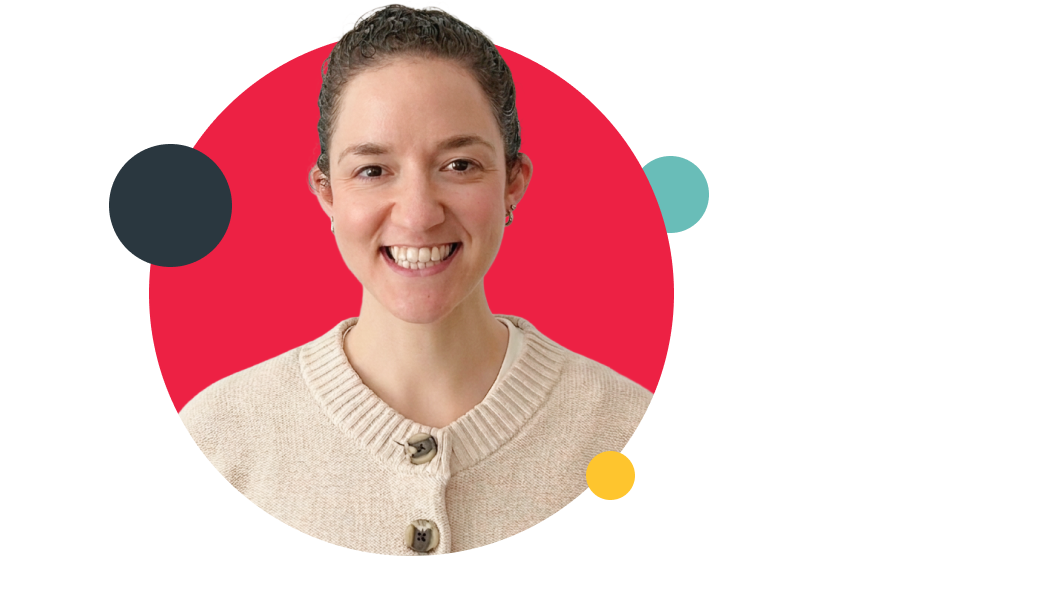
Jacqueline Parisi is the Head of Marketing at Elektra Health and brings over a decade of experience in brand strategy and growth marketing. She kicked off her career as the first U.S. copywriter at HelloFresh before transitioning into the digital health space. She has consulted for Seed to Series C digital health startups like Ophelia, Tend, Local Infusion, and Proper (incubated by Redesign Health). Jacqueline is an alumna of Boston College and NYU. She lives in Brooklyn, New York.
What you’ll learn about in this episode:
- How Elektra Health is redefining women’s healthcare through a virtual, evidence-based model that combines clinical care, coaching, and community support.
- Jacqueline’s definition of branding and why it’s not just what you say, but what customers experience and believe after interacting with your brand.
- Jacqueline’s three pillars of a great brand including, consistency across every touchpoint, distinctiveness you can recognize without a logo, and the ability to deliver on your promise every time.
- Why a bold, positive brand is essential in breaking stigmas, especially in a space like menopause that has been historically overlooked or misrepresented.
- Why growth and brand-building should never be treated as separate efforts, and how strong branding improves performance marketing efficiency.
- How to think about measuring brand impact, from cost of acquisition (CAC and branded search to qualitative signals like perception in AI tools and customer feedback.
- Real-world ways AI is being used today to gain deeper research, social listening, and uncovering customer insights.
- The emerging trends shaping the future of marketing beyond AI, and why staying close to your customer will always be your biggest advantage.
- How to balance being critically rigorous and evidence-based while still sounding human, conversational, and actionable in your messaging.
- What Elektra Health wants to be known for in the next year, including approachability, unbiased care, and a commitment to science-backed outcomes.
Additional resources:
Transcript
Josh Dougherty:
Welcome to A Brave New Podcast. This is a show about branding and marketing in the healthcare space, but more than that, it's an exploration of what it takes to create brands that will be remembered, and how marketing can be a catalyst for those brands' success. I'm Josh Dougherty, your host. Let's dive in.
On today's show, I'll be speaking with Jacqueline Parisi. Jacqueline is the head of marketing at Elektra Health, which is a women's health clinic that is on a mission to smash the menopause taboo, and they're doing this through an innovative virtual care model that combines together both clinical care and coaching.
And our conversation is going to span a lot of things. Jacqueline will speak about how her background as a copywriter has taught her to use content, and tone, and voice, and all these things to build an effective brand. We're going to talk about how to balance growth and brand building. And, ultimately, we're going to talk about how to build a brand that's super engaging around a topic that needs to both be scientific and anti-biased and evidence-based, but also conversational, and that's in an area that I think has, typically, not gotten the attention or the importance that it is due.
And so, without further ado, I want to bring in Jacqueline to start the conversation.
Hi, Jacqueline. Thanks for coming on the show.
Jacqueline Parisi:
Hi, Josh. Thanks for having me.
Josh Dougherty:
Awesome. Well, I am super excited for this conversation today. But as we get started, I'd love to give you a chance to share with our audience a little bit about your story. Could you just tell them about maybe your career path and where it's taken you so far?
Jacqueline Parisi:
Yeah. Absolutely. So, I had a bit of a circuitous path into healthcare. After some time abroad post-college, I actually started my career in the CPG space at HelloFresh. And while that company's more of a household name now, at the time, it was not. I remember folks being like, "Is it Hello ... What? Where are you working? Is it Fresh Direct?"
I joined as their first U.S. copywriter during a really interesting time in the company's growth trajectory. It was this critical inflection point where they had been so focused on growth for so long, and came to this point where it was clear that HelloFresh compared to the competitors ... There was subtle nuance differences between our product and others, but, ultimately, everyone was delivering pre-measured ingredients, and recipes in a box to your doorstep. And that's when it became clear that they needed to build a brand.
And so, I joined as the copywriter alongside graphic designers, and creative strategists, and our creative director, and really working on all channels from editing recipes to writing blog content to coming up with marketing campaigns to working on photo shoots for campaigns. Like, you name it.
But everything had to be measurable, because they were so data-driven. So, it really trained me to think as a creative, but with an eye for data, and an analytical point of view. So, what does it mean for something that's a brand campaign to work? How can you say, "This is working because X, Y, Z. This is not working because X, Y, Z"?
And I took that skill that I had acquired at HelloFresh, and I parlayed it into an even earlier stage startup that sat at the intersection of food and travel. It was called Journey. It was trying to disrupt this antiquated travel agency model. I was working there as a content manager, really setting the strategy, thinking through the execution, and then tying it to analysis. So, really across the full spectrum there.
And then COVID hit, and I was working in travel, and that wasn't so great-
Josh Dougherty:
Yeah.
Jacqueline Parisi:
... to be in the travel space and the hospitality space at that time. So, although we were seeing really great momentum, just the writing was on the wall. Right? We knew we weren't going to last forever. And that's when I started doing consulting work. And I think my experience to date gave me a really solid value proposition to present to clients saying, "I can help you build content that works, and I can understand what it means to work."
Content is expensive. Right? You want to make it do something for you. And so, my clients ended up really mostly being in the healthcare space. I was working in the sleep space, infusion, opioid use disorder, and then, obviously, the menopause space, which is what led me to Elektra, and where I lead all things marketing today.
Josh Dougherty:
Yeah. Awesome. I think having that varied experience a lot of times, it is really good to have maybe experience in a specific industry, but getting to look at things, especially, when you're able to span CPG, or some consumer-based marketing, and then bring that experience in to B2B gives you a different lens almost to look through. And, obviously, you do direct-to-consumer work now as well-
Jacqueline Parisi:
Yeah.
Josh Dougherty:
... in the healthcare space.
Jacqueline Parisi:
Yeah. Absolutely.
Josh Dougherty:
Yeah. So, I'd love to have you share a little bit about Elektra Health. You already alluded to, obviously, you're leading all things marketing, but can you share what Elektra Health is all about? What makes the organization tick? What are you trying to accomplish?
Jacqueline Parisi:
Yeah. So, Elektra Health is a women's health clinic. We are focused on women navigating the journey from perimenopause into their post-menopause decades. We provide evidence-based clinical care in a virtual setting as well as wraparound psychosocial support in the form of coaching, education, and community.
Josh Dougherty:
Awesome.
Jacqueline Parisi:
That's really the SparkNotes version there.
Josh Dougherty:
Yeah. The SparkNotes version is good. And I'm thrilled to have you on, because I think this is an area where people aren't talking about it. It's a vital area where there needs to be investment. Right? In care. So, it's great to have you on. It's great. We're going to spend some time talking, specifically, about the work that you're doing as a brand. We'll also talk about how do you drive growth? And how do you measure growth? Which you alluded to, again, of thinking about, "We're building a brand, but we're also building a brand that has to be"-
Jacqueline Parisi:
Right.
Josh Dougherty:
... "grounded in metrics." But before we get into that, I'd just like to hear—as an expert, as someone who has been working in marketing and brand for a while—what is your definition of branding? And what makes a great brand? What makes someone stand out?
Jacqueline Parisi:
Yeah. The million-dollar question.
Josh Dougherty:
Yeah.
Jacqueline Parisi:
So, I think about branding in a twofold way. So, on the one hand, there's this deliberate shaping of how people perceive and experience a company. So, the emotional resonance and the way that a brand makes you feel, its personality, its tone of voice. I sometimes say that it's a way of anthropomorphizing an organization. So, what I mean by that is if this company were a person, how would it act? What would its sense of humor be? What would it say? That's the expression part of branding that you can do your best to shape as a marketer, but then on the other hand, I think there's an element of perception to branding as well. And that's not just intention.
So, what I mean by that is what people believe about you after interacting with you, and that is really shaped by the product experience, customer support, the pricing, the outcomes or results. So, it's the intention and then the perception-
Josh Dougherty:
Yeah.
Jacqueline Parisi:
... is how I think about it.
Josh Dougherty:
I love that mention, because one of the things I always talk with people about in a branding process is what's that highest order emotional benefit that you're going to leave behind? How is someone going to see themselves differently after they interact with the brand? Or how would they describe themselves differently as a result-
Jacqueline Parisi:
Right.
Josh Dougherty:
... of interacting? Which is, obviously, we'd all love to be able to, I don't know, influence that strongly, but it's, ultimately, we can only create all these touchpoints across the entire experience and hope that they land in a specific way.
Jacqueline Parisi:
Yeah. Yeah. Absolutely. And your follow-up question was what makes a great brand?
Josh Dougherty:
Yeah.
Jacqueline Parisi:
And I think echoing what you were just alluding to there is, for me, one of the elements is consistency, and this idea of a consistent tone of voice across customer touchpoints. So, everywhere that someone interacts with your brand—whether it's an email exchange with customer service, whether it's a confirmation SMS, a paid social post—it should feel uniform in tone of voice. And not just language. Also, I nerd-
Josh Dougherty:
Yeah.
Jacqueline Parisi:
... out a little bit. It should feel uniform in grammar. Like, are you using the Oxford comma or are you not? Are you using an ampersand or are you using the word “and”? I'm in the healthcare space. So, sometimes we joke, the word co-pay, "Are you going to hyphenate co-pay"-
Josh Dougherty:
Totally.
Jacqueline Parisi:
... "Or are you not going to hyphenate it?" Right? Those things matter when you're thinking about consistency. And, in addition to that, I think what makes a great brand is also a brand that's ownable. So, there are certain industries where I see a lot of brand copycat culture. One brand does it, and then their competitor does a slight spin on that. And I think we really try at Elektra to think about what makes us unique, and how are we building?
Josh Dougherty:
Yeah.
Jacqueline Parisi:
And if you saw a TikTok post or an email from us but you didn't see our logo, could you look at it and be like, "That's Elektra"?
Josh Dougherty:
Totally.
Jacqueline Parisi:
"That feels like Elektra." So, I think it's really, like, the consistency, the ownability, and then the last thing I'll say about a great brand I think is the follow-through. Right? So, if you have a really strong brand, it will signal a promise and then it will consistently deliver on that promise.
Josh Dougherty:
Yeah. Yeah.
Jacqueline Parisi:
Which is why product and marketing work so closely together.
Josh Dougherty:
Exactly.
Jacqueline Parisi:
Yeah.
Josh Dougherty:
I was thinking about two things you said. One was, "Can someone tell it’s you if there's no logo?" I was actually talking earlier this week, I had a client in the office, and we were talking about pre-made food brands. And my senior designer ... Or you talked about HelloFresh. And he's like, "It was the green one that we were doing." And it's, like, it's even down to that of, "Do you own this color enough in this sector that someone can remember you?"
Jacqueline Parisi:
Totally. Totally.
Josh Dougherty:
That's just an interesting thing to think about. I'd love to hear ... I think those three areas, that consistency, it's the, "Blow my mind already ..." Sorry-
Jacqueline Parisi:
No. Consistency ... What did I say? Ownability. Like, making something ownable, and then follow-through.
Josh Dougherty:
Yeah. Follow-through. So, I was-
Jacqueline Parisi:
Yes.
Josh Dougherty:
... thinking about follow-through. Sorry. And could you share a little bit ... This is going off-script a little bit from our prep, but how are you helping with follow-through with your team. Right? Because the brand is all about marketing, but it's also people interacting with people, and, especially, as a clinic that's doing virtual care, there's a lot of interaction points. So, what are you doing to equip everybody on your team to have that follow-through and have that resonance that's similar-
Jacqueline Parisi:
Yeah.
Josh Dougherty:
... marketing?
Jacqueline Parisi:
That's a great question. And I think it's something that we're constantly working on improving. Right? With limited-
Josh Dougherty:
Yup.
Jacqueline Parisi:
... resources and bandwidth. It's hard, but I am charged with growing our telemedicine clinic by getting bookings. And so, you could, theoretically, be like, "Okay. Once we get the booking, my job is done." Right?
Josh Dougherty:
Yeah.
Jacqueline Parisi:
But it's not really the case. Right? We need to make that booking into a realized visit, and we want to think about the CAC-to-LTV ratio. Like, we want this person to also schedule a follow-up visit-
Josh Dougherty:
Totally.
Jacqueline Parisi:
... and engage with our platform, and book a coach call, and-
Josh Dougherty:
Yeah.
Jacqueline Parisi:
... you to engage with all the different facets of Elektra. And so, I work really closely with the product team to understand what is ... There's the funnel when it comes to top of funnel to getting the booking, and there's, arguably, another funnel when it comes to booking to having the realized visit. And what does that experience look like?
And then once somebody has the visit, what is that post-visit experience looking like? What do those comms look like? How do we funnel somebody into the right email flow to get them to engage with other parts of Elektra? How do we get them to book follow-up visits? What are the comms when it's eight weeks post-initial visit and somebody hasn't booked a follow-up yet?
Josh Dougherty:
Yeah.
Jacqueline Parisi:
I also worked very closely with the clinical team to make sure that they understand different ways to shape the value of, for example, coaching. Right? If somebody has a clinical care visit, they have a great experience, they didn't really get the chance to dive too much into nutrition, the clinician then needs to funnel them to the coach and be able to position that value prop in the right way?
Josh Dougherty:
Yeah.
Jacqueline Parisi:
And so, yes. I'm working quite hard to get the booking, but also working hard to make sure that the post-booking experience feels on brand for us as well.
Josh Dougherty:
Absolutely. Awesome. So, you talked about branding being about that emotional resonance that you're trying to create and, ultimately, a perception. We talk a lot about brand as being a memory that we're leaving with people. Like, what do they think of? What is that idea? So, thinking about all three of those things, what would you say for Elektra Health? What is the thing that you want to be known for? Or if you looked forward a year into the future, what would you want people to say about, "Oh, Elektra Health, they're the women's health clinic that does X"?
Jacqueline Parisi:
Right. There's a few things I would think about. Number one is an element of approachability and accessibility. And what I mean by that is we ... take New York, for example. We have worked really hard to get in-network with as many health insurance plans as possible. So, we are in-network with 100%, nearly 100% of insurance plans, including Medicaid. And working hard to replicate that model in other states. And I think there are a lot of companies that say, "We're trying to serve all women." And we are trying to also walk the walk there, and get in-network for all women regardless of employment or insurance type.
And I think there is just an element of approachability, because of the diverse array of patients that we see. And in terms of the way that we speak, the fact that you call your Elektra clinician by their first name. You don't say Dr. X, you can call the clinician Nora. Our clinicians … when they are in videos on social, they will never be wearing a white lab coat. There's just this element of approachability and accessibility. So, I think that's probably number one.
Also, I would want our brand to be known for unbiased care. And it's something that we lean into a lot in marketing, because we do not monetize products, supplements, or medications. And, in a way, it feels like the world is waking up to menopause and finally talking about it, which is fabulous. We love to see it. But it's also trying to sell it to you. Right?
Josh Dougherty:
Yeah.
Jacqueline Parisi:
At Elektra, I want our clinicians to be known as unbiased advocates. Like, we have no house brands to sell. We have no profit sharing with supplement companies. Our only goal is your clinical outcome.
Josh Dougherty:
Yeah.
Jacqueline Parisi:
And I think we're trying really hard to make that an integral part of our brand, and what people know Elektra for. And then just the final thing I'll say is probably evidence-based care. Right? We only prescribe FDA-approved medications. We rigorously follow the science, and that comes to life in our blog content and the way that we talk, and our approach to topics. And so, yeah. I would say it's the fact that you can trust us, because evidence-based and unbiased and the fact that we feel approachable, and that you don't have to feel intimidated. We take doctors off this pedestal-
Josh Dougherty:
Yeah.
Jacqueline Parisi:
... so to speak.
Josh Dougherty:
I like that a lot. I think the unbiased thing is so important now, because you assume that everyone is selling the product afterwards.
Jacqueline Parisi:
Right. Right.
Josh Dougherty:
Especially, for maybe newer brands. I know you aren't new, new. But-
Jacqueline Parisi:
Yeah.
Josh Dougherty:
... you think about-
Jacqueline Parisi:
We're trying to think creatively about how to make this hit home for people, and an analogy that I always come back to is back in college when you had a professor who would have you buy their book for the class. Right?
Josh Dougherty:
Totally.
Jacqueline Parisi:
It's, like, this weird conflict of interest.
Josh Dougherty:
Yup. Yup.
Jacqueline Parisi:
So, yeah.
Josh Dougherty:
Well, I think part and parcel, you have to differentiate yourself by having a different personality. You talked about how a brand is a lot about bringing a human face to a brand. And I think one of the things that struck me when I first started learning about your brand is there's this refreshing boldness and positivity whenever I come across your stuff. And so, your website, other areas where you're online. And so, can you share about why you, as a brand, believe this is so important in your space, in the menopause care space today?
Jacqueline Parisi:
Yeah. So, when I first joined Elektra five plus years ago, I was collaborating really closely with the co-founders on developing the brand. And we always joke that if you Googled menopause, you would come across a very sad-looking woman who is pensively looking out the window, it was always raining for some reason. It was just this very depressing image.
And, mind you, it was never a woman who was perimenopausal in her forties. It was always someone who was well-post-menopause. Right? Never depicting somebody who was younger. And we wanted to be the opposite of that. I think there's this societal stigma that menopause is the "end." It's the end of youth, it's the end of fertility. And in many ways, we hear from women saying that it feels like, for them, the end of relevance. And we wanted with our brand to reframe this capital C ”Change” into more of an opportunity.
The women that we see, our patients, they are at the height of their careers. They are active. They are traveling. They have ambitions. They're busy. Some of them are in the sandwich generation. They're still caring for kids, and they have aging parents.
Simply put, they have a lot of life to live, and they don't want to just-
Josh Dougherty:
Totally.
Jacqueline Parisi:
... needlessly suffer through 10, 15 years of their life just because their doctor may have told them that this is just the way it is. Right?
Josh Dougherty:
Yeah.
Jacqueline Parisi:
They're advocating for the care that they deserve, and we wanted to match that boldness with our brand. So, that's why we're very positive, we're very colorful, very science-backed, but also approachable and accessible, like I mentioned. So, I think that's why it's important to really fight back against the predominant way that menopause has been depicted in the cultural zeitgeist.
And I think there's also an element of trust required for us, because we're asking people to purchase healthcare off the internet. Right? That's still a relatively-
Josh Dougherty:
Yeah. Totally.
Jacqueline Parisi:
... novel concept. We're not asking them to purchase luggage. Right? We're asking them to purchase healthcare. And so, there's just a degree of trust required there as well.
Josh Dougherty:
Yeah. And you're asking someone to believe something very different about you than what they've heard for years. And like it or not, I think I would, obviously, hope that every woman who is in that life stage has big dreams still. They don't want-
Jacqueline Parisi:
Right.
Josh Dougherty:
... that to be the time down. So, they need to believe that you're going to actually believe that for them as well.
Jacqueline Parisi:
Right.
Josh Dougherty:
Right?
Jacqueline Parisi:
Right. Absolutely.
Josh Dougherty:
You talked about that scientific and approachable ... I think sometimes people feel like they're ... When you look at maybe scientific or evidence-backed, it has to be dry. It can't be conversational. It can't be human, which, obviously, that's not true. I think you probably spend a lot of your time thinking about that. I spend a lot of my time thinking about that and challenging people to be like, "You can be human and you can be accurate too." But how do you strike that balance as a brand?
Jacqueline Parisi:
Yeah. So, we will always lead with the science, but we will never drop niche jargon on you. And if there's a term or phrase that is more scientific, we will often afterwards have a parenthetical that says, "AKA" or it will say, "In non-science speak, here's what that means." Right?
So, I think it's about just the way that we speak. Sometimes we literally put in the pronunciation of a word. Right? Not assuming that someone understands how to pronounce this medication. Right?
Josh Dougherty:
Yeah.
Jacqueline Parisi:
Like I mentioned, we're trying to break down these old walls that put doctors on pedestals. We refer to our doctors by their first name. They're not wearing white lab coats. When we have our bios of our doctors, we talk about their clinical credibility and their clinical philosophy, but we also talk about their hobbies and what they like to do in their free time. Right? We're trying to humanize our clinicians as real people. Right?
Josh Dougherty:
Yeah.
Jacqueline Parisi:
And I think there's an element of we just treat women like adults. We're not falling prey to pandering language that perpetuates outdated stereotypes, but we also don't shy away from tough conversations and topics. And we keep it, kind of, cheeky. I think that also plays a big role. Like, nobody wants all doom and gloom. This transition, this life stage is hard enough as it is. So, where appropriate we always remember to nurture this sense of humor.
And I will say, the last thing that's coming to mind here is that we are very specific where possible. So, the world does not need more vague health content that's like, "You should be strength training during your midlife years." It's like, "Here's a great YouTube video to start. Do two three-minute strength training sessions a week, and here's how, and here's how to get started." Right?
I think we're trying to be very actionable in our recommendations, which helps as well. So, that was a few things there, but I hope that answered your question.
Josh Dougherty:
Yeah. No. It did answer my question. I think the specificity is super helpful to be like, "We're going to be helpful by being specific," and that's what people want: to cut through all the noise that they have—to something that actually is going to be valuable to them. So, that's really helpful.
Jacqueline Parisi:
Right. Right.
Josh Dougherty:
I want to shift and talk a little bit about the process of building a brand, doing great growth marketing, but I would like to first ... one last question about your brand. Obviously, we've talked about how you present, how you talk about yourself, how you do those things, but I'd love to give you a chance to share a little bit about what's unique about your model beyond maybe the unique thing of, "We're selling healthcare online," which is still-
Jacqueline Parisi:
Yeah.
Josh Dougherty:
... new and, "We're doing it all virtual," which is, kind of, new. Now it's maybe half a decade old that people are doing that. But what are maybe other revolutionary pieces of your model that are helping you see success and to meet the needs of the women that you're providing care to?
Jacqueline Parisi:
Yeah. Well, I mentioned earlier this idea of not selling any products, supplements, or medications. So, that's one element of our model as well as only prescribing FDA-approved medications, which is increasingly important in a world where there's a lot of compounding and there's a lot of non-FDA-approved treatments that are being promoted on maybe social media where the excitement outpaces evidence. So, we really stick to what's FDA-approved.
And our wide insurance coverage, I would say, is another element that is different about our model, but, in addition to those things, I will highlight our clinician and coach model. So, all patients get paired with the clinician who is, whether it's a medical doctor, or an advanced nurse, and this is your typical telehealth visit where they can order their labs as necessary, prescribe whether it's hormonal, non-hormonal medications. But as I'm sure you know, Josh, as just someone who interacts with healthcare, there's not enough time during a visit, an insurance-covered visit, to really sometimes go over all the things that you need to discuss.
And the menopause transition is not the kind of thing where you maybe get a prescription and it's a panacea and you're great. This is a multi-year, 10, 15 plus year transition of your life. And there are a lot of elements that go into it. And so, that's why we really believe in the coaching model and our coaches are not clinicians, but they come from clinical backgrounds.
We have former post-partum doulas, we have former registered nurses, health coaches, who are there to help you prepare for your doctors' visits, know what questions to ask, help you with symptom-specific education, vetted product recommendations, nutrition, supplement, exercise recommendations, emotional support. It really runs the gamut.
And so, I think this clinical coaching model is quite ownable for us, and is a big differentiator. And then the last thing I'll say is that we strategize with patients to alleviate their symptoms of menopause. Right? Their in-the-moment pain points, like the hot flashes, the joint pain, the insomnia, but also, we think a little bit bigger. Our chief medical officer comes from a primary care background. So, we also think about chronic disease prevention and ensuring that health span and longevity are as optimal as possible.
Menopause really is this broader umbrella term to talk about midlife women's health-
Josh Dougherty:
Totally.
Jacqueline Parisi:
... and if you don't get the care that you need during this time, it impacts the way that you live beyond your perimenopause years. And not to be morbid here, Josh, but it also can impact the way that you die. Right?
Josh Dougherty:
Totally.
Jacqueline Parisi:
And so, making sure that somebody's health span is as optimal as possible. So, we think a little bit bigger-
Josh Dougherty:
Yeah.
Jacqueline Parisi:
... than just that in-the-moment hot flash.
Josh Dougherty:
I love that, and it's a beautiful thing to hear about the recombining of people as whole people. And so, thinking of healthcare as this point thing without all of the other things you just described is, in my opinion, a little bit pointless. Right? Because-
Jacqueline Parisi:
Yeah.
Josh Dougherty:
... we are much more complex than the medications we're taking to solve one symptom.
Jacqueline Parisi:
Absolutely. Yeah.
Josh Dougherty:
Well, let's switch over and talk a little bit about process. One of the things as we had in our first conversation, again, that I was struck by is you came up in a copywriting background, I did as well. I think it deeply influenced how I approach brand building, because I was thinking deeply about the words, and how do I influence people with the messages that I'm creating?
But I'm interested for you to share a little bit more in-depth, you talked about this a little at the beginning, but how did that copywriting background ... How has it shaped your approach to building a brand now?
Jacqueline Parisi:
Yeah. In so many ways. For me, it all starts with understanding who you're talking to and getting back to who the marketing persona, the target customer is? So, I dive deep into the demographics and the psychographics. How old is she? Where does she live? What life stage is she at? What does she read? Where does she shop? How does she spend her free time? Like, this informs, for me, how you speak to them, what references they understand, what humor resonates with them, how tech-savvy are they, really everything.
And I think people often have a misconception that I'm marketing to "old women" and I'm like, "These women are 45." Right? They're older millennials with varying degrees of health literacy, sure, but still millennials.
And so, I just try and stay really close to the customer. And I think that's something that came from my copywriting background, because that just informs how we speak to them. And I think as we've talked about when most people think about copywriting, they just think maybe about leads emails or website copy, but it's really every customer touchpoint.
Josh Dougherty:
Yup. Yeah. I think looking across the customer touchpoint is unique, and when we started talking about brand in initial conversations, you were like, "I think you have to do both. You need to drive growth, and you need to do brand at the same time." And I think that's a little bit unique. Obviously, there are people who maybe index more on the branding side and they'll say, "I really love the branding side, but I don't love the growth side," or, "I really love growth and branding is something we have to do," or brand building, I should say.
And so, I would love to hear some more about that combo, and why you think leaning into both of them equally is important.
Jacqueline Parisi:
Yeah. I think growth is inextricable without brand. At the beginning of this year, I sat down to write out what I understood to be Elektra's two to three brand narratives that we really want to double down on in 2026. And I did that because I think it's really important before I go to my CEO and say, "I want to test local radio in Q2 and, say, podcast in Q4." I want to take a step back to solidify the narratives that everything we do should be laddering up to.
So, it was an exercise in, like I mentioned, ensuring that Elektra shows up in a consistent way. And just to give you a really concrete example of how that can come to life, if a perspective patient has Medicaid, and they live in New York, the choice between Elektra and our competitors is clear, because we're really the only ones-
Josh Dougherty:
Totally.
Jacqueline Parisi:
... that accept Medicaid. But if somebody has an insurance plan that maybe we accept and some of our competitors accept, why should they pick Elektra? Like, the Facebook ad reached them. Sure. That was successful. But the trust and the resonance from our brand is what's going to cause them to choose us.
Josh Dougherty:
Totally. Yeah. 100%. And I think this leads to the next interesting question, because the Facebook ad also is really easy to look at and say, "Did this work or did this not? Are we getting the right reach? Are we getting the right frequency? Are we getting the right conversions off of it?" But the brand work is a little bit harder to measure and say, "Is it effective?" So, do you have any wisdom to share about how you effectively measured to see if the brand is resonating with people? What are ways you've ... We all have little tricks, if we've been doing this work, but what are ways that you use to prove that the less growth-oriented work that you're doing is effective?
Jacqueline Parisi:
Yeah. So, I think in the absence of a sophisticated, multitouch attribution or media mixed modeling or-
Josh Dougherty:
Totally.
Jacqueline Parisi:
... all those things that we will have one day-
Josh Dougherty:
Yes.
Jacqueline Parisi:
... but we don't have today, I think brand shows up in the way that people act over time, which I think about in a few ways. So, number one, I do think it impacts CAC, and a good brand makes your growth and direct response work more efficient. So, we keep a really close eye on CAC and CAC-to-LTV ratio.
Also, I look at branded search, how often people are searching Elektra Health or keywords that include Elektra Health. We do also have the post-booking attribution question, which is imperfect, because it's self-reported, but you can see where people-
Josh Dougherty:
It's a data point.
Jacqueline Parisi:
Yeah. Exactly. And then this is a newer one, I'll occasionally just ask ChatGPT, Claude, Gemini, "What is Elektra Health? How does Elektra Health compare to its competitors? What is the public perception of Elektra Health?" And just see how we're showing up in LLMs also.
Josh Dougherty:
Totally. Totally.
Jacqueline Parisi:
Yeah.
Josh Dougherty:
That's such an interesting ... It's interesting to do that directly, and then to have people who are not in your company ask that question too and see how it shows up. I find this fascinating. But that's a good transition into the last question before we wrap up. I wanted to ask you about AI, and everyone I think has a perception that AI is coming and it can replace all of the marketing efforts, because if generative AI can do design, it can do analytics, it can do writing, it can do all these things. I don't think that's necessarily true whenever I talk to anyone on the ground, but I would love to hear the unique ways that you're leveraging it today to make you and your team's work smarter, faster, all of those things.
Jacqueline Parisi:
Yeah. So, one of the ways I've been using AI is as a social listening tool, so to speak. So, specifically, with Reddit, I will ask ChatGPT, Claude, whoever, to scrape Reddit for insert brand name topic, pain point, competitor, and that has saved me a lot of time, and given me really interesting insights from real people-
Josh Dougherty:
Yeah.
Jacqueline Parisi:
... to inform creative. It does a really good job scraping Reddit. I’ve also been using it for deeper research as we think about potentially trying to reengage employers, for example. Like, right now we mostly sell into health and hospital systems, but if we're thinking about maybe trying to reach employers, I can say, "Okay. We want New York-based employers that have more than 1,000 employees. We want them to be large enough to matter. We want them to offer Aetna or United Healthcare to their employees. We want them to be less likely than big tech to already have menopause-specific point solutions. And we want them to be regionally concentrated or New York-centric. So, 50-state coverage is less critical, because we don't have 50-state coverage yet."
Like, I can give them all those parameters.
Josh Dougherty:
Yeah. Yeah.
Jacqueline Parisi:
They do a really good job of helping me do deep research. So, we don't use AI right now to write copy. I do think it does an interesting job at informing maybe SEO strategy of scraping SERPs, understanding competitor keywords-
Josh Dougherty:
Sure.
Jacqueline Parisi:
... but, yeah. I would say right now that's how we're tinkering with it.
Josh Dougherty:
Yeah. I think, good for you for not diving into the AI slop copywriting world. I'm very opinionated about that too. It's just I think all the things that you mentioned can make us a lot smarter at building our copy, but it still isn't able to build something that's inspired from a copy perspective.
Jacqueline Parisi:
No.
Josh Dougherty:
And I'm not sure if it ever will, because sometimes inspiration from a good copywriter, this is probably me being old-school and doing this for a living, is when I'm looking out my window into the sun, and something pops into my head, and it's completely unrelated to-
Jacqueline Parisi:
Oh my God. Absolutely.
Josh Dougherty:
... what I've been thinking about. You know?
Jacqueline Parisi:
Absolutely. Yeah.
Josh Dougherty:
So, great. Well, thank you so much for coming on and sharing. I'd love to, as we close out, hear from you: how can people connect with you, follow up with you, follow along with what Elektra Health is doing? What's the best way to do that?
Jacqueline Parisi:
Yeah. So, you can go to Elektra Health.com. That's Elektra with a K. And find us on social as well at Elektra Health everywhere, Instagram, TikTok, all the things. And then you can find me on LinkedIn, Jaqueline Parisi on LinkedIn. It should pop up. And, yeah. I think that's everything.
Josh Dougherty:
Awesome. Perfect. Well, thanks so much, Jacqueline, for your time, and your wisdom, and for bringing a really rich perspective to the conversation today.
Jacqueline Parisi:
Yeah. Thanks so much, Josh. It was a pleasure to be here.
Josh Dougherty:
Thanks for listening to this episode of A Brave New Podcast. Go to A Brave New.com for more resources and advice on all things brand. If you enjoyed this episode, show us some love by subscribing, rating, and reviewing A Brave New Podcast wherever you listen to your podcasts.
A Brave New Podcast is created by A Brave New, a branding agency in Seattle, Washington, that crafts bold and memorable healthcare brands. Our producer is Rob Gregerson.

Similar Articles
OCT 11, 2021
The Beginner’s Guide to Generating Inbound Leads
Marketing doesn’t have to be painfully intrusive, like getting yet another telemarketing call right when you sit down to dinner with your family.
OCT 11, 2021
The Beginner’s Guide to Generating Inbound Leads
Marketing doesn’t have to be painfully intrusive, like getting yet another telemarketing call right when you sit down to dinner with your family.