 info@abravenew.com
 (206) 746-5024
 2400 NW 80th St, #540, Seattle, WA 98117


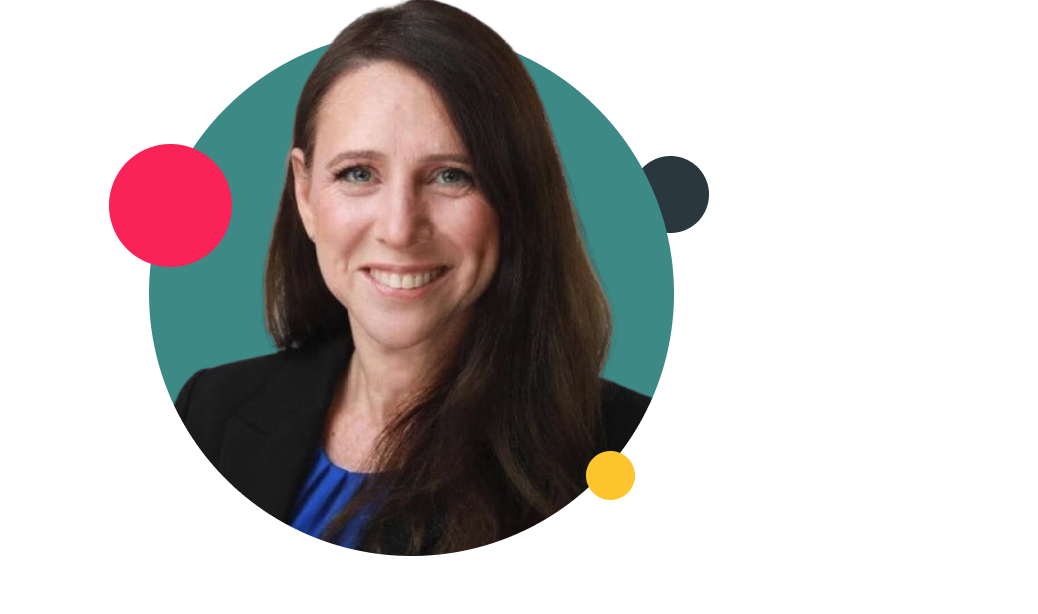
Sharon Dayan is an accomplished, strategic marketing executive with over 15 years of experience driving growth for B2B, early-stage, and global technology and healthcare companies. Dedicated to working towards a "Healthier Tomorrow," Sharon has built a career around using cutting-edge technology to improve patient outcomes and solve complex market needs.
Currently serving as the VP of Marketing at Biobeat, Sharon leads the marketing strategy for the company's ground-breaking, FDA-cleared, cuffless 24-hour blood pressure monitoring platform. By replacing uncomfortable, legacy cuff-based measurements with, a wireless patch that provides day and night data, the platform empowers clinicians to detect hypertension early and manage this condition, transition care to reactive precise management. Prior to this, she was the VP of Marketing at BRIA AI, responsible, Visual Generative AI platform for enterprises, and the Head of Global Marketing at Medix Global, where she managed multi-lingual teams across 12 global offices to advance health equity. Her diverse background also includes pivotal early leadership roles.
A proactive, fast-learning leader, Sharon blends a strong academic foundation-including an MBA in Marketing & Entrepreneurship and a Master of Public Health (M.P.H.) with a proven track record of building brand stories, fostering strategic partnerships, and scaling businesses.
What you’ll learn about in this episode:
- Why branding in medical devices isn't just about visibility, and why it's about building clinical credibility including giving physicians the confidence to rethink long-standing approaches.
- How Biobeat is redefining hypertension management with the first FDA-cleared cuffless 24-hour blood pressure monitoring patch, and why nighttime blood pressure data matters more than people realize.
- Why brand voice and creative strategy are still deeply human strengths, and why the soul of a brand can’t be automated, even as AI continues to evolve.
- Why product-market fit is a powerful marketing tool, and how solving a clear, meaningful problem makes storytelling more impactful.
- Why nearly half of Americans are living with hypertension, and how earlier, more accurate diagnosis could prevent serious downstream health issues and costs.
- How to identify and empower early adopters in a highly regulated industry where change moves slowly, and why those champions are essential for building momentum.
- Sharon's perspective on using AI in regulated marketing: where it’s valuable, where it falls short, and why human oversight remains critical.
Additional resources:
Transcript
Josh Dougherty:
Welcome to A Brave New Podcast. This is a show about branding and marketing in the healthcare space. But more than that, it's an exploration of what it takes to create brands that will be remembered and how marketing can be a catalyst for those brands' success. I'm Josh Dougherty, your host. Let's dive in.
Welcome back to A Brave New Podcast. Today, we're going to go and talk to someone who works in the medical device field. Sharon Dayan is the VP of marketing for Biobeat, and Biobeat really works in the hypertension space. They have a cuffless, 24-hour, blood pressure-monitoring platform, and it's the first of its kind that's FDA cleared. And I'm really excited to share the conversation that I've had with her so that we could kind of delve into a number of things.
In our conversation, we talk about the importance of healthcare prevention, how to build a brand, how to connect with people who are first movers or more willing to innovate, and also about the utility of AI in a more regulated space like medical devices when it comes to marketing.
But I think the thing that makes this conversation really unique is that the area of hypertension and blood pressure monitoring is a place where there hasn't been a lot of innovation for a number of years, and Sharon's company is trying to innovate in that space. And at the end of the day, what their product is about is about prevention and helping people get better health outcomes and live healthier lives. And Sharon brings a little of that perspective because, in addition to her 20 years of marketing experience, she also has a master's in public health, so she can speak a lot from the public health perspective as well. So without further ado, I'm going to bring Sharon into the show.
Josh Dougherty:
Excellent. Well, Sharon, thanks so much for joining the show.
Sharon Dayan:
Hello. It's very nice to be here. Thank you for inviting me to join the show.
Josh Dougherty:
Yeah. Awesome. Well, before we dive in, I know we have a lot to talk about today, but I'd like to give you a chance to share a little bit about your story and your career path and where it's taken you so our audience can get to know you a little bit.
Sharon Dayan:
So I have more than 20 years of experience in marketing, driving growth for technology, B2B, early-stage companies, both in healthcare and other aspects of technology. I also have an MBA and an MPA, master of public health. Currently, I'm VP Marketing at Biobeat, which is the first FDA-cleared, cuffless, 24-hour blood pressure monitoring for hypertension management. So that's mostly about me.
Josh Dougherty:
Yeah. Awesome. Well, can you talk a little bit more about Biobeat and share a little bit about what the focus is now? I know you entered the U.S. market a number of years ago, but what's your primary focus as you're growing that brand?
Sharon Dayan:
So Biobeat is, as I mentioned, an FDA-cleared, ambulatory blood pressure-monitoring patch, a cuffless one, which is opposed to other solutions which are more cuff-based. The company has been around for 10 years from 2016. In the last two years, we pivoted into only focusing on the blood pressure and hypertension management solution and working ... Our solution is available around the world, but the focus is right now in the U.S.
So we are looking to replace the legacy cuff-based measurement with a patch that empowers, actually, clinicians and makes the test, the ambulatory blood pressure monitoring accessible and easier for patients to do. So, really moving from proactive to prevention and looking at more precise diagnosis with 24 hours of data, especially during the night, for physicians to receive more data so they can actually diagnose more accurately.
Josh Dougherty:
Awesome. Thanks for walking us through that. I'm interested and excited always to hear about new opportunities that I think move forward in the medical device space. So I'd love to ... As we get our conversation started, we'll spend a little bit more time talking about how you're expanding and the work that you're doing, but I'd love to talk first about branding, because we all know that having strong brand positioning is key to be able to grow in a new market, to build a company. So I'd love to start by asking, how do you define branding? How do you think about it?
Sharon Dayan:
Yeah. So first of all, I'm an advocate for branding. For me, it's the best part of my work. I think that especially in medical devices, but it's around any brand that is focusing on entering a new market or getting awareness with a specific audience, I think branding is making sure the audience understands who you are. It contains your message, but also making sure ... Or the credibility part.
So it gives the audience the understanding that who you are, but also the reassurance that this is a brand that I would like to approach, I would like to learn more, and I would eventually like to purchase their product. So I think that's the path. The path is to, first of all, make the audience understand that there's something different, but then also give them the reassurance that this is something they would like to look into. And obviously, eventually, we are all about making sure that the company grows, but I believe that without a solid foundation of the brand, it's very hard to maintain growth throughout the years.
And I think that for Biobeat, the opportunity is very big because the problem is very big. But I think that people need to understand not only the problem, but also the fact that this solution is clinically validated. It enables a better way to diagnose and to manage hypertension. And with building it with the right partners and making sure that working with hospitals or with physicians that are actually working with it and seeing results within their patients ... So this is really part of the branding.
Josh Dougherty:
Yeah.
Sharon Dayan:
I think the brand story, and it really doesn't matter if it's Biobeat or ... A company that I worked with before, it was BRIA. It is an AI company, which with the understanding that you need to stand out with a message, and the message was responsible AI, which is so important for so many people. And when you understand what's the right hook and you build the branding around that, I think that's where you can shine. Sorry, was a bit of a long answer.
Josh Dougherty:
No, it's totally okay. And I agree with that 100% because, with the right hook and with the right differentiated idea, it seems then you can really make your marketing tactics successful. And without that, you can have success for a time, but ultimately there has to be a compelling story, right? For someone to find at-
Sharon Dayan:
Yeah.
Josh Dougherty:
... the end of the process.
Sharon Dayan:
I definitely agree with you. I think when you look across many different industries, you can identify the brands that have survived so many years back and the product is obviously a very big part of the story, but if you need to think about, I don't know, Coca-Cola or you need to think about Nike or ... So they make you feel something, a certain feeling. It's not rational. And I think that when you create a compelling brand story, even for medical devices ... And if you walk around different ... If you go through different websites of medical devices, at the end of the day, there is a message that makes you react to it. And it doesn't really matter if we are talking about B2B or B2C at the end of the day.
We sell to physicians, or we approach physicians. They are people at the end of the day. They have the same ... They're looking for a solution which is on their professional side. But at the end of the day, it's people. So you need to understand where do they have challenges, and how can we actually solve this challenge and help them become better physicians or to help their patients for better outcomes, et cetera.
I think that when you excel at branding, then I think the rest is important, so growth and tactics and everything. But when the story is strong, it helps. It helps a lot to maintain flow of growth.
Josh Dougherty:
Yeah. Excellent. I agree. I'd love to go back to something you just spoke about briefly. You talked about how, ultimately, even in the medical device space, you're selling to people. You need to have an evocative story, understand what are the real challenges that a physician is facing, et cetera. But I'd love to have you dig a little bit more into what are those essential ingredients for a strong brand in the medical device space. So you have to build connection with your audience, but what are some of those things that are required to make sure your brand is successful in this space?
Sharon Dayan:
Yeah. So I think, ultimately, every physician wants to have better outcomes for their patients. That's what's leading them within their work. And they also want to show a change, so whether it's clinical research or ... They want to show that things are improving and changing.
And so I think, if I'm looking at it from my point of view, it's enabling them to have tools to actually do that, so to show progress in their research or in their research work or in their clinical work. If they can diagnose better, if they can eliminate situations where they can take a patient off medication or adjust the medication so that at the end of the day it's enabling a better outcome.
So I think that the story, the compelling story of how can we actually perform or help you perform better specifically with Biobeat, it's data. So I think that's really the story. So, ultimately, I think moving from proactive treatment or from treating diseases to preventing them, that's the place where this industry is moving. And I think understanding that, that we ... I'll tell you in terms of hypertension.
So almost 50% of the U.S. population, they have hypertension. That's a lot of patients. But if they are diagnosed early enough, then it's preventing other diseases. So just talking about that. How are we changing the paradigm? How are we redefining the way that hypertension is managed? Even looking at the blood pressure devices, they haven't changed for so many years. And we are bringing a tool or a way to monitor blood pressure for 24 hours without interrupting the day-to-day of the patient. So we're not only talking about the outcome but also about the workflow and also about patient accessibility, and the fact that, even the patients, they don't need to take two days off of work to take the device and bring back the device.
So I think, at the end of the day, it's really understanding the whole ... I would say, what are the challenges? And how can we solve each challenge for the patient, for the physician, for the administrative team? And then throughout that, build the story.
Josh Dougherty:
100%. I think it's always interesting to think about this. You mentioned that the tools or the devices for measuring blood pressure haven't changed in a long time. It's been the standard same devices used over and over again. So what sort of barriers of trust do you have to overcome when you're selling your solution that is clearly very different, clearly new? And how do you build trust when something has been the same for so long?
Sharon Dayan:
Yeah. So it's always a challenge, and it's not only in medical devices. When you introduce a new solution or a new product, it's always in comparison to something else. Either you are replacing something or you are adding, but it's always in comparison.
I think that within medical devices, clinical industry as a whole, I think it's even more ... You need to prove more, obviously, because it's not a snack. This is actually something that you are diagnosing or treating or monitoring a human being. With us, we are just really, really heavy on clinical trials, making sure that this is the evidence. We are evidence-based. But we are constantly looking to maintain this stream of clinical research.
Josh Dougherty:
Yeah.
Sharon Dayan:
Because at the end of the day, this is the source of truth for the clinical industry.
Josh Dougherty:
Yeah, absolutely.
Sharon Dayan:
It's not something that we say we ... There is an authority. There is an FDA. And there is CE. There are the clinical trials. So that's one part of the authority. And the second one is obviously we are working with physicians, and that's also ... We are using the industry voice, so to say. And they are also presuming a lot of clinical research. So really, I think the evidence-based, that's where we are really focused on.
Josh Dougherty:
Yeah. It's where you have to be focused on, right?
Sharon Dayan:
Yeah. Yeah, yeah.
Josh Dougherty:
When you're doing something that's medically and scientifically focused.
Sharon Dayan:
Definitely. Yeah.
Josh Dougherty:
I'd love to shift the conversation over to something we talked about as we were preparing for the podcast, which is the area of AI. You alluded to it a little bit earlier and alluded to ... Obviously, in your space, you can't use those automatic AI tools that are maybe publishing things for you, et cetera, because you’ve got to do that sort of review. But I'd be interested to hear about what is your general belief about AI's utility in your area of marketing right now? Where are you seeing success? How have you found it useful?
Sharon Dayan:
Yeah. So first of all, we use a lot of tools or different tools for different needs, especially because it is a very regulated industry. So we need to be very careful, very minded. We have our management rules and regulations around it and our IT department and everything. So it's less, I would say, different. In the retail industry where nothing is very HIPAA compliant or you can do whatever you like with the ... Obviously, there are things that are confidential, so you don't ... But with us, we are very, very minded to not using tools with data that we cannot share in any way or leak.
So I like to see AI as a tool to help us simplify complicated tasks or tasks that are more manual. I think we are all using it for better communication, maybe sometimes to help us write and analyze and create, even sometimes strategy to analyze or to understand two or three different directions for a concept. It's funny because every other week it's a different tool. So now it's Claude, and then it's Gemini, and this one does this. And so we're also constantly learning on what would be the best way.
We are not using it as an automated content creator because of the fact that everything needs to be reviewed. So we can use the tools to create content. Although, I have an amazing content writer, and she writes everything. But for other more short form content and things like that, obviously we use AI. It's just everything needs to be monitored. And I think it's also, for me, sometimes I use it to get insights to understand with data.
It's a process, and I think that moving along will create more automated things with agents. I see it as a new ... It's a new frontier in terms of the amount of things that you can do. You just need to choose what you want to do. I don't know. I don't think it will replace everyone. I think a lot, especially in the medical device, in the medical industry as a whole, I think that content writing will not be only done by AI.
I'm a bit more conservative on the way that it will replace everyone, all the designers. I think there are a lot of good things that AI can do. My prior position was in an AI company, so I think it's amazing for marketing. I think that there are a lot of industries that can use AI and ... Yeah.
Josh Dougherty:
Yeah.
Sharon Dayan:
I think it's just a work in progress.
Josh Dougherty:
Totally. I have the same perspective as you on the content and design side. Obviously, that's a lot of what we do in my firm, is human work in those areas, but I just think we haven't seen the quality. Despite the fact that it can do those things, there are those seeds of inspiration, the new ideas, that it cannot replicate as of yet. Now, talk to me in a year, two years, maybe that'll change.
But one more question before we wrap up. And that's really around this idea of AI. I'd love to hear your thoughts on how do we better align the vision and promise of AI with the realities of how it works in real life. I think you talk to a lot of senior execs, and they're like, "We'll just use AI to fix that or to do that." But in reality, those who are down executing a marketing plan, building a business, running ... or working on growth in the company, it's a little bit more complicated than that. So how do we better align the vision and promise that AI has with the day-to-day realities?
Sharon Dayan:
So it's what I said before. It's just understanding which tasks you can actually use AI for and how can it maybe give you a different point of view. Or for me, sometimes when we write the newsletter, or maybe I want to maybe check if there is a better way to outline something so I can use it. At the end of the day, as I said, I have not given AI the option to decide on its own. So it's still us.
I think in terms of design, there is ... And again, I agree with you that one year from now we might speak differently. I think that the unique voice of a brand needs to be heard. And I want to make sure that we don't all look the same and sound the same. And I think that's really a ... I mean, again, maybe in the future it will not be, but I think now, still, there is an advantage to a human being-
Josh Dougherty:
100%.
Sharon Dayan:
... doing the strategy, the branding, the last piece so we can ... Some of the ideation can be done with AI, some of the storytelling foundations. But I think there's still a place where strategy and creativity and that uniqueness of a brand ... I'm not sure that AI captures all of those.
Josh Dougherty:
Yeah.
Sharon Dayan:
Again, things can change in a year or two, but it's like I always say, things can also ... Some things AI will definitely take over. And some things, they might stay as they are or even not change at all. And it's a back-and-forth thing.
It's very funny, but I see it with earphones. I have kids. So there was one point where all of them had the AirPods, and some of them ... My kids actually just moved back to the earphones with the string ones.
Josh Dougherty:
Yeah, yeah, yeah.
Sharon Dayan:
And it's funny because you wouldn't think that would happen, right?
Josh Dougherty:
Mm-hmm.
Sharon Dayan:
It's like a detour somehow. Or my kids are reading books, like book-books, not Kindle, not in the ... Books.
Josh Dougherty:
Yeah.
Sharon Dayan:
So we can't predict everything. I think there is definitely ... AI is taking over a lot of the tasks, but I would like to believe that the human being still has the creative and the understanding of telling a good story.
Josh Dougherty:
Yeah, absolutely.
Sharon Dayan:
Yeah. Yes.
Josh Dougherty:
That's a great place to wrap up the conversation. As we close out, how can people connect with you and maybe follow along with the work that you're doing?
Sharon Dayan:
So Biobeat, it's bio-beat.com. That's our website. Sharon Dayan, that's my name. They could follow me on LinkedIn. I should share more. I'm not a big sharer, but maybe I should start. And I think for me, just sharing the fact that we can all try to do something for prevention, either in the community. Actually, I also try to do some prevention in my community. So I believe that prevention starts from the age of three. So if you understand how to maintain a healthy lifestyle, this is something that can really come through at an older age. But yeah, thank you very much.
Josh Dougherty:
Yeah.
Sharon Dayan:
Was a good time.
Josh Dougherty:
Yeah. Thanks so much for joining.
Sharon Dayan:
Thank you.
Josh Dougherty:
Thanks for listening to this episode of A Brave New Podcast. Go to abravenew.com for more resources and advice on all things brand. If you enjoyed this episode, show us some love by subscribing, rating, and reviewing A Brave New Podcast wherever you listen to your podcasts. A Brave New Podcast is created by A Brave New, a branding agency in Seattle, Washington, that crafts bold and memorable healthcare brands. Our producer is Rob Gregerson.

Similar Articles
OCT 11, 2021
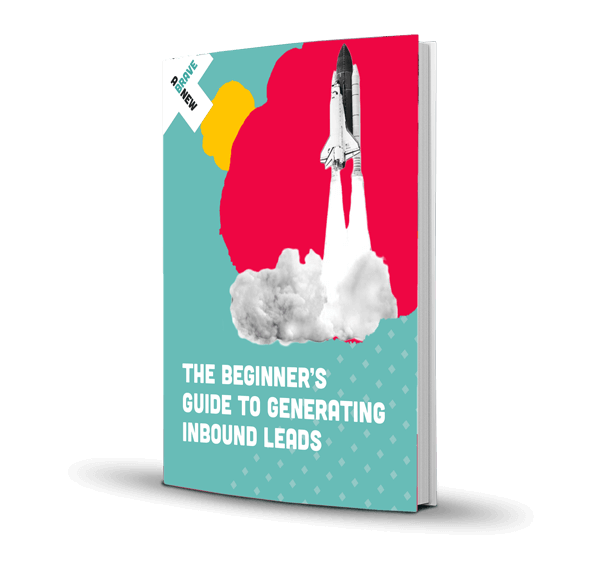
The Beginner’s Guide to Generating Inbound Leads
Marketing doesn’t have to be painfully intrusive, like getting yet another telemarketing call right when you sit down to dinner with your family.
OCT 11, 2021
The Beginner’s Guide to Generating Inbound Leads
Marketing doesn’t have to be painfully intrusive, like getting yet another telemarketing call right when you sit down to dinner with your family.