 info@abravenew.com
 (206) 746-5024
 2400 NW 80th St, #540, Seattle, WA 98117



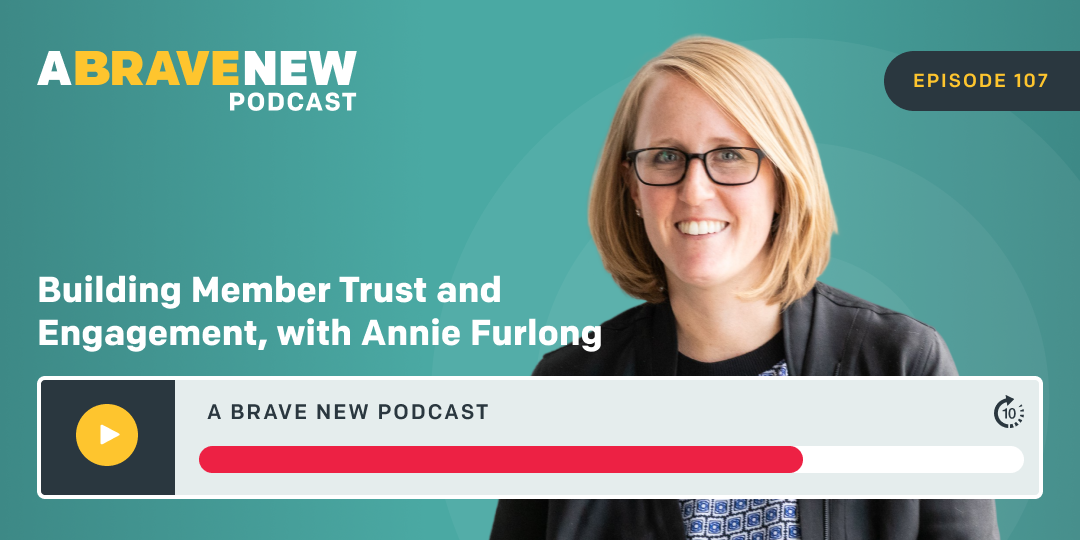
Kristi Annes is a healthcare marketing executive with more than 15 years of experience building brands and driving growth at some of the most influential companies in health IT.
Kristi currently serves as VP of Marketing Strategy at IMO Health, a private equity-backed leader in clinical intelligence and data solutions, where she has spent nearly a decade defining how the company shows up in the market. When IMO Health acquired Melax Tech, she led the marketing integration — unifying teams, technology, and execution to deliver impact from day one.
Her path to that role ran through one of health IT’s most notable transactions: the IBM acquisition of Merge Healthcare. As Director of Performance Marketing at Merge, Kristi was retained post-acquisition to lead segment marketing inside IBM Watson Health, guiding a specialized healthcare brand through the demands of integrating into one of the world’s largest technology organizations.
Earlier in her career, Kristi held marketing leadership roles at the American Hospital Association, where she helped launch AHA SmartMarket, and began her career in brand and creative strategy at Shaker Recruitment Advertising. Kristi holds a Bachelor of Science in Marketing from Illinois State University.
What you’ll learn about in this episode:
- How IMO Health keeps its mission focused on improving patient and clinician experiences while developing AI-ready solutions.
- How Kristi defines branding beyond logos and visuals, and why emotional connection and trust are essential in B2B healthcare.
- Why enterprise healthcare buyers make decisions emotionally, and how brands that deliver clarity, reliability, and human centered messaging stand out in complex markets.
- How collaboration between brand, content, product, and performance marketing teams create cohesive campaigns, leading to stronger business impact.
- How Kristi’s team approaches attribution, pipeline generation, and ROI during the complexities of long healthcare buying cycles.
- How interactive virtual experiences, research-driven surveys, and creative engagement are outperforming webinars and generating meaningful conversations with prospective customers.
- Practical ways AI is helping marketing teams automate reporting, content creation, and operational tasks.
- Why future marketing leaders will oversee both people and AI agents, balancing automation with strategy, ethics, and relationship-building.
Additional resources:
Transcript
Josh Dougherty:
Welcome to A Brave New Podcast. This is a show about branding and marketing in the healthcare space. But more than that, it's an exploration of what it takes to create brands that will be remembered and how marketing can be a catalyst for those brands' success. I'm Josh Dougherty, your host. Let's dive in.
Welcome back to another episode of A Brave New Podcast. Today I have Kristi Annes from IMO Health joining me and we're going to have a wide-ranging conversation. She leads a performance marketing team at IMO Health and kind of sits at the intersection of brand product and performance in her organization. I really appreciate her emphasis of focusing on how do we do marketing work and create a brand and then promote that brand in such a way that creates emotional connections with the people that she's selling to. I think this is essential.
You've heard me talk about it in the past in B2B marketing that sometimes people forget that buyers at hospitals or health techs or many other areas in the B2B space are people, too. They're consumers who want to have a brand connect with them in a real and emotive and emotional way. And so I think the way that Kristi thinks about this is really helpful. She also brings a wealth of experience on how to actually do effective performance marketing in the B2B space, the B2B healthcare space. And so this conversation is going to be an excellent way for you to dig into brand, dig into the overlap between brand and performance, and also what is working for IMO Health from a performance marketing perspective as well. So without further ado, I'd love to bring Kristi into the show.
Hi, Kristi. Welcome to the show. It's so great to have you on.
Kristi Annes:
Hi, Josh. Thanks for having me. Happy to be here.
Josh Dougherty:
Awesome. Well, before we dive into the meat of our conversation, which I'm super excited for, I'd love to have you share a little bit about your story. Can you tell our audience about your career path and where it's taking you?
Kristi Annes:
Yeah, absolutely. So my path has not been a perfectly straight line in marketing. I started in a recruitment advertising agency right out of college. So brand creative, messaging, account management, loved it, was super fun. But in my mid-twenties, I kind of took a detour and was like, "I want to try residential real estate and be a real estate agent." And so I went and did that in doing residential real estate in Chicago, and I enjoyed the sales energy and meeting so many different people but that creative side of my brain just really wasn't getting what it needed. So I moved back into marketing, this time at the American Hospital Association, working on co-marketing initiatives with the AHA's endorsed partners at the time. So this was a for-profit side of the business. And then our president of our division got the green light to start a startup, and I jumped at the chance to be a part of that team.
So we built this platform called AHA Smart Market where it connected hospital decision makers with vendors through elevated product reviews and peer testimonials, really designed to make the healthcare buying process more transparent and efficient. Honestly, it was really ahead of its time. This was a long time ago. I don't want to say how long because that'll age me a little bit, but the investment unfortunately got pulled before it got the chance to really fully come to life. And I think about that platform sometimes and how much healthcare procurement has evolved since then. But so from there, I went to Merge Healthcare leading segment marketing for their imaging and radiology solutions, which Merge eventually got acquired by IBM Watson Health. Very cool, very exciting at the time to then be a part of the IBM organization. Spent a few years at Watson Health and left IBM Watson Health to join IMO Health where I've been the last seven years leading performance marketing strategy.
Josh Dougherty:
Nice. Can you share with our audiences a little bit about IMO Health, what your focus is, and then what the organization is all about?
Kristi Annes:
Yeah, yeah, yeah. So at its core, IMO Health is a clinical data intelligence company. So our foundation is clinician built medical terminology ontology and a knowledge graph. So built over the last 30 years, it takes and transforms fragmented messy clinical documentation in the EHR and transforms it into structured, standardized AI-ready data. So we kind of like to ask people to think about IMO Health as the trusted intelligence layer that sits between the raw EHR data and every downstream use case that depends on that data being more accurate and explainable, whether that's clinical analytics, AI model development, or reimbursement. And then my role in marketing really sits at the intersection of brand and performance.
So we have an incredibly talented marketing team at IMO Health, product marketers, brand and content creators, and then my performance marketing team. And what makes us really effective is that while each person sits on a team that has a specific focus, we don't operate in silos. So the work really overlaps in meaningful ways. Our brand and content team collaborates daily with our product marketers to create content that's timely and relevant and educational to speak to each one of our audiences. And our performance marketing team then puts that content to work in the channels and tactics that drive measurable outcomes.
Josh Dougherty:
Excellent.
Kristi Annes:
So certainly an oversimplification of how the team works, but nonetheless, there's really a shared responsibility for how the IMO Health brand comes to life in the market. And I've seen in some orgs, these functions can stay very walled off from each other. It's like, you just do what you do and then hand it over the wall and I'll go take it and run with it. But what I've seen is that where those walls are broken down and the cross-functional collaboration can really lead to much better results. It just seems like the latter always wins out.
Josh Dougherty:
Yeah. I think that's been my experience, too. Working with so many people across the industry— those that are willing to be brave enough to work together, and to collaborate, and not have as clear of lines can do better work just simply because it is, I think, where the collision of product brand and performance, together, creates better ideas and better, more agile work and efforts that allow you to pivot as you're seeing results in the market.
Kristi Annes:
Absolutely. And this is just shared connection to driving the outcome. It's not just one team or one person's responsibility for the outcome. Everyone plays a role in the ideation or the execution strategy or the measurement of what we're doing when we look at it as, hey, we're all in the same boat together. It gives people a greater connection to driving quality outcomes.
Josh Dougherty:
Absolutely. And the other thing that I was interested in as you're talking about IMO Health is I was just struck by the importance of the work that you're doing because we all know that AI is a very powerful tool that we can use and can be leveraged, but if data isn't ready to be ingested into AI and isn't accurate and clean, the output is messy. So I imagine this is a compelling story that you can tell across the board.
Kristi Annes:
Yeah, right? Like, garbage in, garbage out.
Josh Dougherty:
Yeah. So I know we're going to talk a bit about that intersection and continue the conversation around performance marketing and how that intersects with telling a great brand story. But I like to ask everyone, when they're coming on the show, how they define branding. So if you think about branding, I know this is maybe tangential or you're at that intersection like you said, but what is your definition of branding?
Kristi Annes:
Yeah, so I think about branding in two ways. The first is how you show up to the world. So your visual and verbal identity, the words, the images, the design language, tone of voice, all the things that, over time, people come to associate with your brand or your company. But the second one is one that I personally find more interesting and, honestly, more powerful and that's how you make people feel. So it's the emotions that a brand evokes, that's what differentiates you.
And in B2B where I've spent virtually my entire career, that emotional layer really matters more than people give it credit for. And here's what I mean. So the people making purchase decisions at hospitals and health systems, which is just one of the audiences that our business plays in, they don't stop being consumers when they walk in their office doors. They have the same expectations as they do in their consumer life. So if you think about it, the same person leading a revenue cycle team and wrestling with denied claims, trying to figure out where her organization is losing revenue, is the same person who can pull up her phone and know exactly where her Amazon package is. It's going to get delivered in two hours to my old set.
Josh Dougherty:
It's what I tell my team all the time. It's the same person.
Kristi Annes:
Down to the minute. Yes. And so that expectation of speed and reliability and information, it's still there when she puts on her worker hat. And so she goes back to work and she can't get that same clarity on where millions of dollars are leaking out of her organization. That's a jarring juxtaposition for her. So I think that the brands that can close that gap, that bring clarity and confidence and even a little relief to that experience are the ones that are going to win.
Josh Dougherty:
Yeah. I love that you brought up emotions because I've also worked in B2B almost my entire career, and whenever we're starting a branding project with someone, we do talk about trying to create a memory that has emotional resonance with the people who are buying. And everyone's like, "Emotions?" And I'm like, "Yeah, we want to think about how do they feel when they first interact with you and how do they feel after that interaction? And then how do they look at themselves differently when they become a customer?" And what are the emotional evolutions, I guess, that we're bringing someone through in their interaction? Because I talked about this in a podcast a couple of weeks ago. When I'm buying toothpaste, the brand has to do a little bit of work. If we look at a consumer product like toothpaste, it has to do a tiny bit of work to make me recognize the logo.
But there's so much more weight on ... Like, you were talking to someone who's working in revenue cycle management. The purchase is a much more intense and important purchase for them. There's a lot hanging on their reputation in the company, their career, all these sorts of things. And those are hugely emotional things for people even though we like to come in and say, we are professionals who just are making rational decisions. That's not usually the case.
Kristi Annes:
Right, absolutely. If you're trying to convince somebody to buy a product that costs tens of thousands or even hundreds of thousands of dollars, they want to be pretty confident that you're going to deliver the results that they need to see in order to look good. We want to help our customers look good to their bosses. We want them to succeed and not just for that reason, many other reasons, but it's really important that you make them feel that the product is the right product. It's going to do what we say it's going to do and it's going to make the impact on your organization that you are looking to achieve.
Josh Dougherty:
Yeah, absolutely. So that dovetails into my next question, which was going to be around what do you think the core idea behind IMO Health's brand is? And maybe you can talk a little bit about what emotions you're trying to evoke with your customers or your prospects to get them to trust and to move forward with you.
Kristi Annes:
Yeah. So I think that our brand is really built on confidence, the confidence our customers feel knowing that the data powering their most critical decisions is accurate, is standardized, and clinically trustworthy. We're talking about technology that powers how clinicians treat and care for their patients. That's us. We're patients at the end of the day. So I think that confidence has sort of three pillars for us.
One is our people. We have over 300 employees, including physicians, terminologists, clinical informaticists, and AI scientists, people who bring genuine domain expertise, not just the technical capability.
The second is our terminology. So 30 years of clinician built, continuously validated medical terminology that captures every possible way a patient problem can be described, synonyms, misspellings, acronyms, local vernacular, all mapped to appropriate billing and classification codes. So when we talk about reimbursement, this is really huge for the clinicians and the hospitals to get compensated back the way that they're supposed to for the care that they provide.
And then third is our technology. So the solutions that take all of that foundational knowledge and put it to work to improve clinical documentation, financial performance, and operational efficiency. The sort of brand promise underneath it all is that when you build on IMO Health, you're building on something real powered by smart technology and even smarter people.
Josh Dougherty:
Yeah, this is great. And the fact that you can express it in like, here's the three pillars and here's how it fits together means that you've clearly thought this through, which I love. A lot of people aren't able to express in such a coherent and organized way what the brand promises. So that's awesome.
Kristi Annes:
Yeah. And it's evolved over time, too, as the business has evolved and matured, as just the market has changed, as our clients' needs have changed, not just ... I think it's important to think about not only how we're changing as an organization and where we intend to continue to grow, but also how our clients, our customers, are changing and how they're changing the way they're approaching business. And geez, of course, how AI has changed so much for both us and them. That requires a constant reevaluation of how we're communicating who we are and consideration of those feelings that we want to evoke.
Josh Dougherty:
Of course.
Kristi Annes:
Because around AI, there's a whole lot of-
Josh Dougherty:
There are many feelings.
Kristi Annes:
... Varying emotions. Yeah.
Josh Dougherty:
Yes, which I think led me to ... I think digging in, one of the things that people I think have fears of, whether real or not, is that AI is going to take over and remove the human element from healthcare. I think we don't know what that it's going to look like necessarily yet, but could you speak a little bit to how you maintain the human connection with your brand when you're doing ... I mean, it's a technical product, it's based on clinical data. And I know I've heard you talk about patients a lot already, so maybe that's the way you build that connection. But what are the strategies that you do to make sure people realize this is a technology that's in service of real people, not just technology?
Kristi Annes:
Us. Us. Yeah. Yeah, it's in service of us, right? I think there's ... I kind of thought about this in two ways. The first is this internal connection to it. So how do we make sure that our teams internally are thinking about the human connection to our brand? And healthcare really at its core is a people first business and no matter how advanced the technology gets, our teams are never losing sight of who we're ultimately serving. So the patient is not an abstraction. It's all of us. It's me, it's the people I love and that's consistent across the organization. So it's a coworker's child who needs multiple specialized GI procedures. It's a gal on the team whose mom is searching for a clinical trial because she's exhausted all other treatment options. These aren't hypothetical examples. These are real situations faced by our employees inside our own organization. So we all want healthcare to be better for ourselves and the people that we love.
And I think that mission really makes it personal and urgent for all of us at IMO Health. We've surveyed people when they come to work here like, "Why do you want to work at IMO Health?" And there's always that connection to wanting to make a difference in healthcare because they've had a bad experience or someone they care about has had a bad experience, or they just genuinely see the unlimited opportunity to make it better for our loved ones and our communities.
Josh Dougherty:
Totally. I think that's-
Kristi Annes:
So I think that just helps us ground ourselves in the work that we're doing, that it really matters.
Josh Dougherty:
Yeah, the specificity is so helpful, too, because when you tell those specific stories, like, I can think of individual people in my life who have gone through those same situations and all of a sudden it becomes real.
Kristi Annes:
Absolutely.
Josh Dougherty:
At the end of the day, it is all about people. And I think when we can remember that our industry is at the end of the day about patients, we're all better for it. I know sometimes in health tech it can become an abstraction, but love that you're focused on not doing that. So I'd love to switch the conversation now down into a little bit more about the nuts and bolts of marketing because you're obviously doing good performance marketing. Your team's role is to get the word out about the brand and drive results. I want to talk about what's working, but sometimes I like to ask first about what's challenging for you and your role and in your space to get the word out and do effective performance marketing for your organization?
Kristi Annes:
Yeah. I mean, I think the most challenging part, and I hear this from so many people, is attribution. It's the number one thing. It's tying every dollar that you do back to ROI. How much did you spend and what results did you get from it? So there are countless channels that we can bring the brand to life and there's niche associations, trade events, content partnerships, paid media, the list goes on. The real challenge is being able to tie every dollar back to those measurable outcomes. So, because marketing in a complex B2B environment isn't like e-commerce where you could just draw a clean line from ad click to purchase, our deals are long and they involve multiple stakeholders and influence is distributed across multiple touchpoints. The harder strategic challenge is marketing is often treated like a cost center when it should be recognized as a revenue driver. And so my job isn't just to run campaigns, but it's to demonstrate that our marketing investment is fueling the growth engine of this company.
And that requires building the data infrastructure to tell that story clearly and being persistent enough to keep advocating for it even when attribution is messy because it's not clean all the time. And there can be like, well, marketing got this lead from X, Y, Z show. Oh, but you've been talking to them over here, so it's my lead. No, it's my lead. I drove that revenue. There can often be that battle with sales for who gets credit for it. I kind of am like, who cares who gets credit for it? We're all driving towards the same goal and trying to all row the boat together.
But I think that not giving up on advocating for that measurement, it's hard sometimes to get the resources you need just to get the data connected in a way that allows you to create the attribution that you want, but we have to keep asking for it, keep putting in those Jira tickets or those requests into your sales ops team or whoever it might be because, eventually, the squeaky wheel will get the grease and you'll get the information you need and then you can be like, "Now I have the data. I can make more informed decisions that help us quantify the value that every marketing dollar has."
So I've gone through the process several times and sometimes it's really difficult to just get access to the data or the data connected in a way that you can leverage it. But my advice would just be like, find yourself a marketing operations leader or I see go-to-market engineers doing the same thing. The type of person that really loves finding, connecting, and leveraging all the customer data that you have and also loves AI, that certainly is helpful. Go find one of those people. It really makes all the difference in advancing your attribution work no matter where you're at. If you're just starting a model or you're already well on your way, somebody that can just live it, breathe it, thrive doing that work, it's hugely impactful.
Josh Dougherty:
Totally. And I think at the end of the day, it's the only thing that converts you from being viewed as a cost center, having been around marketers my entire career and doing that work. So I'm interested to dig in this, going a little off script, but thinking about how marketing measures success, I know a lot of people are responsible in the marketing now for pipeline generation. Do you have pipeline generation goals? Is that how you're measuring bottom line ROI?
Kristi Annes:
Yeah. I mean, we are looking at marketing's influence on pipeline for sure. So MQLs matter, but they're not the whole story. And we have multiple kinds of sides to our business and each segment has a different way in which we're approaching it. So on the provider side, this is where we built our business over the last three decades, selling into hospitals and health systems. We have substantial market share, over 90% in this space. And so we have to treat that side of the house very differently because we know all the farms. We're now just farming that business to continue to grow it through cross-sell, upsell opportunities.
90% of all hospitals have a product from IMO Health, and I think it's over 90% now. On the other side, we've got health tech and life sciences. Those are a little bit more nascent businesses. They've started to grow within the last 7 to 10 years. We can approach that very differently from a net new lead generation and a net new client logo that we're bringing into the house. So the way that we approach them from a pipeline and measurement standpoint is different, but generally speaking, it's MQLs, it's how many meetings are we able to get from those MQLs and then how many of those meetings convert into a pipeline and opportunity in your CRM.
Josh Dougherty:
Makes sense. And I know you're doing a lot of different tactics, but there's also tactics that everyone's doing, webinars, events, trade shows, industry events, et cetera. What do you do to differentiate when you're kind of out there doing the similar things to other people, which I don't think you shouldn't be. Obviously, people do them because they work, but what are the ways that you work just to have your teams make sure you stand out when you're participating in those activities that others are also doing?
Kristi Annes:
Yeah, we do all of those activities, too, like you said, and they are really huge pipeline contributors for us. So we do continue to do that. But there are two things that I can think of. So one is on the virtual side. So we've seen some real success with something a little unexpected. So these are hosted virtual experiences. We partner with vendors to run virtual cocktail-making classes, terrarium-building sessions, coffee mornings where you get a coffee kit and you learn about all the coffees and then you taste them and then there might be a little plug about IMO Health and some cool things that we're doing. So we do these for prospects and existing customers and specific market segments and we pivoted to doing these back during COVID when we couldn't get face-to-face with our hospital clients. They're like, "No way, Jose. You're not bringing your germs into our facility. We don't know what's going on." So we had to find ways to be able to get virtual FaceTime with them in those sort of relationship building kind of ways.
They're low cost, they're high impact ways to create that FaceTime, and we always lead with education because the IMO Health brand then shows up alongside thoughtful thought leadership content and fun, and that combination becomes a memorable way that we can stand out against what a lot of our competitors or other vendors that are vying for dollars from our hospital clients are doing. So to the point of emotion, people remember how you make them feel and those are really just nice experiences to get people together, and they enjoy it because they get the little kit of the thing that you're focused on doing mailed to their house in advance. They show up and they're with a bunch of other revenue cycle leaders or other GMs of their practice or what have you. So that's been a really successful vehicle for us for building and expanding our relationships with our customers.
And the other one is one that we started doing in the last year and it kind of surprised us how successful it was, but we were using surveys, but not just surveys. So we found a way to make them, the surveys, pull double duty. So it was generating real genuine market research while also creating a natural low friction path to a meeting request. So we would ask the survey, but the survey questions we genuinely wanted for product development reasons or to understand where our customers were at in their buying journey of X, Y, Z product. But then at the end, the way the questions flowed, it made you think when you got to that last question, "Do you want to have a meeting to talk about your survey results?" They wanted to because the survey made them realize where all of their gaps are.
And when you recognize that you have a pain, then you can't stop thinking about that pain, and so it turned into a wildly successful way for us to get meetings on the books faster. And what are one of the ways that we measure the success of what we're doing? MQLs and meetings, because we need the meeting before we can get to pipeline. In one of our recent campaigns, we had a 25% conversion rate of respondents requesting a meeting at the end of the survey. So for an enterprise sale-
Josh Dougherty:
That's incredible.
Kristi Annes:
... That's a really remarkable conversion rate. Yeah. So like I said, by the time they get to the end of the survey, they're already thinking about their own challenges in the way that we've structured the survey. So it just feels like the logical next step and it's not a cold pitch to take a meeting with my executive. He's going to be in town next week.
Josh Dougherty:
Totally.
Kristi Annes:
It just works.
Josh Dougherty:
I like this. Both those are very good examples. I think of how we've ... There's this moment maybe in 2022 where we were all super saturated from COVID of the endless requests just to meet and do a product demo or even do a webinar. It's like, no, I've done a million webinars. So both of those are interesting ways to cut through the noise of that, not to say that webinars don't work anymore, but I especially like that first tactic because it's so different than what other people are going to approach you with. And it isn't salesy, it's focused on connection. Again, that human interaction.
Kristi Annes:
So before COVID, we had a probably 60% attendance rate on our webinars. And after COVID in the last couple of years, that's dropped to probably 40% attendance rate. So we've seen a significant decline. I think it speaks to what you're saying, just the burnout around it. And you register, it shows up on your calendar and you know it's there, but stuff always comes up and there are going to be people that fall off and are unable to attend. That's just how it is. I'm going to skip a webinar if something more pressing comes up on my calendar. With the virtual events, it's interesting because they get a package mailed to them at whatever address they give us. It could be their office, it could be their home, whatever. And now they have this thing. They got this gift and it's not a water bottle, and it's not a notepad or a pen. It feels like more. And so there's almost a ... Oh, what is the word that I'm looking for? There's almost this-
Josh Dougherty:
It feels like reciprocity. Yeah.
Kristi Annes:
... Obligation. Yes. You almost feel like you have an obligation to attend because I received this thing, so I have to fulfill my end of the bargain now. I said I was going to show up. And our attendance rates are over 75% to those events.
Josh Dougherty:
Yeah. Amazing.
Kristi Annes:
Yeah.
Josh Dougherty:
Well, how is this ... So you alluded to this a little bit. You have providers that you work with, you have health tech, you have life sciences. Do you use these strategies similarly across all of them? I know you're treating them differently because some markets are ... Health tech is never expanding TAM because there's new things that come up, new companies that are coming up every day, but where hospitals are not as established. But how have you tailored these strategies or others to each of those audiences?
Kristi Annes:
Yeah. We do think about who the audience is, what their interests are, where they like to obtain information and where they like to engage with vendors, which is what we are to them. And so we do have to carefully curate what our go-to-market plans are in each of those groups. There's also, in addition to what the customers want and needs are for every persona, there's also, then, the expectation of our sales leaders and the ways that they like to go engage with those markets, which varies. So you have to blend those two things together to then create what our go-to-market plans are, which we typically do focusing only six months at a time because we find that so much changes in the market, on our own product roadmaps, on our own list of priorities, that planning out further than that becomes a fruitless effort. So we focus on first half and second half planning as we look at tailoring those three catering to those three audiences. And then of course there's very different messaging for each one of those as well.
Josh Dougherty:
And I think that's the only responsible way to do it really at this point because we also have so much data that we should be responding in six months ... I mean more frequently than six months, but at least doing a major review every six months to understand what's the data telling us and how do we need to iterate our strategy.
Kristi Annes:
Yeah. It's funny sometimes finance will be like, "Well, how much are you going to spend in Google AdWords in November?" And we're like, "We are not going to tell you that because we don't know exactly what we're going to be focused on at that time and what the requirement is going to be from a budgetary standpoint." So finance sometimes, again, cost center view of marketing rather than revenue generator.
Josh Dougherty:
Awesome. Well, as we get to the end of this conversation, I'd love to ask a couple questions about AI because I feel like we have to talk about that. And I think it's interesting to hear about how people are using and leveraging AI in their own marketing. So I'd be interested to hear about how have you incorporated this into your ... AI into your marketing workflows so far? Are there some areas that you've had breakthroughs with your team?
Kristi Annes:
There are. So on our team, we're really trying to embrace AI fully and not just talk the talk, but really get in there, get our hands dirty. And so AI fluency has become a requirement for us. And I don't mean just using AI as a shortcut. We're really focused on working smarter, leveraging the AI capabilities already baked into our existing tools, integrating new agentic platforms into our stack, and building workflows that eliminate the tedious manual work that doesn't require human creativity or judgment, easy-peasy things.
So one of the AI projects that we've done that I'm proud of are the ones that give my team their time back. So to think, to be creative, to come up with strategies that will advance our team, our work, our pipeline. So we've automated large parts of our monthly marketing operations report. So we send this out on a monthly basis, which used to consume several hours of work across multiple people. Gone. We use AI for copywriting first drafts of emails, which accelerates our whole content production process. We've built several AI agentic workflows that run in the background. Like, one team member uses it to deliver a prioritized daily briefing based on their upcoming deadlines. Another one uses it to scan our event manager's inbox because she has a lot of expenses, receipts from all the event vendors. And then when an expense report is triggered, it pulls all those receipts for her to upload into our expense management platform.
Josh Dougherty:
Which saves hours even though it's such a small thing, right?
Kristi Annes:
Hunting down receipts in your inbox.
Josh Dougherty:
Yeah, yeah.
Kristi Annes:
Like, "Gosh, where is that receipt from this vendor for the shipping of that booth?" It's incredible. They're like, "I can't believe how much time this is saving me." One of my marketing automation managers was just telling me yesterday how, he's like, "I set up this agent to take all of the draft copy for a newsletter that we put out, put it into where it drafts up the entire email, HTML codes it for me. So all I have to do is copy the code and drop it into our marketing automation platform." He's like, "Kristi, hours of my time is saved." I'm like, "This is amazing."
And I don't know, I don't feel like that's super magical or super flashy, but it's using the technology to really open up our capacity to do the cool work that we really enjoy doing. The projects that get back burnered that we know are going to make a difference to helping us use more data to make data back decisions. It's not magic, but it meaningfully changes how the team operates and where they invest their energy.
Josh Dougherty:
And I think what all of your examples speak to is those who I think have been the most successful at adopting are thinking about what are those micro interactions or processes that are time sucks and being as specific enough instead of saying, we're going to deploy this for everything, we're choosing a very specific use case and solving that use case and then moving on to the next one, like the receipt extraction, super specific, but probably eliminates four hours of work a month, or even more.
Kristi Annes:
Yes.
Josh Dougherty:
Yep.
Kristi Annes:
Absolutely. And look, I get it. I think AI and implementing agents and workflows and agents that talk to agents, it sounds daunting. If that's not an area that you're super comfortable in, it can feel like I don't even know where to start and I can absolutely appreciate the feeling that people have about that. But some of these ways, just setting it up to deliver you a scan of your inbox and tell you what decisions you need to make today or what your to-dos are in a prioritized way, those little ways of turning it into your own little personal assistant are going to make a big difference for you. So get comfortable being uncomfortable and just dive in. And it takes some time to tweak it and to get it to know you and the way you want to be communicated to, but gosh, is it worth it.
Josh Dougherty:
Yeah, 100%. So to close out, thinking forward, we've talked about efficiency gains, building out, I think removing whole parts of the production side of marketing with AI. If you look a year into the future and futurecast a bit, how do you think things are going to evolve more? What do you think are maybe some of the next big wins that we're going to see in this area?
Kristi Annes:
I think a year from now, marketing leaders will be managing both people and agents. I think the team structure changes and you'll have human strategists working alongside AI agents that handle the execution and monitoring in real time. I feel like I'm already seeing it, but writing will largely be AI assisted and real-time campaign iteration, the testing and optimization on the fly will become sort of standard practice. I think that the marketers who thrive will be the ones who are really good at judgment, knowing which AI output to trust, which to override, and how to direct agents toward the right outcomes. AI doesn't understand nuance or emotion yet. I don't know if it ever will. It doesn't understand the relationship between your VP of sales and a key channel partner. It doesn't know that a particular phrasing will land really badly with a segment of your audience or that a tone reads confident versus arrogant.
I don't think that it's there yet. And so we need the people in place to gut check it, to understand the emotional texture of the relationship. And that's the human in the loop. And the human in the loop is a huge part of our brand, too. As we talk about AI to our customers, that human becomes more valuable, not less, as AI takes on the execution work.
Josh Dougherty:
Awesome. Well, I think that's a good place to leave it in our conversation. As we close out, I'd love to have you share a little bit how people can stay connected with you. What's a good way to follow along with the work you're doing? You shared so much in this conversation. I'm sure people will be interested in following along.
Kristi Annes:
Yeah, happy to connect with folks. You can find me on LinkedIn, Kristi Annes and yeah, I'd be happy to connect and have a conversation with anyone.
Josh Dougherty:
Awesome. Thanks so much, Kristi, for coming on. I really appreciate the time and the wisdom that you've shared.
Kristi Annes:
All right. Thanks so much for having me, Josh. Have a great day.
Josh Dougherty:
Thanks for listening to this episode of A Brave New Podcast. Go to abravenew.com for more resources and advice on all things brand. If you enjoyed this episode, show us some love by subscribing, rating, and reviewing A Brave New Podcast wherever you listen to your podcasts. A Brave New Podcast is created by A Brave New, a branding agency in Seattle, Washington, that crafts bold and memorable healthcare brands. Our producer is Rob Gregerson.

Similar Articles
OCT 11, 2021
The Beginner’s Guide to Generating Inbound Leads
Marketing doesn’t have to be painfully intrusive, like getting yet another telemarketing call right when you sit down to dinner with your family.
OCT 11, 2021
The Beginner’s Guide to Generating Inbound Leads
Marketing doesn’t have to be painfully intrusive, like getting yet another telemarketing call right when you sit down to dinner with your family.