 info@abravenew.com
 (206) 746-5024
 2400 NW 80th St, #540, Seattle, WA 98117


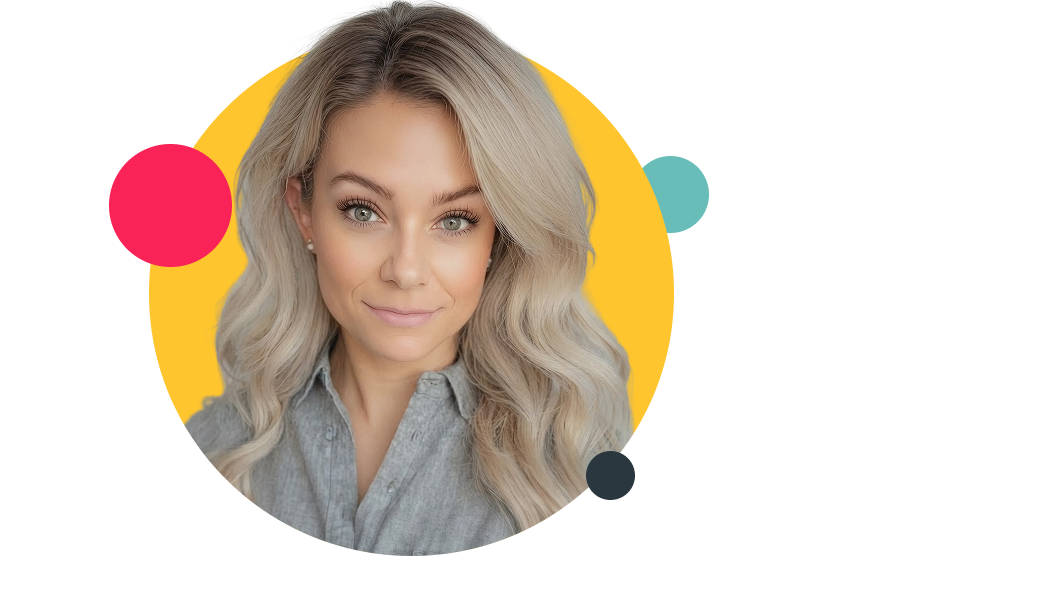
Aeron Povey is Vice President of Marketing at Nasco Healthcare, where she leads global marketing and works across product strategy, commercialization, brand, and business growth.
With a background spanning both marketing and operations, Aeron built her career on the agency side, working across industries and helping organizations solve complex business challenges before joining Nasco Healthcare.
Today, her work is focused on understanding the people Nasco serves and translating those insights into better products, stronger positioning, and meaningful commercial strategies. She is particularly passionate about building real relationships, asking good questions, and creating the kind of trust that gets to what people really think and need.
Outside of work, Aeron can usually be found on a golf course or cheering on her kids from the sidelines.
What you’ll learn about in this episode:
- How Nasco Healthcare is evolving their brand from a product-focused approach to a clearer, more customer-centered brand.
- How Nasco Healthcare is helping prepare healthcare professionals for critical moments through education.
- The importance of research before rebranding and how months of listening to customers, teams, and stakeholders shaped Nasco’s brand transformation.
- What makes a healthcare brand memorable and the critical roles of substance, personality, and credibility in branding.
- How simplicity, personality, and usability can create more value than adding more features and complexity.
- How customer insights shape positioning from product-focused to customer-focused messaging.
- Why a successful brand shift goes beyond marketing to influence products, commercialization, and organizational change.
Additional resources:
- Aeron Povey on LinkedIn
- Nasco Healthcare’s Website
- Josh Dougherty on LinkedIn
- Josh Dougherty’s speaking site
- A Brave New’s Website
Transcript
Josh Dougherty:
Welcome to A Brave New Podcast. This is a show about branding and marketing in the healthcare space. But more than that, it's an exploration of what it takes to create brands that will be remembered and how marketing can be a catalyst for those brands' success. I'm Josh Dougherty, your host. Let's dive in.
One of the conversations that I most enjoy on the podcast is around unpacking how an organization has walked through a transformation. And so today my guest, Aeron Povey, will be joining me from Nasco Healthcare. And we're going to do just that, walk through how she repositioned the story and the brand positioning for her organization—which is an 80-year-old organization with incredible products and a strong history—but needed to tell their story more differently. And if you are considering needing to take a step back, do some research, understand the needs of your audience, and then reposition your story, I think this will be a really rich conversation for you.
And so without further ado, I'd love to dive in and let her share about the insights and the process she went through and the outcomes that she's achieved as a result. And hopefully you'll find it inspiring. Here we go.
Excellent. Well, hi, Aeron, welcome to the show. Thanks for coming on.
Aeron Povey:
Thanks for having me.
Josh Dougherty:
Great. Well, I am very excited to have you share the Nasco Healthcare story, and the work that you've been doing there, over the course of this episode. But before we do that, I'd love for you to have a chance to share a little bit about your story, about your career path, and where it's taking you.
Aeron Povey:
Sure, thank you. So I grew up in the agency world, and so from that perspective, my background was a little bit broader than necessarily just traditional advertising. I also have an operational background, and I think that combination really shaped my approach to business. I always found myself loving problem solving and a challenge. And so the agency world was really satisfying from that perspective because I got exposure to so many different clients, businesses, products, industries, and I was able to really dig in. So learn how to get up to speed quickly, ask good questions, build relationships, establish trust so that you could really run alongside them and figure out what those problems are that they have, how you might help them solve those problems and approach things differently. But I got to a point in my career where I realized what I was bumping up against was there's only so effective you can be from the outside.
And so that led me to start looking at when might be the time to move to the client side and really how that transpired was with Nasco Healthcare. And so now today, I lead the global marketing team, but my role crosses into some other aspects as well, such as product and commercialization. And I think because of my different and vast background, that's really allowed me to be more effective in that space.
Josh Dougherty:
Yeah. Because I think to lead an effective marketing team, you need to be thinking across so many different ... I don't know what the correct word is. Of course, it's not coming to me, but different levels essentially, and not just be focusing on the marketing itself.
Aeron Povey:
Yeah. Not just what we talk about, but really what we stand for, right?
Josh Dougherty:
Yep. So can you share a little bit about Nasco Healthcare and what they're all about? What are you doing day to day? What's the power behind the brand?
Aeron Povey:
For sure. So Nasco Healthcare is a really interesting company, and what stood out to me is that they have this great and rich legacy in the healthcare simulation space. And so, first question usually when I tell people about that is what the heck is healthcare simulation? So at the most basic level, think CPR trainers. So those dummies that you use, even kids in classrooms learning how to do CPR, how much depth do you need to get with the compression? What's the timing? And using those mannequins to get that feedback and understanding so that if you're in a situation and you need to perform CPR, you know what you're doing.
So at the most basic, that's one of the offerings that Nasco has. And then the most complex would be fully integrated, immersive training environments in which you can interact with the walls. There's mannequins that are integrated. It places you inside of a hospital environment. You can feedback with the mannequin, with your coworkers, or with the environment. And so that's kind of the really broad range that we have here at the Nasco Healthcare portfolio. And we span a bunch of different spaces. So everything from entry level nursing, EMS, fire and rescue, military, trauma, high school, community colleges, anatomical training, and allied health. So it's a really rich and broad space, so no shortage of challenges and opportunities, never boring, never the same thing every day.
Josh Dougherty:
Truly.
Aeron Povey:
And really, what spoke to me was the fact that what we're here doing is helping healthcare providers be ready to take care of patients on their worst days. And so for me coming in, the first thing I wanted to do was to understand the landscape, how are things working right now, what's not working? And then really focus on how do we improve that? How do we make that better? Because at the end of the day, what we're doing here is healthcare, and what we're trying to do is improve outcomes and help save lives. And so that's an important task and a big one, and it's a lot more than just marketing.
Josh Dougherty:
Yeah. And I think the other thing that struck me as you were talking is you have such a diverse portfolio of audiences that you're talking to that telling that story in a cohesive way could be challenging, right? Because everyone else has a community college or a high school is going to have very different needs than maybe a hospital system that's going to want to train its nurses, right?
Aeron Povey:
Absolutely. Yeah.
Josh Dougherty:
Yeah.
Aeron Povey:
That's what makes it interesting every day.
Josh Dougherty:
Exactly. So we're going to spend a lot of time talking about your work to reposition the brand and the story that you were telling. But before we dive in, I'd love for you to define for me the word, branding. How do you define it? How do you think about it? I think everyone looks at it slightly differently, so it's interesting to hear your thoughts about it.
Aeron Povey:
Absolutely. So I mean, we all know there are a ton of definitions, and I'm sure AI could give you a bunch more definitions, but how I like to simplify it and think about it is that it's the identity that we're creating and shaping around both our company and our products. And there's a lot that goes into that. The most obvious being the visual identity, but there's also your tone, your messaging, your story, your strategy, what people are saying in rooms that you're not in. So that all kind of goes into building that perception.
Josh Dougherty:
Yeah. And then if we zero in on your specific space, I know broad medical device is a broad space, but I think, would you put yourself in that category generally or is it ...
Aeron Povey:
We are a little bit removed from just the medical device space because we're specifically focused on education, so it's a little bit different. I do have a medical device background and also pharma from the agency side of things. And so something that has been really interesting and different about this space is that it's in a space of its own. So you're less constrained in a lot of ways, a bit less regulated because it's not FDA or through Health Canada or any of those. But it's really about speaking to both the educators and the end users, understanding their space and what they're trying to do and helping them do a better job of that.
Josh Dougherty:
Yeah. So as you think about that education space, what do you think are really the ingredients to standing out in that space? People have a lot of, I'm sure a lot of people talking to them about, "You should think about this for your education program, or you should think about that." What are the key ingredients, having worked in this space for a while, that you think are important?
Aeron Povey:
To me, the things that it comes down to are substance, personality, and credibility. So with everything that we're doing, I'm always coming back to this idea about substance. So do we have something meaningful here? Not just to offer, but to say. Are we solving a real problem? In healthcare, I think you can't market your way around that. No matter how beautiful the story is, if you don't have any substance to offer, it's kind of pointless.
And then having that personality, I think that's something different in this space. So know who you are, have a point of view, and be bold enough to say it with your chest. I think that's something that definitely stands out. And for me, credibility is huge. So this is healthcare. The people that we serve are experts in what they do. The work they're doing is preparing people to save lives. It's serious. There are real consequences. You have to not only have respect for that, but you also have to understand that, be really honest with yourselves and with them, know what you're talking about, and make sure that you can deliver on that.
Josh Dougherty:
Yeah. I think those substance and credibility things, or points, work together really closely. Because at the end of the day, if you are, I liked how you said in healthcare, you can't just tell a nice story, you need to be able to follow through. I think that's true in all brands, but here the stakes are higher. And so the credibility of being able to show these other organizations that have had success with you builds that substance, as well, as you're going through. So what are some trends that you see in your space? You're trying to get noticed, you're talking to a lot of people, you're competing against others. What are some trends that you're seeing in how brands are showing up that are effective and that aren't working so well?
Aeron Povey:
So I think one of the biggest trends that I see is the pressure to do more. Produce more content, more channels, more technology, more features, more everything. More is better. But when I take a step back, and do the work that we were talking about—which is sometimes you have to pause for a second and think about strategy—even though there's that pressure to move and do a lot. I don't actually hear anyone asking for more.
They want something worth paying attention to, something worth saying, something of substance. And interestingly, although I think that applies to probably all spaces, I've heard that feedback a lot from healthcare educators specifically. So one of the things that I heard over and over and over again was, "We don't want more technology. We don't need more features. We don't want more complexity, more things to manage. Our job's tough enough as it is. I don't want to have to configure that. I don't want to have to maintain that." And so that really gave me something to sink my teeth into and think about. And so I went back to them and said, "What do you actually need?" And they were like, "Whatever you're giving me, make it intuitive, make it reliable and durable. That's it. Don't give me any more than that." And so that really influenced how I started to think about innovation because it's counterintuitive a little bit.
Usually innovation, we think about addition, where in this case, what actually kept coming up to me is subtraction. So although technology is fantastic, it only is if it's solving a meaningful problem. And more features are great when they're valuable and adding something that someone needs. And so I also think about marketing in that same way. More isn't inherently better. Useful is better. Meaningful is better, not just more.
Josh Dougherty:
Yeah. I love that concept. When you're talking, it made me think of, I don't know if you're aware of the designer, John Maeda. He worked at, I think it's the Rhode Island School of Design for a long time, but he's a thinker on simplicity, and he has this quote that simplicity is removing the obvious and adding the meaningful. And I think that's exactly what you're talking about here is how do you create something that each time someone interacts with it, they walk away saying, "Oh, that added something for me. That made me better." And I think in some ways in the marketing space, what you talked about eloquently in the product design space is very true, but in the marketing space, the great lie of the GenAI, I don't know if we can call it era that we're in, but where we are living is that more is better, but it's actually resulted in those brands that take the time to make human thoughtful content stand out from other people because everyone else is just pumping stuff into the ecosphere.
Aeron Povey:
Exactly.
Josh Dougherty:
Yeah. That's a great word and I totally emphasize that in my work as well, because great brands tell a clear, simple, straightforward story that's true. And it stands out because-
Aeron Povey:
It's amazing how simple that sounds, but it's actually so hard in practice, right?
Josh Dougherty:
So hard. So hard. I was working yesterday with my colleague, Albert, on a postcard that we're doing to send out to people, and we spent so long on the three paragraphs we were writing.
Aeron Povey:
Yeah. And the less space you have, the tougher it is to get that story across.
Josh Dougherty:
The tougher it is. Exactly.
Aeron Povey:
Yeah, for sure.
Josh Dougherty:
So let's shift the conversation with all this in mind over to the process that you took Nasco Healthcare through as you were coming in. I want to spend this time giving you a chance to talk about moving the brand from this internal-focused brand to more of an external focus with a clear brand story. You've already alluded to some of the work that you did through that process, but let's dive deeper in there. And as we get started, can you share a bit about where things were when you landed in the organization? I'm sure there were lots of good things going on, but there were also things that made you diagnose like, "Hey, we need to take a step back and think strategically."
Aeron Povey:
For sure. So there were a lot of great components, as you mentioned, the rich history and legacy. Nasco has been in the game for over 80 years. So with that comes great experience, a hugely broad portfolio, almost unruly to be honest with you, but some great things too. The durability, the reliability, best-in-class warranties, and having a reputation for really caring about the customer. And so that's not something to sniff at. Those are important things to build upon. We also had this quirky reputation as being a catalog company that I'm fighting really hard against right now, but have to embrace it a little bit. The good thing was though, the people who knew Nasco, they knew the products, they loved them, they knew they could call us and we would take care of them. And so I wasn't coming into a company that had no brand or had a really negative brand.
There was a lot there and a lot to respect, but there was a big opportunity to elevate that. And so with that, I wanted to build upon those strengths and really think about where were we missing the opportunity? And for me, it kind of ties back to the fact that we have such a broad audience that's very unique. And so what came across to me pretty quickly is that we weren't doing a great job of telling the story in a way that connected to those different people that we serve.
Josh Dougherty:
Yeah. That's really well said. I think you talking about the strength of the product goes back to when you were talking about substance and credibility. You didn't have to build the substance and credibility, you just had to channel that in the right direction, and you had to channel it in a way that was multifaceted enough. So one of the foundations that we talked about in your prep or in our prep, and we follow when we're doing branding work as well, is this idea of doing research to start. And so you just got to talk to people. So what was the type of research that you did to make sure you were getting the ear of your customers, end users, all the important people that go into someone making a decision on whether they're going to use Nasco or buy from Nasco?
Aeron Povey:
Yeah. So first I ate my veggies. So, did market research, read the trend reports, historical data, conducted focus groups, all that good stuff. But I think where it started to really come to life for me and where I could really see that I could make a difference was just asking a ton of questions and listening. And so I'm lucky to be in a space where people are really generous with their time, their opinion, their feedback. And they gave me so much time of day. And it wasn't just our distributors, our true believers, our fans, our customers that we did business with. It was people who don't do business with us. They gave me a lot of time of day and really walked me through why. What are the barriers? Why won't they do business with us? Competitors also shared their time with me, talked to me about their strategies. I've never experienced that before, having such a wide open space.
Internally, we have people that have been here forever. It was great to pick their brains, understand what they think makes Nasco so great, what they would do, what they wouldn't change. Talking to the leadership team, our sales teams, nursing experts, industry experts, key opinion leaders. I spent probably nine months doing that, asking a million questions, listening. I came across a lot of different points. So there were things that were confirmatory and that was helpful. There were uncomfortable things, and that was fine. If you're going to ask the question, I always think you have to be willing to hear the answer and sit with it. So I'm not willing to ask questions that I'm not going to listen to or take into feedback and do something with. And then I had to wrestle all that down and figure out, okay, what are some unique points here?
Josh Dougherty:
Totally.
Aeron Povey:
What am I hearing time and time again? What's consistent? What's fundamentally true? Where are we falling short? And then asking the most important question, what are we going to do about all of that? Because I don't think listening is particularly important if you're not going to take any action next.
Josh Dougherty:
No doubt. No doubt. And I'd be interested to hear. You talked about how you spent nine months doing this.
Aeron Povey:
Yeah.
Josh Dougherty:
How important was the length of time? I find that research, it's sometimes very helpful to move quickly and it's sometimes very helpful to move slowly because if you're moving slowly, you have the ability to percolate and have new insights pop up as you're processing it. So how important was taking the extended period of time for you?
Aeron Povey:
It wasn't what I originally planned on doing. It was just because the audiences are so diverse—and so is the portfolio—that it just kept emerging that there were others to talk to next. And especially in the day and time that we are, that's not to say that all I did for nine months was focus on my research.
Josh Dougherty:
Yeah. No. No.
Aeron Povey:
That would've been cool. There were things though that I uncovered that were obviously quick and easy that we could take those on right away and change those and do something with that information. And then there were things that quickly emerged as: we're just skimming the surface here, and we’ve really got to keep digging. We haven't gotten to the bottom of this yet, so we can start to think about how we might address some of these issues and challenges, but we're not quite there. Right?
Josh Dougherty:
Yes.
Aeron Povey:
I don't want to do justice to what we're doing.
Josh Dougherty:
So a good researcher just following the thread until you know you get to the end of that thread.
Aeron Povey:
Absolutely.
Josh Dougherty:
Smart. Well, you said there were tons of insights that came out of the research, but could you share with me maybe the three or four insights or gaps you identified through the research you were doing?
Aeron Povey:
I think the most interesting thing is, Nasco having that rich history and legacy, being around for 80 years, we knew that was a strength. We also knew on the flip side of that strength, we were slow. So there hasn't been a lot of innovation. We were feeling a lot of pressure. We had this insight or idea that we weren't keeping up. And so we really needed to get into action. We needed solutions that could compete. We didn't have those. And then we started about this research. Some of our customers confirmed that, but then when we started talking to end users, that's not what we heard at all. So what they started to articulate for me was that they were tired of all those products being launched for them, at them really, and being told what they needed and being asked questions and not being listened to.
And so they were feeling like a lot of those products and the pressure that we felt wasn't correct. They didn't need all those features. They didn't need that complexity. They didn't want finicky and unreliable products. They didn't want very expensive high-end products that they were afraid to use, that were sort of like showroom products, I'll say. That was something that came up time and time again. And so what they really wanted was straightforward, listen to me, understand what I'm saying to you, and give me what I need. That's it.
Josh Dougherty:
Yeah. That's amazing.
Aeron Povey:
And so it was really one of those turning points where we went from having a huge laundry list of all of these things that we needed to do to having one of those pause moments and thinking about what do we actually need to do with this information that we've just received? And it's certainly not more. It's that simplicity theme again coming in.
Josh Dougherty:
Yeah. And it also, probably made your job easier because then you don't have to think about how are we retooling the whole product development process. You're just thinking about how do we tell a clearer story to people.
Aeron Povey:
Yeah. For sure.
Josh Dougherty:
Well, can you share a little bit about how the positioning evolved then? So you have this big breakthrough. People are asking for simpler, more reliable products. They don't want as much flash maybe as you were expecting. So where was the positioning when it started? And then how did that evolve as you were going through?
Aeron Povey:
I say this with all due respect to my predecessors, but I wouldn't say there was really a lot of positioning at all when I came in. So I'd say we were presenting our products for sure. Here's the product, here's what it does. List of features, functions, specifications, additions to the catalog, of course. And then what we started doing was moving forward to starting with the customer in mind. So who's this for? What are they trying to do? What's the problem that we're helping them solve? Why should this be valuable to them? And then that's where we started thinking not only about our product roadmap and our product development process, but also the positioning that's so closely tied to that. And so being a lot more intentional, audience specific, and focused on why it matters for them, not just what the product does.
Josh Dougherty:
Yeah. Awesome. And then as you think about the time since you established what that is, then the job of a marketer is to pull that thread through all of the channels. How has that process been as you've been retooling, I'm sure, website, emails or catalog, everything that you're doing?
Aeron Povey:
Yeah. So I mean, the good news is there's no shortage of work to do. Obviously, I think our portfolio sits around 4,500 products, and so you can't boil the ocean. So that's where having done all that research for such a long period of time and hearing those common themes, I could at least figure out where to start first, where to block and tackle first, looking at which audiences were the biggest, where were we being the most effective, where did we have the most work to do, focusing in on that. And then of course, in the age of AI, like you were talking about, some of that execution becomes easier. Right?
Josh Dougherty:
Yeah.
Aeron Povey:
There's a faster process. Once you've done the strategy and the work, then obviously AI can be a really effective tool, in my opinion, to spit out the content and make those changes across the board.
Josh Dougherty:
1,000%. I think it's more just don't leave the strategy to AI or else you get something that isn't going to be very differentiated.
Aeron Povey:
For sure.
Josh Dougherty:
But you can train a good AI model to do some really good work for you if you've done the thinking ahead of time.
Aeron Povey:
Yeah. And I like to think of AI as kind of our unpaid intern. And so I treat it in that same way. I wouldn't trust the unpaid intern with creating the strategy for us. But after we nail down that strategy and we have the bad version, I'm happy to let the intern take some cracks at the execution.
Josh Dougherty:
Absolutely. So obviously you were shifting how the organization was talking about itself, how it was presenting its products. A lot of times organizations with your history struggle to make that change because leadership is pretty entrenched, but I don't think that was the case for you. So how did your leadership react to these changes and what takeaways do you have that maybe could help someone else who's looking forward to one of these, making this sort of positioning shift themselves?
Aeron Povey:
Yeah. You're right. So I was really fortunate because I'm doing the job I was brought in to do. So it was apparent to everyone on leadership that there was an obvious need for this change. I had their support in making the change, and we did that upfront work and understanding what that change really needed to look like. And then from there, I think how I continued to build that confidence is by doing the work and showing the results, bringing them along the way with me. And so something that I always think about, because I understand decision-making can be tough, taking that first step, those actions when there's so much to do. But for me, marketing, we're lucky. It's not all or nothing. So we build the strategy, we start to execute, we track the performance, we see what's working, we do more of that.
We see what's not working, we figure out why, we adjust, we keep moving forward. And AI is such a great tool for that in terms of helping with the execution, the tracking, making it less risky, faster to make those changes. We have more flexibility to try things out and evolve along the way. And so, really, I wasn't in that position of having to get leadership to buy in at every single decision along the way. We were very aligned, and we were able to just keep moving.
Josh Dougherty:
I love it. And I think you said letting the data lead is so helpful because as long as you have the core ideas in place, you can be flexible about most of the execution. How are you measuring success then and pivoting? What are some of the key data points that you're looking at to determine whether stuff is working and whether you need to make adjustments?
Aeron Povey:
Well, I think there are a lot of points. And because my role is a lot more broad than just marketing specific, some of the most meaningful ones for me are really around the momentum that we're building, and that's become something that's very visible. Our launch cadence has expedited tremendously. Our commercial expansion into markets around the world and the time to do so has been tremendously shortened. We've brought in new products, we've relaunched established ones with much clearer positioning. And internally, we've really restructured around this shift, and we’re being much more customer-centric. And that applies to a bunch of different areas of our business. But what I'm particularly proud of is the product development process and how we're bringing them to market. And so, yeah, there's a ton of work still to do, but it's an exciting time and we can see that momentum building in the pipeline along with it. So it's always helpful.
Josh Dougherty:
Yeah. And I think you talking about how you're looking far beyond just marketing metrics is super helpful because, like it or not, the metrics just related to marketing can have a lot of noise in them. But if you're looking towards those more substantive changes, you can see, is the culture shifting? Are products being received better? Are we accelerating the overall business? And that helps give you intuition on how the marketing is working as well.
Aeron Povey:
Yeah. And I think my operational background and from being on the agency side of things, I've just grown up having to do that. Understanding the whole ecosystem, having the ability to track all of those different touchpoints, understanding the process, understanding that it's not a matter of just launching a product and selling a ton of it immediately. There are a lot of steps in between that that we can track, be excited about, see the momentum building, understand the impact on the business. And so I think that's really helped me. And it helps you keep a clear vision and strategy moving forward so you don't throw the baby out with the bath water.
Josh Dougherty:
Totally, totally. And so, obviously, you've had success, made a ton of incredible amount of progress, but I think as we look through, there's also always challenges that you face. And I think a lot of times we can learn more from the challenges than from the success. So I wonder if you could share some of, maybe one or two, of the challenges that you faced through this process and maybe what you learned from them or how you overcame them.
Aeron Povey:
Yeah. So honestly, what challenges didn't I face? And I say that half kidding, but when you know you need to transform and have massive changes, you have to be up for a challenge. So it's difficult to make huge organizational changes, especially in such a well-established company. So you're going to run into a lot of challenges, and it's going to be hard along the way, but I think just accepting that in advance changes the way that you look at those challenges. They're opportunities. You don't see them as problems or roadblocks. And so what we thought was maybe some positioning challenges and needs for storytelling uncovered that we needed to change the way that we developed products. That wasn't something that was easy to change. So there was decision-making that needed to change, there were workflows that needed to change, there were structural changes that we needed to do.
We needed to think about timelines, cost implication, resourcing, all of those things needed to dramatically change, and we weren't expecting to do that originally. So that was a big one for us. And along the way, we had to keep having those honest and difficult conversations with ourselves and challenging our assumptions, thinking about those changes, what was it going to take? What could we do? What shouldn't we do anymore? But I think once you get past those, then it's really satisfying. You keep building momentum and you know yourselves as people that can take on tough challenges, and the next one doesn't seem so difficult once you have that track record.
Josh Dougherty:
Absolutely. Seeing the momentum grow makes it easier to take on that next challenge and say, what portion of it can we do now to keep that momentum increasing?
Aeron Povey:
For sure.
Josh Dougherty:
Awesome. Well, thank you so much for taking some time to walk us through the transformation that you've been guiding and the work that you've been doing. What is a good way for people to connect with you and keep up with how your journey and the Nasco Healthcare journey is continuing going forward?
Aeron Povey:
So the best way would be LinkedIn. And if you like a mix of leadership posts along with some advice from my dad, some golf tips and tricks, and whatever random thoughts come into my mind from the sidelines of my kids' games and competitions, then that's a really great place to connect and keep the conversation going.
Josh Dougherty:
Awesome. Well, we'll share a link in the show notes so people can find you easily. And thank you so much, Aeron, for the time and for the insights into your process, because we can all learn so much by hearing what other people have walked through and gone through in their process at their organizations.
Aeron Povey:
Thank you so much. I really appreciated the opportunity.
Josh Dougherty:
Thanks for listening to this episode of A Brave New Podcast. Go to abravenew.com for more resources and advice on all things brand. If you enjoyed this episode, show us some love by subscribing, rating, and reviewing A Brave New Podcast wherever you listen to your podcasts. A Brave New Podcast is created by A Brave New, a branding agency in Seattle, Washington, that crafts bold and memorable healthcare brands. Our producer is Rob Gregerson.

Similar Articles
OCT 11, 2021
The Beginner’s Guide to Generating Inbound Leads
Marketing doesn’t have to be painfully intrusive, like getting yet another telemarketing call right when you sit down to dinner with your family.
OCT 11, 2021
The Beginner’s Guide to Generating Inbound Leads
Marketing doesn’t have to be painfully intrusive, like getting yet another telemarketing call right when you sit down to dinner with your family.