


 info@abravenew.com
 (206) 746-5024
 2400 NW 80th St, #540, Seattle, WA 98117


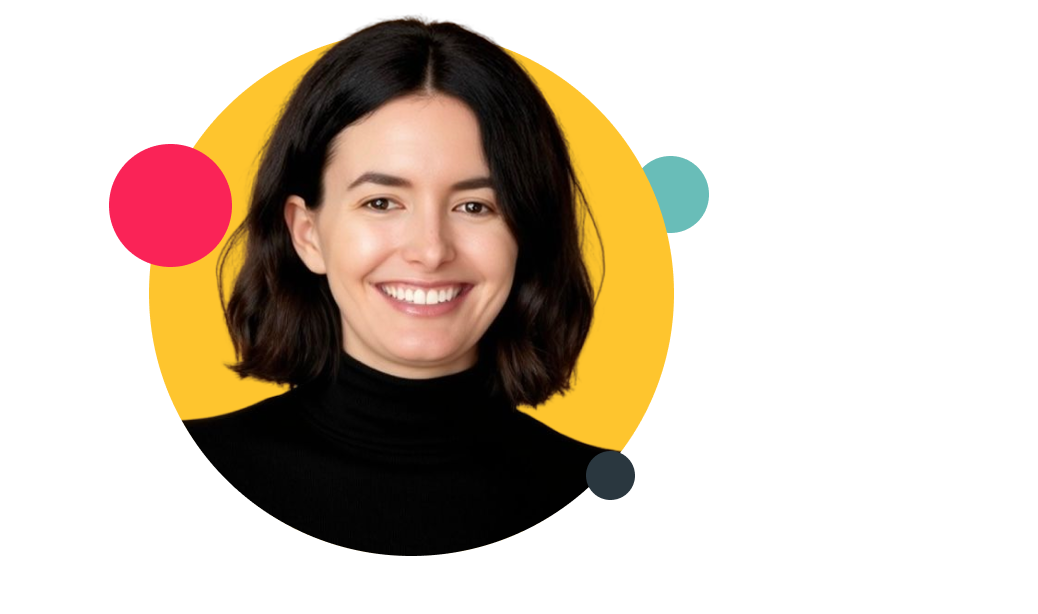
Claire Bolger is the Senior Director of Marketing and Growth at Health2047. In this role, she leads brand, PR, and strategic communications for the firm while advising portfolio companies and corporate partners on growth strategy, commercialization, and innovation.
Prior to joining Health2047, Claire was a consultant for early-stage startups and has worked with corporate clients ranging from Planned Parenthood to Stanford Medicine. As Assistant Vice President of Marketing at EmblemHealth, Claire built and led a department responsible for marketing, PR, market insights, and events across the company’s portfolio of health plans and provider practices. Claire holds an MSc from the London School of Economics and Political Science and a BA from McGill University.
What you’ll learn about in this episode:
- Health2047’s mission and approach to investing
- How Health2047’s venture studio model differs from traditional venture capital firms
- Claire’s approach to go-to-market, starting with audience definition and personas through to specific strategies and tactics - with everything focused on solving actual customer problems
- Why an early stage startup, and especially the brand voice, must sound like the founder so that the authenticity of the brand can carry on through to things like investment pitches
- How founders can build trust in the healthcare space today
- The importance of defining the brand story for employees
- Claire’s one recommendation for founders this quarter: run an AI visibility audit
Additional resources:
- Josh Dougherty on LinkedIn
- Claire Bolger on LinkedIn
- Health2047’s website
- A Brave New’s website
- Josh Dougherty’s speaking site
Transcript
Josh Dougherty:
Hi Claire. Thanks for coming on the show today.
Claire Bolger:
Thanks for having me on.
Josh Dougherty:
Awesome. Well, before we get started, I'd love to have you share your story a little bit. Can you tell our audience about your career path, what you've done and how you ended up at Health2047?
Claire Bolger:
Sure. I studied population health and medical anthropology. I'm a foreign service kid, so I grew up around the world. And for me, studying the intersection of health as well as culture was always really interesting. And out of grad school, I joined the company EmblemHealth to launch their brand and social media presence really in the wake of—this was 2013—the wake of the Affordable Care Act or Obamacare, which if you think about that moment in time, it really made health insurance a lot more consumer focused.
Which for me, as a marketer, was a really exciting brand challenge. I stayed there for eight years and worked my way up to assistant vice president of marketing and PR where I was leading a cross-functional department across eight brands. And then, I think like a lot of people during the pandemic, I had one of those moments where I needed to make a change. I went independent as a fractional marketing lead. I worked at a couple of startups, Planned Parenthood for a while. And then Health2047, which is where I currently am. They were my client and then in 2023, I joined full time to support the firm's brand as well as our portfolio of 12 companies.
Josh Dougherty:
Awesome. Well, so you've been in the space for a long time. You know all the goings-on, andt we're going to talk a lot about that and how to build a successful brand inside this space and the work that you do day to day. But I'd love for you to introduce our audience, if they haven't heard of Health2047, to who they are and what they're all about.
Claire Bolger:
Health2047 is a venture studio that was founded by the American Medical Association. We invest at the seed stage, so super early. We're often a company's first or second big institutional check. And our thesis coming out of the AMA is really about strengthening the relationship between the physician and the patient. So what that actually looks like in practice is we've invested in an obesity phenotyping company at a Mayo Clinic, they're called Phenomix Sciences and a Medicare Advantage plan that was founded by physicians, that's Zing Health.
As well as in the past couple of years with AI, a foundation model that's used by radiologists, which is called HOPPR. And we are a venture studio, which means we really apply an agency model to the way that we work with startups. So that might look like helping with things like go-to-market strategy, websites and campaigns, PR. And I realize I just selfishly mentioned all the things that I do, but also things like fundraising, clinical validation support, et cetera.
And as I mentioned before, we have 12 companies, and one of the things I really love about my work at Health2047 is that I get to work across all of them.
Josh Dougherty:
Yeah. I mean, and it's really like you're giving founders a playbook and the tools to start their journey as they're trying to accelerate their fundraising and accelerating the growth of their company, correct?
Claire Bolger:
Exactly.
Josh Dougherty:
Yeah. Well, your job has two sides. So you do get to play with all 12 of the companies that you're working with, but you're also building your own firm's brand as well. So how do you split your time, and how do you make sure you are able to prioritize all those things successfully?
Claire Bolger:
Yeah, so I would say in terms of output and effort, it's about half and half. So the first half is, like you mentioned, the firm's brand. So you can think of that kind of similar to business development in any other role, so events, sponsorships, PR and that work really drives about three quarters of the firm's deal flow. So those are startup applications that we receive, and then the deal flow ultimately turns into the companies we invest in.
So in terms of how that all works together, it's really symbiotic in that, as you can imagine, an investor that has a strong brand and a strong market presence is good for the startup. If you think about it, not only does it help our own visibility, but it also can help the startup attract higher quality co-investors as well. But then when you turn around, investors really are only as good as the companies in our portfolio. So a startup that's successful is also good for the firm's brand as well.
Josh Dougherty:
Yeah, it really does. They play off each other really well. So I'd love to talk a little bit about your colleague as a service model and how you support the investors that you're putting time, effort, and money into. Where did that idea come from? How is it different than or similar to the typical VC? What is your approach, and what makes it special?
Claire Bolger:
So as a marketer, I love to coin a term. I started using that phrase because I felt like it best described the approach that I take. If you think about an early-stage company, marketing and comms are almost never higher number one. Usually, it's engineering, it's clinical, it's sales. So what ends up happening is there's a gap for a year or two when a company first starts, where no one is really looking after the brand in a concerted fashion, and that's where I can come in to help.
In terms of what that looks like, it's very hands-on. I do everything from PR, strategy, prepping founders for media appearances, helping to stand up their websites, building personas, content, and more. And that's really part of what we offer as a venture studio. So if you think about a pure play investor, your typical VC firm, they would typically help you with that by referring you out to those services instead of having them in-house.
And I use the word service very specifically here because I'm not meant to be permanent. The goal is to build enough frameworks and a system that when the company does first make their first marketing hire, that person can inherit something instead of starting from zero. And as an investor from the earliest stage, I'm also not going anywhere.
Josh Dougherty:
Yeah, that makes sense. And it's almost like a mini agency model inside of your studio.
Claire Bolger:
Yeah, that's absolutely right.
Josh Dougherty:
Well, so you've seen a lot. You work with a lot of companies, founders on a day-to-day basis. I'd love for your perspective on what go-to-market looks like at this early stage. What does the work actually look like? What are the most important things maybe for someone to get started on when they're at this early seed stage of investment?
Claire Bolger:
Yeah, I would say if we look at go-to-market, one of the things that I think often doesn't get looked at as much, and this is where I often come in to help, is some of the personas and segmentation work. So one of the things that I tell the founders that I work with is it's really important to fall in love with your customer's problem. And in a lot of cases, these founders do very much understand the problem and the challenges, but they might not necessarily be thinking of their audience in terms of actual segments who respond to different messages as well as have different motivations.
So I often start from there and then build a communications and channel strategy off the back of that deep brand insights work. I think that's also a really good way to get buy-in from employees as well, working with them to better understand the customer that they serve. So that's where I like to start. But like I said, my model then continues on to things like PR, which again, if we invest the time to get the story right, those things tend to flow a lot more naturally.
Josh Dougherty:
Yeah. And I think that really resonates with me as someone who does brand every day too. If we fall in love with our customers and the people that we're focused on, all of a sudden different ideas show up because you're starting to look at your story from a slightly different perspective or multiple different perspectives, which all of a sudden pops better ideas to build engagement and trust.
Claire Bolger:
Exactly.
Josh Dougherty:
Yeah. And so, you're obviously helping people with that full-fledged strategy through to execution, but where do you draw that line? Obviously, you're trying to build capacity internally at the organizations as well, to do this. And sometimes I know the first marketer hire doesn't come until far later than where your organizations are in their process. So maybe when there's a leaner team in place, they are preferencing engineering, product, sales, where do you draw that line between helping and doing?
Claire Bolger:
I tend to get really nerdy and excited about marketing, and the founders I work with tend to likewise get really excited about what they're working on. So in a lot of cases, there's a lot of that mutual sharing of they're the experts on their product and I can come and want to be the expert on their brand and story, but I need to really draw that out of them. There are a couple lines that I draw, which is that the brand and the voice of the company, especially at the earliest stage when it's really the founder still the one selling the product and company, it really needs to sound natural for the founder themselves.
So I spend a lot of time getting to know them and even working with them on how they are pitching investors, how's that working for them? And I would never put anything out. I really draw the line on something that doesn't sound natural or authentic to the founder. Now we might have a little back and forth on a headline choice, et cetera, but ultimately the buck ends at them. And where I can really come in is provide that litmus test for, okay, will this work for an investor? Since I understand that audience.
We've done some research with your customers, how can we make sure we go a level deeper to really make our message resonate with them? So it's kind of helping to make sure the story really survives that contact with a regulator, with a reporter, with your customer, and with investors.
Josh Dougherty:
Yeah, because, ultimately, you can't control when they're in the room with having those conversations. It has to be something that seamlessly connects with how they're going to talk about their product.
Claire Bolger:
Exactly.
Josh Dougherty:
Anyways. Yeah, that makes a lot of sense. What do you think is something that maybe is left behind by founders at this stage that you ... so personas you said you bring people back to, what is maybe one or two other things that you think other founders could be thinking about at this stage and that would help them get ahead compared to their peers as they're trying to get noticed, bring in investment, bring in customers?
Claire Bolger:
Yeah, I would say that a lot of the work I do beyond marketing and brand, which I get very excited about, is also the deeper go-to-market and commercial work. So some of the things I talk with our founders about is, it's really important to make sure that not only the story they're telling about the product, but the workflow itself as well actually fits into how clinicians are actually working.
So, I do a lot of work with them to bring in clinical advisors, for example, or do user journey mapping to really better understand how it can be more native to their workflow. And I think that can be really game-changing for companies. If you look at a company like OpenEvidence, for example, they had a very successful product-led growth model where they really started with those initial customers as physicians who aren't actually the buyer, but they're the user and got that buy-in, got that excitement.
When they got to the point where they were coming to organizations and they could say 70 of your physicians are already using this platform daily, that made a big difference. And then, I also think that another thing we talk about a lot especially since I work with a number of startups that leverage AI—is how to take trust seriously and talk about it plainly. Because since we come from the AMA's perspective, in healthcare, you're not just asking a physician to use this tool, but to also put their license behind your output.
So talk can be cheap. Words like trust, for example, I'll ask a founder, tell me why, tell me more. Simply saying you can trust us, think about it. If someone told you, just trust me, you'd have a reason to be skeptical.
Josh Dougherty:
Yep. I think our society doesn't trust that anymore, right?
Claire Bolger:
Correct.
Josh Dougherty:
I think back to every year I look forward to seeing the Edelman Trust Barometer come out. I don't know if you're familiar with that study. And every year I think, "Oh yeah, we're getting deeper into this lack of trust. So that's something that I think we have to emphasize again and again because we're dealing with people's health, we're dealing with people's licenses, we're dealing with people's ability to literally put their life in the hands of a provider."
So it's got to be something that is trustworthy and that is repeated over and over again, shown through evidence, not just words. So I love that message. Well, I'd love to shift, that's really helpful to think about the core of what you are doing from a marketing perspective, how you think people should be ... founders at the early stage should be thinking about their marketing and their go-to-market. But I would love to chat about those founders and those successful companies today.
Because we're seeing shifts and the venture space is always changing. And I think with the advent of AI and how it's disrupting the market, it's changing even more. So I would love to hear your opinion on if someone is founding an organization now or company now, what do investors want to see differently from a founder today in 2026 versus maybe three years ago as we were coming out of the pandemic? How have things shifted?
Claire Bolger:
I would say first and foremost, coming from the commercial side of things, proof that someone is going to pay and fast. Three years ago, as you mentioned, you could certainly raise on a big vision as well as user growth, but now investors want to see that there's a buyer, they want to see a budget line, at the very least they want to see a letter of intent and a timeline as well, knowing that sales cycles in healthcare are really long, sometimes as long as 18 months.
Josh Dougherty:
Yep.
Claire Bolger:
Another one to keep touching upon the clinical side, but also beyond that, is healthcare depth. We talked about clinical, but that's also, does a founder really understand how a health system buys, how reimbursement works, who is actually signing the contract at the end of the day? And again, going back to that venture studio model, we do have experts on our team who can help stress test some of these assumptions in diligence, which can be very helpful to our partners.
And then, I would just add lastly, we really look for, and I know certainly other investors look for this as well, validation and partnerships. So for our portfolio company, HOPPR, which is the foundation model for a radiologist that I mentioned, that looked like partnerships with RadNet as well as NVIDIA. For Zing, which is the Medicare Advantage plan that I mentioned, it was incredibly significant when they received co-investment from CVS Health.
Josh Dougherty:
Yeah. And this goes back, I think, a little bit to the level of trust, because those sort of partnerships signify that there's trust—from other trusted ... like other entities that are established—that this is going to be a product that's actually going to work in the real world.
Claire Bolger:
Yeah.
Josh Dougherty:
I think it's so fascinating because you mentioned the idea that someone used to be able to fundraise more on a big vision. And I think we've been on this journey—not just inthe last three years, but from probably 2012, 2015 onwards—where we've gotten more and more specific that there's got to be outcomes tied to this pretty quickly for investment to come in and for companies to survive. So I love that focus on what's the actual plan to make this into a real thing that's going to work?
So I know a lot of money is flowing into ... even though maybe deal flow is changing always, but a lot of money is flowing into AI companies today, everyone's talking about it. What are the ingredients beyond maybe saying we have an AI tool or solution that's helping people win? So we know they need to have a good solid plan to go to market and get customers quickly. Maybe they're in a space that's moving, but are there other things that come to mind that people should think about?
Claire Bolger:
So I mentioned this before and it's worth mentioning it again. Being able to integrate with real clinician workflow and the example of open evidence I think is a really strong one, and I think that's why they're so successful. It's also important to own something that's defensible and is not just a wrapper. So that could look like proprietary data or in the case of our company HOPPR, a foundation model.
And this often involves clinical partnerships, not just building in a silo. So one of the things we do from the AMA's perspective is really talk about, "Hey, these are health systems that we think would be open to innovating with you." And then, I would also say that it's really important for them to be able to show ROI in the buyer's language as well. So that looks like time saved per radiologist, cost avoided, patient seen, et cetera.
Josh Dougherty:
Yeah. So they're really thinking about placing it in the context of the person that's selling to very directly, not making them do any translation work.
Claire Bolger:
Yes.
Josh Dougherty:
Awesome. Well, let's talk about storytelling and brand building with founders. You talked about this a little bit already, but I'd love to dig deeper. I think this is what many founders would find interesting. What do you think successful storytelling looks like for them? And can you tell us a story about someone who's maybe evolved how they're telling their story and done a really good job with that?
Claire Bolger:
Yeah, I would say that I get asked this question a lot by founders, and as trite as it may sound, it is true. Consistency really is key. So if I could point them to a founder who I think is epitomizing this and does it very well, Carine Carmy is the co-founder and CEO of Origin, and she engages in a very multichannel strategy that feels authentic. She's consistently posting screenshots of Google reviews. She's putting out a state of pelvic health report. She's on a podcast. She's reacting to the recent Wired article about the perimenopausal industrial complex that was recently published.
But I would also note, and I think it's always important to understand the background of a founder, she makes this look easy and she's so good at it because this is her area of expertise. Before this, she co-founded and was chief marketing officer of an app that was for women creators. So for someone else as a founder, maybe that looks more like posting your latest takes on the clinical research that's come out of JAMA. Maybe that's polling your audience, but it can look like a lot of different things.
And I always encourage our founders, much like they experiment with their products, to experiment with their content on social media.
Josh Dougherty:
Yeah. And it's just like repeating. It's so funny because as we're talking, this is very similar to what I always say about marketing. People are like, "How do you do great marketing?" I'm like, "It's not that complicated. You do it over and over and over again until people notice." Right?
Claire Bolger:
Exactly.
Josh Dougherty:
Yeah. And you say the same thing. So you don't have to be a great marketer to do that. You just need to know what the core messages are and be willing to talk about them in multiple formats. And I think at the end of the day, understand where the people you're trying to reach are spending their time already so you can be speaking to them.
Claire Bolger:
Exactly. And if you've founded a company and put in all that work, you have stories, you have content. It's just getting to that content.
Josh Dougherty:
No doubt. Slow down long enough to think about that because you've been through the reps, to build the content out. What do you think is the best lead for a story? So often founders open with their technology and with how transformative it is. And oftentimes, it is very transformative, but I don't know if leading with the features of a technology is always the strongest. So how do you coach founders to lead differently when they're building out their narrative about the company?
Claire Bolger:
Yeah, I would say that leading with the problem is really important. As I said before, falling in love with your customer's problem. But by that, I don't just mean that typical TAM, or total addressable market, slide that shows the size of the problem, but really what is the problem in the words of the person experiencing it and how are you uniquely positioned to solve for it? And one nuance that's important to keep in mind too is the person who pays for the product.
The person who champions the product, the person who invests in the product, those may be three different people. Certainly your investor isn't likely your customer unless you're a solution like Adio. So a clinician might love your product and think that it solves their problem, but they don't actually have the budget. So then you really have to think about, okay, who's paying? And that might look like the CIO for the organization, so how do they frame the problem?
You want a different version of your story for each. And one of the things that I work on with founders is really versioning out the pitch deck. The pitch should be consistent in terms of the high-level value proposition, but the different shades of it are going to look a little bit different. And then, I would also say that one thing that's important is to bring your employees along on the story as well.
So if they can't tell your story the same way, then that can often fall apart at the conference booth or when you're talking to reporters. So it's important to pay attention to that as well.
Josh Dougherty:
Totally. How much do you talk about emotion in this side of things? So I think people often think emotion doesn't play a big part, but for all of their buyers, all the different buyers, there is an emotional component. So, do you delve into that as you're talking about their story?
Claire Bolger:
Yeah. I mean, emotions are motivation. Emotions are frustration and friction points. And if you think about healthcare in particular, everyone has a personal story behind healthcare. It's one of the reasons I was driven to it in the first place because I grew up living in Asia, Latin America, Europe, and the US and Canada. And I realized that across the board in these different countries, healthcare was pretty universally something that was emotional and really deeply felt.
But it came out in very different ways, and the stories people tell are really different. So I love to get to the emotional core, including of things like an AI foundation model. There is a story behind that as well.
Josh Dougherty:
Totally is. Yeah, 100%. And so, you're trying to tap into emotion, tell a compelling story, but there's also regulation in your space and regulatory caution that needs to happen, I think rightly so, because we want to build trust over time. But how do you keep the message compelling within limits of needing to be following regulations, doing the work that you need to do to stay on the right side of all the requirements that exist?
Claire Bolger:
Yeah, so as I mentioned, before I started working at Health2047, I was at a health insurance company, so this was really my bread and butter in terms of leading a brand team there. And I actually enjoy this challenge. I think the cognitive trick that I play here is that I treat these regulatory limits as kind of a creative brief. And I think it literally does have certain creative constraints, if you think about it.
Certain platforms have restrictions, not just on the words you can use, but also things like imagery that actually require creative solutions. So I can give an example, which is Meta heavily restricts, and I actually don't think this is a bad thing, before and after images. You think about a weight loss company using those images, and that's usually a pretty, I won't say lazy, but easy way for companies in the GLP-1 space to show off their results.
And as a result of that, we actually see that there are companies that have come up with some pretty compelling and creative workarounds. I love Noom's campaign with the comedian, Rebel Wilson, where they actually demonstrate the concept of food noise, so this kind of mental cacophony, I'm hungry, I'm hungry, as literal noise in a stage kitchen. So there are blenders and timers going off, and she's talking about that and how Noom helped her solve that.
So I think they actually probably had that in the creative brief as a limitation. We don't want your typical before and after story, and they came up with a really creative solution.
Josh Dougherty:
I love that campaign as well. And I think it's because of the ... even if that maybe isn't a challenge that you struggle with, it is something we can all relate to of that noise. And so, they did tap into something that's deeply emotional for I think everybody as you watch it. So it's a great campaign. So as we close out the conversation, I'd love to chat here around if the founder could only do one thing for their brand this quarter, what would you recommend it to be?
And obviously, this is a cheater question because everyone is at a different stage in their founding or their journey, they've done different things, but what is maybe the single best thing you think someone can be investing in now?
Claire Bolger:
Well, my answer is one that even if they've already done it, actually the good thing is they should do it regularly, which is run an AI audit. So open up ChatGPT, Gemini Claude, Perplexity, or even run a free version to test it out of a tool like Profound. And ask it the questions your buyers or reporters that you're targeting or investors, the questions you think they're going to be asking. Who are the leading companies in this category?
Tell me about X company. Then, you want to look at whether you show up at all and where is most of the information coming from, whether that's about your category or your company itself. And then my rule of thumb is that for any query that's specifically about your brand, you want roughly half the cited sources to be things that you directly control. So that's coming from your website, that's your owned content, and for the other half to be earned coverage.
Because if you're below that level, people are telling the story for you and not all of it will be accurate. And I also think that while you're at it, if you have any sort of survey mechanism on your site, how did you hear about us, et cetera. It's important to have that loop back to AI because Meta obviously is releasing new tools, but right now it's harder to make that attribution back to AI. So ask your company, ask your customers as well.
Josh Dougherty:
Yeah, I love that advice. I also, as an add-on to that, if you have access to multiple models, it's really interesting to then stick the results of those audits into the different models and have them poke holes at each other because they will, and you'll learn new things that way also.
Claire Bolger:
I love pitting AI against each other, so I agree.
Josh Dougherty:
I mean, we have to do that as much as possible, defend the humans by pitting AI against each other. But awesome. Well, Claire, thank you so much for giving us some time, sharing some wisdom with us today. How can people connect with you? What's the best way for them to follow along with their work or with your work if they've been excited about what they heard today and want to stay in touch?
Claire Bolger:
Yeah, I'd love to connect to your listeners. So LinkedIn is the best place to find me and it's pretty simple. I'm just /ClaireBolger. I post about Health2047, what our portfolio companies have been up to, but also what I'm seeing in the health tech and marketing space. And I would also say if you're a founder listening and you're building something that strengthens the relationship between physicians and patients and you think you could be a good fit for us at Health2047, we'd love to hear from you through our website, which is health2047.com.
Josh Dougherty:
Cool. And we'll put links to your LinkedIn, to the website, et cetera, in the show notes so people can easily find those and not have to search. But yeah, Claire, thanks so much for coming on, sharing your wisdom and being part of the conversation.
Claire Bolger:
Thank you so much. It was a pleasure.

Similar Articles
WHITE PAPER

4 levers to pull to improve your healthcare marketing
Discover the 4 levers you can pull right now to make a positive and lasting impression, stand out in a crowded industry, and gain trust.
GUIDE

The secret to an accelerated branding process
In this guide we unpack why a unique brand matters, how to know if your brand needs work, and the essential things you need to think about to conduct an effective branding process.