

 info@abravenew.com
 (206) 746-5024
 2400 NW 80th St, #540, Seattle, WA 98117


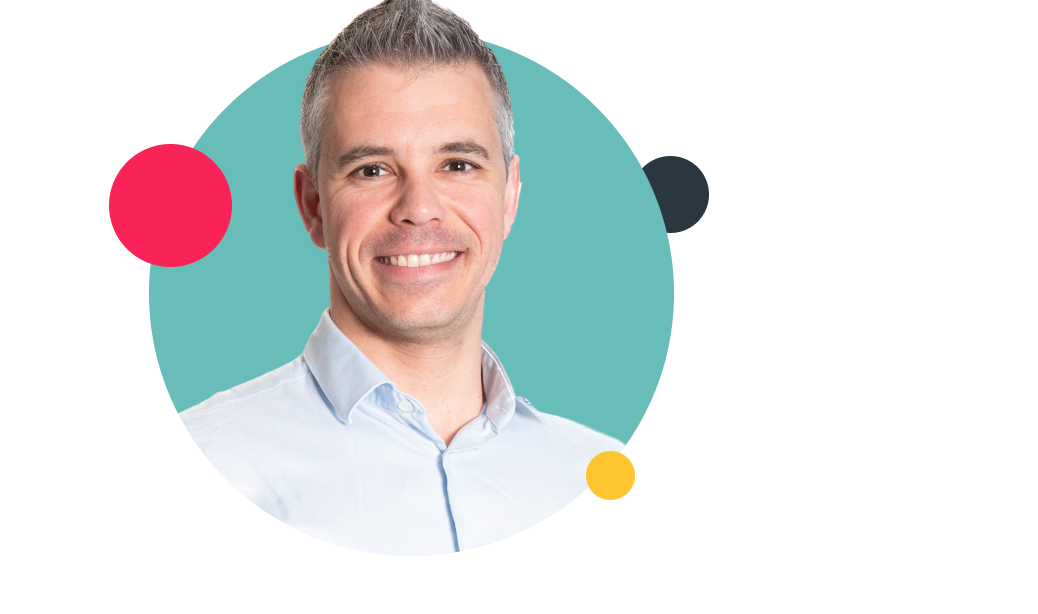
Geoffrey Schiavon is a marketing leader with more than 15 years of international experience driving growth through B2B2C business models across ecommerce and health tech. His expertise spans performance marketing, customer engagement, strategic partnerships, and go-to-market strategy, helping businesses build lasting relationships and drive sustainable revenue growth.
Before joining dacadoo as Head of Marketing & Client Success, Geoffrey spent nine years at Webloyalty, where he held a variety of marketing leadership roles, partnering with leading retailers and ecommerce businesses across Europe to deliver scalable customer acquisition and retention programs.
Today, Geoffrey helps insurers, banks, and retailers leverage AI, behavioral science, and gamification to create engaging digital health experiences that improve customer wellbeing and business outcomes.
Outside of work, Geoffrey is a licensed private pilot and enjoys exploring the intersection of technology, precision, and lifelong learning.
What you’ll learn about in this episode:
- Why trust is the foundation of healthcare branding and how it shapes customer interactions.
- How dacadoo differentiates itself through personalization, engagement, and a holistic approach to health.
- How messaging evolves to address the unique needs of insurers, employers, retailers, and healthcare organizations.
- Balancing brand, product, and performance marketing, including how these functions work together to drive growth and measure success.
- How co-branding, personalization, and A/B testing are helping dacadoo build credibility and expand into new markets.
- Why retailers are an important growth opportunity and how wellness is creating a new customer engagement.
- How AI is improving efficiency and influencing the future of marketing.
Additional resources:
Transcript
Josh Dougherty:
Welcome to A Brave New Podcast. This is a show about branding and marketing in the healthcare space. But more than that, it's an exploration of what it takes to create brands that will be remembered and how marketing can be a catalyst for those brands' success. I'm Josh Dougherty, your host. Let's dive in.
Welcome back into the show. Today, we're going to talk all about engagement, and the reason we're going to talk about that is it is the key to success for helping people and entire populations live healthier lives. Because if we can get people to engage in their health before they're sick or before they have a huge acute need, we can increase long-term health outcomes for people. And to explore that, I'm joined by Geoffrey Schiavon from dacadoo. Geoffrey is the Head of Marketing there. He's based out of Switzerland. And dacadoo, if you haven't heard of them, is a digital health technology platform. They work with a number of different industries to increase customer engagement or patient engagement, in some cases, retention and personalization, and they have some interesting, I think, audiences that we'll talk about.
First off, they work with people that we expect and we talk about a lot on the show: insurers, health providers, and employers, but they also work with retailers and banks to help encourage healthy life choices, healthy engagement. And so, we're going to dig into that and a bunch of other things in our conversation. We'll also talk through brand building, trust building, successes that Geoffrey's seeing from a marketing tactics and measurement perspective. And also, I think dig into the retailer space, which I think is fascinating, and how they're approaching using their platform to encourage health in a retail setting. So, I'm very excited for this conversation and would love to welcome Geoffrey onto the show.
Well, hi, Geoffrey. Welcome to the show.
Geoffrey Schiavon:
Hello. Hello, hello. How are you?
Josh Dougherty:
I'm doing well. Thanks so much for coming on. We have a lot to talk about today, but I'd love to start out by having you share a little bit about your story and your career path with our audience so they can get to know you a little bit?
Geoffrey Schiavon:
Yes. Yes, absolutely. So, as you can probably hear, I'm French, just in case there was any doubt here. Well, I studied in France, but I spent my entire professional career in Switzerland. And I always knew I wanted to work in marketing. I always like the mix of creativity, psychology, basically, and understanding what motivates people and how they take decision or they make decisions. And with digital marketing, that really took off over the last couple of decades. It became even more interesting because I always loved technology, so yes. So I started very basically as a sales and marketing consultant for a company that designed bespoke furniture before moving to a digital loyalty company called Webloyalty. And in that company, I work on everything about conversion rate with a lot of A/B testing, regularity changes, such as GDPR for Europe, PSD2 about transaction, et cetera, et cetera, fantastic learning experience. And after almost nine years there, I decided to join dacadoo. And the main reason why I wanted to work on that such a product is because I wanted something that meant something to me.?
Josh Dougherty:
Mm-hmm.
Geoffrey Schiavon:
And digital health has that impact. You are not just building a software, but you have the opportunity to help people change their lifestyle behavior, trying to support them to be healthier. So, definitely, that's really where I think it makes a difference for me. Well, and looking back, actually, there's actually a common thread through my roles. Both are B2B2C businesses, which I find really interesting because you're balancing the needs of the business with the expectation of the end users. And in both cases, I entered an industry where I knew almost nothing. Before Webloyalty, I never worked on conversion rate optimization, for instance, experimentation or digital regulation. And before dacadoo, I never worked with insurer, healthcare, or banks. So, yeah, I guess I've become quite comfortable being uncomfortable, I would say, and learning as I go.
Josh Dougherty:
Yeah, I think that's sometimes the mark of a good marketer who has longevity, right? Because if you like to learn and like to grow over time-
Geoffrey Schiavon:
True.
Josh Dougherty:
... you're going to be successful.
Geoffrey Schiavon:
Yeah, yeah. Exactly. Exactly. Well, you have to be successful but also assume your failures, and so many as well.
Josh Dougherty:
It's very true, very true. Can you share a little bit about dacadoo and what you're all about? What is the main focus of the company? What are you trying to accomplish?
Geoffrey Schiavon:
Yeah, absolutely. Absolutely. So, at dacadoo, we provide digital health engagement technology to insurers, banks, retailers, and healthcare organizations. We don't sell directly to consumers.? Instead, we help our clients create personalized health experiences—either through our White Label or API—and that encourages healthier behaviors while supporting their own business objective, whether that's increasing engagement, improving retention, or delivering more value to their members. One of our core beliefs is that people can change what they understand. And health can often feel overwhelming, so our goal is to make it easier to understand by taking some sort of holistic approach. Well, not some sort, actually, a holistic approach. So, for instance, it's not just about how many steps you are going to take, it's about your sleep, your nutrition, your habits, your mental well-being, because everything is connected. If you sleep better, you generally have more energy to be active. And if you are more active, you often feel better mentally. So it's all part of the same picture.
Josh Dougherty:
Yeah. I think this is something that we miss. Well, at least in the United States, I can say, often, we are only interacting with healthcare when we're sick. And what you're talking about is such a huge shift in where most of modern healthcare providers are going. Because if you don't tackle all those things-
Geoffrey Schiavon:
Absolutely.
Josh Dougherty:
... you don't see the progress. Yeah.
Geoffrey Schiavon:
Absolutely. Today, we can feel those trends actually being more and more on the prevention side because people are ... I mean the longevity is evolving, health span as well. So people are living longer, but they want to be also healthier in those late ages. And this is why we have made that platform in order to gamify that kind of experience-
Josh Dougherty:
Totally.
Geoffrey Schiavon:
... and trying to engage people into something which is worth it.
Josh Dougherty:
Totally. So you mentioned that the core of the platform and the product is this idea that people can change what they understand, which will lead to a change of behavior. Would you say that's the concept that lies at the center of the brand, or what is maybe the core essence or the core idea behind the brand?
Geoffrey Schiavon:
So, yes, I would say that's one of the concepts. Now, dacadoo is really about engagement, okay?
Josh Dougherty:
Mm-hmm.
Geoffrey Schiavon:
We are specialized in user engagement so our clients can achieve their specific business goal. And in our case, sorry, trust is really fundamental. We are working, as I said, with insurers, banks, and healthcare organizations so that those people expect credibility, transparency, and security.
Josh Dougherty:
Mm-hmm.
Geoffrey Schiavon:
And at the same time, health is an emotional topic. So, you need the science to build the trust, but you also need an experience that's engaging enough for people to come back. So, yeah, that's where our concept lies at the center of dacadoo. Our vision is simple, it's great life and health for everyone. But because we are a B2B2C company, that vision isn't something that we deliver directly to consumers, it's where we help our clients to deliver to their members or our users.
Josh Dougherty:
Yeah. I love this space as well. I've done quite a bit of work in the B2B2C space, so I think it's really fascinating. Whenever we're talking about patient engagement, obviously, there's a lot of emotional things tied into-
Geoffrey Schiavon:
Absolutely.
Josh Dougherty:
... building trust, building engagement, et cetera. But on the B2B side, do you find that to be an emotional engagement? Are there emotions engaged when you're selling to the insurers, or is it a completely different approach? Insurers, bankers, healthcare organizations, it feels like you're really playing two corners or two sides.
Geoffrey Schiavon:
Yeah, absolutely. Absolutely. For the user, definitely, health is emotional. But for insurers, banks, and retailers, they all have business goals and that makes sense. We are in a business world. And based on that, they want to achieve something. Now, I'm proud, actually, to support them in the fact that, in trying to combine, actually, their business goals with making people healthier, that's for me very valuable. I'm happy if someone says, and it happens already, that they have been able to lose a few kilos, we're talking kilos on my side, thanks to the platform that has been pushed by one of our clients. And on the other side, our client, they are happy because they managed to retain their members on the longer time period. That's some sort of win-win, and I'm completely transparent with that.
Josh Dougherty:
Absolutely. Well, so the patient engagement space is pretty crowded, right? There are lots of people that do patient ... or lots of platforms, I should say, that do patient engagement. So you think about brand positioning and standing out and making sure that your platform is winning against the others when you go up to them. What does it take to stand out from the competition today from your perspective?
Geoffrey Schiavon:
Well, I think one of the mistakes that companies make is competing on features. Today, almost everyone has an app, coaching, Rarible integration, and more and more AI, actually. So, what really differentiates you is the value that you are going to create for both your client but also the end users. We are coming back to that B2B2C again. And in our case, we are not trying to build another fitness app. There is definitely other apps that do that better than we do.
Josh Dougherty:
Totally.
Geoffrey Schiavon:
But we want to help our clients to engage their members in healthier behaviors and supporting the business objective. We want to give that holistic view of health. So, one more time, what you can understand, you can change.
Josh Dougherty:
Yeah.
Geoffrey Schiavon:
And we give our client the features, of course, to do that. Because at the end of the day, if you ask the question to a teenager or to my grandma, for instance, "How do you feel today? How do you feel today?" They would probably say, "Yeah, I feel good." Yeah, except that the teenager is 14 and my grandma is 90. And definitely, that's a huge difference-
Josh Dougherty:
Different.
Geoffrey Schiavon:
... in terms of health and what is going to happen. So I would say that's the first thing. Second thing is about trust, as I said. Health is personal, so people need to trust the science beyond what you are doing, but they also need an experience which is simple and engaging. So, if it's engaging but it lacks credibility, well, people won't trust it. So you need both scientific accuracy, I would say, and engagement. So, yeah, that's our role—to make people healthier but not necessarily people who are already healthy today. Our role is to help, actually, those who sleep bad, those who are stressed, who don't make any activities to support them and convince them that they can send that. So, yeah. And finally, I would say the last thing that maybe stands out from our competition is the flexibility and the agnostic nature of our platform. Every client has a different strategy, different system, different customer journey, and we are able to integrate into the ecosystem, whether through API, White Label, or partnership, and make the experience feel seamless and is becoming increasingly important. So, yeah.
Josh Dougherty:
Yeah, I think that flexibility is huge because, as technology is advanced, people expect to have the similar-
Geoffrey Schiavon:
Absolutely.
Josh Dougherty:
... experience across all the platforms that they're working on.
Geoffrey Schiavon:
Absolutely, absolutely. And in that patient engagement, we are not talking about even medical device. We don't give medical advice, those kind of things on our side, but it can be different thing that our clients could provide. Could be content, it could be telehealth, okay? So, all those kinds of ecosystems that already exist on their side, we need to make sure that, actually, they can integrate that smoothly into the experience with our platform.
Josh Dougherty:
Yeah. Excellent. So, a lot of what you talked about is the stuff that is around features, which I love saying. You don't like to talk about features and more about the value that you're providing. I think when we're crafting a great brand, we are figuring out what is that specific value that we're sharing. So I'd love to jump back. I meant to ask you a little bit earlier what your definition of branding is, because, obviously, you've done a lot of deep thinking about how do you make the dacadoo brand stand out, but how do you define branding as someone who's been working in this space for a long time?
Geoffrey Schiavon:
Well, I don't think I'm going to be very innovative here.
Josh Dougherty:
Yeah.
Geoffrey Schiavon:
Okay? But basically, for me, the branding is the perception that people have about the dacadoo when we are not in the room. So it's a little bit the same of every interaction that someone will have with our business. So, it can be the product, but it can be also our marketing, our website, the customer service, or the people that we meet at a specific event. So, it's not just about the logo or the visual identity.
Josh Dougherty:
Sure.
Geoffrey Schiavon:
Of course, it matters, but that's really ... Yeah, it's all those interactions that actually people have. So, that's why I think marketing alone can't build, actually, a brand. We have product, customer success, sales as well. Everyone contributes. So, yeah, I would say that's my definition and that's how we define branding.
Josh Dougherty:
I would agree with that, because when I think about branding, I talk about it being a memory that you're leaving behind with your customer. And so, similar to that idea of what's-
Geoffrey Schiavon:
Of course.
Josh Dougherty:
... the perception after you leave. And I do really appreciate you saying it's all those pieces of the experience because I think, sometimes, people can conflate or combine together the concepts of marketing and branding, where branding really ... It sits outside marketing and allows it to be the entire experience that you're building for people.
Geoffrey Schiavon:
And it's very important also to have that accuracy and that 360 vision, I would say, because people are changing organizations. And it happened a few times on our side—that we were having one of our key project leaders working with an insurance company and then they moved to another insurance company and they remember you about the great experience they have with your brand, with your company, and then they come back later with a new project, and that really makes a huge difference.
Josh Dougherty:
Yeah, it's the key proof point that what you're doing is-
Geoffrey Schiavon:
Absolutely.
Josh Dougherty:
... working, right?
Geoffrey Schiavon:
Correct.
Josh Dougherty:
Yeah. So, I'd love to zoom in a little bit on the B2B side of things. We'll talk somewhat about performance marketing and some other things as we get going. But from a positioning and differentiation place, I would love to talk about your different audiences because, insurers, employers, retailers, banks, they all have different needs, I imagine. Maybe the same end goals, but different needs. How do you evolve or change how you're talking to those audiences? And how do you manage speaking to them all in a relevant way?
Geoffrey Schiavon:
Absolutely. So, that's something that we implement at dacadoo, and I'm convinced that this is the right way to do it because we can see that in the results of our campaigns, but we always start with a challenge, okay?
Josh Dougherty:
Mm-hmm.
Geoffrey Schiavon:
And those insurers, those retailers ... We work a little bit less with employers because we actually have clients working-
Josh Dougherty:
Sure.
Geoffrey Schiavon:
... with employers. So, when we have employers, we actually pass them to our clients because they're just better. But even then, we start with the challenge. So what challenge do we want to solve for those specific industries? And there is always a business goal attached. For health insurance, it's going to be a healthcare cost reduction, for instance. For a retailer, it's going to be trying to increase the growth and profitability and getting away a little bit of every discount extractor that they can propose. For employers, of course, it's how can they make sure that employees ... they retain employees longer and how can they make sure that their employee is not going to be sick for ages, et cetera, et cetera. So this is how we define that. So every message is different based on the industry.
There are some common patterns, of course, when you start to talk to insurer, employer, and also about bancassurance.? Retailers are different. Retail is different. It definitely is something different. We try to approach them with the same speech, with the same messages. But definitely, it did not resonate as it resonates for the other industries I was talking about.
Josh Dougherty:
Yeah. I think their goals are very different, so it makes sense that you'd have to speak very differently.
Geoffrey Schiavon:
Yeah, yeah. That's what I think.
Josh Dougherty:
But I like this core idea of saying, if you start with the challenge, then automatically, it seems like your messaging is going to-
Geoffrey Schiavon:
Exactly, exactly.
Josh Dougherty:
... vary correctly. Yeah.
Geoffrey Schiavon:
Yes, yes.
Josh Dougherty:
So, I'm assuming this is, as Head of Marketing, you're seeing ... You have some purview over all these areas, but there's an inherent balance between product marketing, brand marketing, and performance. And in any marketing program, you have to do all of them at once, but it can be hard to balance-
Geoffrey Schiavon:
Yeah, absolutely.
Josh Dougherty:
... all of them. So, how do you manage that? And where do you think maybe your organization is stronger?
Geoffrey Schiavon:
So, it's something that we have defined, I would say, not recently but a few years ago. Because at dacadoo, we see these three components as part of the same loop, rather than separate functions. So, product marketing starts with understanding the market, get the customer feedback, look at emerging trends. They are constantly asking, one more time, to challenge what problem should we solve next. And then marketing takes those innovations and translate them into a story.
Josh Dougherty:
Mm-hmm.
Geoffrey Schiavon:
We don't just talk about the new features. We explain the challenge that it solves, why it matters, and, of course, the business values that it will create.
Josh Dougherty:
Mm-hmm.
Geoffrey Schiavon:
That's something that will resonate with our clients. So that's where brand marketing and demand generation, I would say, come together. And finally, we have our client success team, which is there to close the loop. They work closely with our clients to define success, to track the KPIs, to help them get the most value from the platform, which is a bit different from all the other customer success teams that usually we see. They are more on the technical side.
Josh Dougherty:
Mm-hmm.
Geoffrey Schiavon:
But on our side, they are more on the marketing side. So, yeah, the feedback of the CSM team goes straight back to both marketing and product, and that's a continuous cycle. Product builds based on market needs, market creates the awareness and the demand, and client success ensures that customers succeed with what we provided. And everything we learned from clients feeds the next generation of the products, gives marketing real customer stories and business outcomes to share, extract. So I think that's one of our strengths.
Josh Dougherty:
Yeah. I like that you brought in customer success because, ultimately, that is creating brand ambassadors, if you will, if people really-
Geoffrey Schiavon:
Absolutely.
Josh Dougherty:
... love your company.
Geoffrey Schiavon:
Absolutely. And we saw that in our lead and prospect calls. The client success team is joining now more and more of those strategic workshop meetings where we discuss about our clients, what value proposition do they want, because they can really share experience and best practices from other clients as well.
Josh Dougherty:
How did you go about building that team? I know this may not be exactly your team that you're overseeing, but I agree that, oftentimes, those teams are very technically focused and focused on checking the boxes of, "Is someone using the platform correctly? Is utilization high for all the features?" How did you go about creating a team that thought differently, or how did-
Geoffrey Schiavon:
So, I'm leading the marketing and client success team because we decided to take that direction. So, at dacadoo, we have another team, the service team, made of technical people that they are here to support our clients and to help us to make sure that, actually, what we propose-
Josh Dougherty:
Sure.
Geoffrey Schiavon:
... is possible from a technical point of view. Now, when we decided to create that team, we decided to say, "Okay, we want people specialized in engagement, retention. We want marketers." So the profile that we recruited at that moment and we hired were people into the marketing space and with always that B2C mindset so they can have a better understanding about what we are trying to create here at dacadoo. So, yeah, that's how we have been working with things.
Josh Dougherty:
Makes a lot of sense. If you put two organizations or two departments underneath a marketing lead, you're going to be able to really influence the culture of how you're approaching it. Yeah.
Geoffrey Schiavon:
Correct, correct. And we see that difference since we implemented that—the numbers of business cases that our marketing team has been able to get, the KPIs, as well that our clients accepted to share all these kinds of things—makes a huge difference when you want to go to market with your story and your messages.
Josh Dougherty:
Yeah, absolutely. Well, I'd love to talk a little bit about tactics and measurement and what's working right now. So, can you share a little bit maybe of what are a few of the tactics from a demand generation perspective that you're seeing success with at this point?
Geoffrey Schiavon:
Yeah. I feel like I repeat a bit myself because, one more time, branding and trust are connected.
Josh Dougherty:
Yeah.
Geoffrey Schiavon:
And this is where, on our side, we have seen the best results if we talk about performance. So, every time that we release a paper supported by a client, a consulting firm, a university, we see a strong increase. So, co-branding is really one of the tactics that we have been pushing hard on our side. Even with partners, it works well, as well, because both companies put their audience into the same basket.
Josh Dougherty:
Totally.
Geoffrey Schiavon:
So, I remember that, during the COVID time, people were doing a lot of webinars. And after that, people were just tired about webinars, externally.
Josh Dougherty:
Totally, yep.
Geoffrey Schiavon:
And I completely understand that. However, on our side, by doing those co-branded webinars, those co-branded approaches, we really managed to bring value to our audience, thanks to best practices, concrete cases, concrete business cases that they were able to deploy, and we saw that in the numbers of participants and registrations that we had. It was a nice jump, as well. Definitely, definitely.
Josh Dougherty:
And it's still working, that type of approach? I think it makes sense, right? Because-
Geoffrey Schiavon:
Yes.
Josh Dougherty:
... if you have concrete stories that you're telling real companies that are presenting with you, it-
Geoffrey Schiavon:
Yeah, absolutely. Absolutely. Now, if we want to talk about performance, we always have many things. If you have volume, usually, we will be talking about the visits, the impressions, the clicks, the engagement in general. On my side, I'm a huge fan of A/B testing.
Josh Dougherty:
Mm-hmm.
Geoffrey Schiavon:
But the second tactic, of course, and that one works for everyone, is personalization. Personalization has always been a performer on all the marketing side but also the product side. In our platform, for instance, of course, there is automation, coaching, et cetera, et cetera, which is highly hyper-personalized. So, that's really definitely a good performer. Now, I can understand that, sometimes, you don't have the resources to make it.
Josh Dougherty:
Totally.
Geoffrey Schiavon:
Okay? And in that case, well, on my side, I did not hesitate to actually fake it. Like instead of giving a €10 discount or cashback, you can give, I don't know, 1687, for instance, which looks personalized, but actually, it's not. And honestly, I tested that.
Josh Dougherty:
And it works.
Geoffrey Schiavon:
You would be surprised by the results.
Josh Dougherty:
Yeah.
Geoffrey Schiavon:
Yes. Absolutely, absolutely.
Josh Dougherty:
Yeah, I love that thinking.
Geoffrey Schiavon:
You can see those kinds of stories also on Instagram or TikTok about, "Hey, if you give me 30 days by the end of August, you can be shredded," for instance, all this kind of thing. That's also the kind of fake personalization that works. So, yeah.
Josh Dougherty:
Totally, yeah, because you're getting into the psyche of the person you're marketing to. It doesn't matter if it's-
Geoffrey Schiavon:
Absolutely, absolutely.
Josh Dougherty:
100% based on their data, yeah. Awesome. How are you measuring ROI from a marketing perspective? As a marketing team, are you responsible for actual pipeline creation? Are you responsible for leads? But what is the bottom line of how you're measuring ROI?
Geoffrey Schiavon:
Yeah, yeah, no, no, no, I do from the marketing side. So, at a high-level, we, of course, try to balance efficiency with business impact.
Josh Dougherty:
Mm-hmm.
Geoffrey Schiavon:
On the efficiency side, we look at things like cost per lead by channel, attribution models as well, to understand what actually drives our pipeline. On our side, we use a last touch attribution model. So, that's a thing. We focus also a lot on the conversions through the funnel. So how many leads become marketing qualified leads, then sales qualified leads, opportunity, and, of course, ultimately customers? And we look at each stage to identify where we are performing well and where we need to do some improvements. And another metrics part of that that I pay close attention to is actually the lead velocity because it's not just about generating more leads, it's about generating, of course, the right leads and helping them to move through the sales process faster-
Josh Dougherty:
Absolutely.
Geoffrey Schiavon:
... because we don't want leads that take 36 months, for instance, to convert because it's a waste of resources. Even though, at the end, we are happy they become clients, but of course, it's a huge thing. So, yeah.
Josh Dougherty:
Totally.
Geoffrey Schiavon:
Well, and ultimately, I would say marketing should not be measured only by traffic and clicks alone. So, the real question is always, "Are we contributing to the revenue? Are we helping sales to have better conversations? And are we attracting customers that go on to be successful?" So, this is how we think about return on investment. If I can add as well, AI is also changing how people discover information. So we also start to look beyond the traditional search metrics and pay more and more attention to the brand visibility in AI generating elsewhere and how our content is influencing buying decisions.
Josh Dougherty:
Yeah, I think that we all are because-
Geoffrey Schiavon:
Absolutely.
Josh Dougherty:
... as things are changing, the ironic thing is, I think as we focus in that area, because you're doing a lot of things that maybe all of us should have been doing from a technical SEO perspective, it's resulting in better search ranking, too-
Geoffrey Schiavon:
Absolutely.
Josh Dougherty:
... because you're becoming more disciplined.
Geoffrey Schiavon:
Yes, yes.
Josh Dougherty:
And I’d love to go back to what you were talking about, lead velocity. I like that metric a lot as well, because I think when you were saying marketing needs to be held responsible to a certain level for the revenue as well, lead velocity is one of the, I think, metrics that's a pure marketing metric but that tells a little bit of that story. Because if you have people that are moving down the funnel more quickly, naturally, they're leading into the pipeline more quickly as well.
Geoffrey Schiavon:
Absolutely, absolutely.
Josh Dougherty:
Well, one of the other things I'd love to chat about is about your retail and supermarket efforts because this is fascinating to me. And when we were prepping, you had said this is a growth area for you, but it's very different than everything else you're doing. So can you share about maybe why this audience is so important to you?
Geoffrey Schiavon:
Yeah. Of course.
Josh Dougherty:
And how it's connected to wellness?
Geoffrey Schiavon:
So, it's a really interesting evolution, okay? When people think about health, I would say they naturally think about insurers, hospitals or healthcare providers.
Josh Dougherty:
Mm-hmm.
Geoffrey Schiavon:
But retailers, especially supermarkets, they have one of the biggest influences on our daily health because, well, they shape many of the decisions we make every week.
Josh Dougherty:
Mm-hmm.
Geoffrey Schiavon:
And at the same time, they are facing their own challenges. Today, what we observe is they rely heavily on discounts and promotions to drive traffic. And while they have always been experts in loyalty programs, the digital world has changed also a little bit the game. So, today, you first need to bring customers online and then encourage them to use your app because that's where you can create a much more personalized experience.
Josh Dougherty:
Mm-hmm.
Geoffrey Schiavon:
This is where dacadoo can propose different features or ways to solve that challenge. And the challenge is that most consumers only interact with their supermarkets once a week and their priority is simply to buy groceries.
Josh Dougherty:
Mm-hmm.
Geoffrey Schiavon:
So, by introducing health insights, gamification, personalized recommendation, you give people another reason to engage with a brand beyond just shopping.
Josh Dougherty:
Mm-hmm.
Geoffrey Schiavon:
So, the more interaction you create, the more opportunities you have to guide consumers to make a healthier choice or specific product that actually are more valuable for the retailers, such as, for instance, private label. So, yeah. And another trend that's having a huge impact, of course, is the rise of GLP-1 medication.
Josh Dougherty:
Mm-hmm.
Geoffrey Schiavon:
There is a 2024 Cornell University study that found that households with at least one GLP-1 user reduced their grocery spending by around 5% within six months. Okay, I'm quoting here, rising to more than 8% among higher income households. So, at the same time, it means that people are changing the way they buy. They choose smaller portions, they prioritize protein, and they pay more attention to the nutrition. So, this is where we see that evolution as well with retail markets.
Josh Dougherty:
And it's creating a crisis because it creates more of a need for loyalty for these retailers because of their-
Geoffrey Schiavon:
Correct, right.
Josh Dougherty:
They have to retain their customers if they're going to lose some of that pie.
Geoffrey Schiavon:
Absolutely, absolutely.
Josh Dougherty:
Yeah. So, as you've tried to move into this space more and more, where are you seeing success in building relationships with retailers? And what have been some of the challenges? Or building brand awareness maybe is the more important thing, yeah.
Geoffrey Schiavon:
That industry is more complicated because digital health is a topic for life and health insurers, and that's usually connected with healthcare. So, when we touch-
Josh Dougherty:
It's also a straight line, right?
Geoffrey Schiavon:
Exactly, correct.
Josh Dougherty:
People understand the connection. Yeah.
Geoffrey Schiavon:
Correct. Absolutely. So, when you touch one, usually touch the other, or you can have, in terms of branding messages, some common topics. Retail is different. First of all, not all the markets have the same trains. So, GLP-1, for instance, is very accurate in North America. It's growing in Europe. But, for instance, in Outback, it's not such a topic, the consumer difference. So, health is not a topic for all of them, and that's why this is what I was explaining at the beginning that we try to shift the angle about basket influence, interaction, engagement increase, and, of course, profitability, which is something that looks to resonate more to that specific audience.
Josh Dougherty:
Yeah, makes sense. And how do you build the case that you, as a health patient engagement organization, are the ones that can help increase the basket value to those sorts of things? Because you have to bridge a little bit of a gap, I imagine, right?
Geoffrey Schiavon:
Absolutely, absolutely.
Josh Dougherty:
Yeah.
Geoffrey Schiavon:
So, here, we don't talk yet on our side about patient engagement because, as I said, we are more focused on our side about prevention. We want to make sure that people don't go to that patient status, I would say.
Josh Dougherty:
Yeah, yeah.
Geoffrey Schiavon:
And for retail, we try to support them with specific innovations, actually, that's made for them. One of-
Josh Dougherty:
Okay.
Geoffrey Schiavon:
... the last innovation that we go to market with is called the Grocery Basket Score. And basically, it looks at your basket and it's going to recommend better alternatives or healthier alternatives [inaudible 00:36:16]. And this is something that can influence, for instance, the swap, can influence what you are going to put into your basket. Now, we are trying to work also smarter. And with gamification, we want to give people another chance or another opportunity, I would say, to add different products into their basket. For instance, we have nutrition goals, and one of our nutrition goals is about starting a meal with a salad.
Josh Dougherty:
Mm-hmm.
Geoffrey Schiavon:
So, we give recipes for salads, and those recipes, you can directly add the items into your basket, for instance.
Josh Dougherty:
Of course, yep.
Geoffrey Schiavon:
So this is the type of thing where we influence that. So it's not that we want to hammer you and push you as hell to add that specific product into your basket-
Josh Dougherty:
Totally.
Geoffrey Schiavon:
... but we want to advise you and support you about, "Okay, if you are really looking to make a behavior change, those are how we can help you."
Josh Dougherty:
Yep. I'm fascinated because we started the conversation about how you worked in conversion rate optimization for years, and in some ways, this product and what you're describing is similar to that. It's making small tweaks to give people ideas and make it easy for them to change, right?
Geoffrey Schiavon:
Absolutely, absolutely.
Josh Dougherty:
Yep. Awesome. Well, as we get to the end of our conversation, I appreciate you sharing about in detail about what you're doing day to day with your organization. I would love to talk a little bit about AI because I don't think we can really get out of this conversation without chatting about that. How has AI been influencing your marketing efforts so far? I think we all are adopting it to varying levels and we're getting better and better as marketers at using it, but what are some of the successes that you're seeing?
Geoffrey Schiavon:
Huge impact, huge impact on the way we work. But before we started to implement tools, we realized that we needed to build the right foundations.
Josh Dougherty:
Mm-hmm.
Geoffrey Schiavon:
So the first thing that we did was to partner with a Swiss AI consultancy agency called juvaii, J-U-V-A-I-I.
Josh Dougherty:
Mm-hmm.
Geoffrey Schiavon:
And what they did was they reviewed how we were working, and they ran a series of workshops with our sales and marketing team in order to help us to build AI into our day-to-day processes in a practical way. So it's not about replacing people, it's just helping everyone to become more effective. We started with custom GPTs, and then, now, we are on the way to introduce automations with agents, Extra Excel with our first AI agents. On my side, results ... I mean on my side, on my team's side, the results have been significant. We have reduced the time it takes to create and optimize email campaigns by around 50% to 60% maybe. We cut press release production by 50%. We reduce the time spent to create social media content and ads by, I don't know, roughly 30%. So, huge impact, of course, of course. And I think the biggest change isn't operational, it's also strategic because AI is changing how people discover companies.
Josh Dougherty:
Yeah.
Geoffrey Schiavon:
And we are seeing less traffic today coming from traditional search, as maybe a lot of person-
Josh Dougherty:
I think it's most companies are seeing-
Geoffrey Schiavon:
Yeah, exactly, exactly.
Josh Dougherty:
... the same thing, yeah.
Geoffrey Schiavon:
However, the visitors who do reach our website are much more qualified because they have already done part of their research through ChatGPT, Gemini, or Perplexity, for instance, and that forced us to rethink our marketing strategy. As you were saying before, it's no longer about Bing or Google, it's about optimizing the LLMs. So, now, we have that big project where we are reviewing everything, our website structure, the backlinks, et cetera, et cetera, in order to make sure that LLMs have a better understanding about what dacadoo is doing and for who and why.
Josh Dougherty:
Yeah. I think that's also the other interesting thing is it's all about all those offsite trust signals as well. So, like we've been seeing with clients, a focus in on Reddit, which is something that has always been something that's been on our mind, but people are ... LLMs are looking at it and saying, "Hey, we really trust this site," right?
Geoffrey Schiavon:
Exactly, exactly.
Josh Dougherty:
Yeah.
Geoffrey Schiavon:
And that's such a huge change for, I would say, any organization. On our side, we have seen. As soon as ChatGPT has been released globally, et cetera, et cetera, we start to see the trends in our analytics and the drops on visitors. Well, about AI, we could have another podcast just talking about that.
Josh Dougherty:
I think we could talk for hours about that. One quick question I have, though, do you have any tools that you really like for measuring the effectiveness of your AI optimization for your site and for your program?
Geoffrey Schiavon:
We do have tools actually using that. I won't communicate on that because, otherwise, I will tell you what type of tools I'm using.
Josh Dougherty:
Okay.
Geoffrey Schiavon:
So, yeah. Yeah, yeah.
Josh Dougherty:
All right, all right. Sounds good.
Geoffrey Schiavon:
Definitely, we have tools that monitor specific prompts that we have been identifying on our side, of course, but one thing that gave us actually a good way to understand what people are prompting is, during our sales calls or discovery calls, we ask people the classic question, "How do you know us?" Okay?
Josh Dougherty:
Mm-hmm.
Geoffrey Schiavon:
And when they say, "Well, I saw you now ..." Because it's becoming more and more common, they say, "Well, I found you on ChatGPT," on an LLM. We ask them, "What did you type exactly to find us?"
Josh Dougherty:
Correct.
Geoffrey Schiavon:
And then we consider, actually, those answers into our prompting and the monitoring that we do with our prompt.
Josh Dougherty:
Yeah, smart. Excellent. Well, thank you for spending some time with me this morning. I really appreciate it.
Geoffrey Schiavon:
With pleasure.
Josh Dougherty:
Or this evening for you, I guess, as we're splitting time zones quite a bit. How can people connect with you and maybe keep up with what you're doing if they're interested and inspired by this conversation?
Geoffrey Schiavon:
Well, the best way, of course, is LinkedIn. People can follow our page. We have our LinkedIn newsletter if they want to go further and see some insight about different topics, about patient engagement, healthcare, insurance, and retail. And of course, you can always visit our websites, www.dacadoo.com, where we always have new content released.
Josh Dougherty:
Awesome. Excellent. Well, thanks so much for your time today, Geoffrey. We really appreciate it.
Geoffrey Schiavon:
Thank you very much, Josh.
Josh Dougherty:
Yep. Bye.
Thanks for listening to this episode of A Brave New Podcast. Go to abravenew.com for more resources and advice on all things brand. If you enjoyed this episode, show us some love by subscribing, rating, and reviewing A Brave New Podcast wherever you listen to your podcasts. A Brave New Podcast is created by A Brave New, a branding agency in Seattle, Washington, that crafts bold and memorable healthcare brands. Our producer is Rob Gregerson.

Similar Articles
OCT 11, 2021

The Beginner’s Guide to Generating Inbound Leads
Marketing doesn’t have to be painfully intrusive, like getting yet another telemarketing call right when you sit down to dinner with your family.
OCT 11, 2021
The Beginner’s Guide to Generating Inbound Leads
Marketing doesn’t have to be painfully intrusive, like getting yet another telemarketing call right when you sit down to dinner with your family.